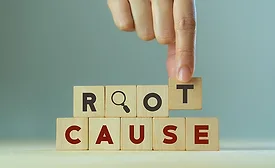
Root cause analysis can turn routine food safety deviations into opportunities to identify systemic weaknesses, strengthen preventive controls, and reduce the likelihood of recurrence.
SGS has announced a partnership with Eezytrace, an innovative software solution that powers data-driven risk management and helps digitize self-check procedures in the foodservice industry.
An unbiased gap assessment of a foodservice business' FSMP should be performed by a third party, using a defined set of standards for each business function
The food safety management program in a foodservice business should be periodically benchmarked against the most current regulatory requirements and best-in-class food safety standards to determine if gaps exist in the program. The gap analysis should be performed by a third party to ensure an unbiased benchmark, and include a review of the corporate governance, systems/specifications, training/education, supply chain management, foodservice operations, and facilities design. The food safety management team should coordinate and review all deficiencies with an action plan prioritized to the level of risk identified.
In 1906, President Theodore Roosevelt signed legislation that created the agency with legal authority to seize goods in interstate commerce that were adulterated, contained additives injurious to health, or contained filthy, decomposed or putrid substances.
After the Food Safety Modernization Act was passed, there was a great deal of angst and fear in the food industry about the impending implementation of hazard analysis, risk-based preventive controls.
Many processors have grown more sophisticated at compiling information and presenting it when inspectors ask for proof that a facility's food safety management system is working. But no matter the companies’ size or record management methods, they likely experience some of the common deficiencies that experts see.
As new regulations have led to increased food recalls, companies work to digitize their food safety systems, hoping they will help make it easier to track their products.
To prevent cross-contamination in your plant, you have to consider every single step in the chain and do everything you can to ensure that none of the links are weak.
On Demand:From this webinar, attendees will learn how large food manufacturing organizations can successfully manage their supply chain, food safety, and regulatory risks.
On Demand: Attend this webinar to learn how to position food safety as a material enterprise risk with measurable financial, operational, and reputational impacts relevant to Board-level decision-making.