Food Safety
search
Ask Food Safety AI
cart
facebook twitter linkedin
  • Sign In
  • Create Account
  • Sign Out
  • My Account
Food Safety
  • NEWS
    • Latest News
    • White Papers
  • PRODUCTS
  • TOPICS
    • Contamination Control
    • Food Types
    • Management
    • Process Control
    • Regulatory
    • Sanitation
    • Supply Chain
    • Testing and Analysis
  • PODCAST
  • EXCLUSIVES
    • Food Safety Five Newsreel
    • eBooks
    • FSM Distinguished Service Award
    • Interactive Product Spotlights
    • Videos
  • BUYER'S GUIDE
  • MORE
    • ENEWSLETTER >
      • Archive Issues
      • Subscribe to eNews
    • Store
    • Sponsor Insights
    • ASK FSM AI
  • WEBINARS
  • FOOD SAFETY SUMMIT
  • EMAG
    • eMagazine
    • Archive Issues
    • Editorial Advisory Board
    • Contact
    • Advertise
  • SIGN UP!

Food Safety

Assessing risk in your operation’s food safety plan

By law, your assessment must evaluate two elements: likelihood and severity of occurrence

By Richard F. Stier, M.S.
HACCP

Processors didn’t have to make major changes to HACCP programs as feared.

Photo courtesy of Getty Images

November 19, 2019

After the Food Safety Modernization Act was passed, there was a great deal of angst and fear in the food industry about the impending implementation of hazard analysis, risk-based preventive controls. 

Why the angst? People thought that HARPC was new and would force processors to adopt completely new and different food safety management systems. The reality was people did not have to make major changes to their HACCP programs or food safety management systems. In fact, HARPC sort of vanished. As an instructor for the PCQI (preventive controls qualified individual) program, I can attest that there is absolutely no mention of HARPC in the course materials. 

Since FSMA was enacted in 2011, there have been a number of regulations passed to ensure enforcement. The Preventive Controls for Human Food regulation, found in 21 CFR Part 117, emphasizes the utilization of risk assessment as a means for establishing the hazards that need to be controlled through traditional critical control points or process preventive controls, allergen preventive controls, sanitation preventive controls, supplier preventive controls or any hazard controls. The regulation also mandates that processors utilize a risk assessment protocol that includes two elements: likelihood of occurrence and severity of occurrence. In fact, 21 CFR Part 117.130 (c) reads:

“The hazard analysis must include an evaluation of the hazards identified in paragraph (b) of this section to assess the severity of the illness or injury if the hazard were to occur and the probability that the hazard will occur in the absence of preventive controls.”

The emphasis on risk assessment is not new, or it should not be thought of as new. As far back as 1994, Dr. Russell Cross of the U.S. Department of Agriculture made the following statement:

“We believe that the HACCP system, coupled with strong risk assessment programs is the food safety system of the future … and the future is now.” 

But very few processors adopted a risk-based approach within their food safety management systems. They would do hazard analyses, but there was really no documented risk assessment, nor was there pressure from regulators to go that route. I used the words “very few” intentionally because there are a few multinationals that adopted a risk-based approach to ensuring and updating food safety systems globally.

In response to pressure to develop a new internal audit that would not only better ensure the safety and quality of products globally but also would assess how operations throughout the world could continuously improve, one company developed a risk-based audit that utilized FMEA or failure mode, effects analysis. The FMEA program has three basic principles:

  1. A systemized group of activities intended to recognize and evaluate the potential failure of a product, process or design and its potential effect on customers and consumers
  2. A systemized group of activities intended to identify actions that would mitigate the chance of a potential failure from occurring
  3. A systemized group of activities intended to document and continuously improve the product, process or design

The program was designed to mandate that each and every element making up the food safety management system was to be subjected to a risk assessment using FMEA. What made this assessment even more powerful is that the company included three elements: likelihood of occurrence, severity of occurrence and the ability to detect issues. Each element had a defined one to 10 rating. 

Without a written assessment, the company simply would not score well on that section, even if it had a documented program that was working well. When the audit was rolled out, it did not make operations around the world very happy because no one had done the necessary risk assessments. Companies that had scored in the high 80s or 90s on third-party audits were now scoring 15 to 25, but long term the overall goal was achieved: continual improvement throughout the corporation. The program has been so well received that it was continued even after a merger. And the adoption of the internal audit scheme undoubtedly made complying with FSMA and its supporting regulations easier.

Looking for quick answers on food safety topics? Try Ask FSM, our new smart AI search tool. Ask FSM →

Risk assessment is now an integral part of most processors’ food safety management systems. This has been driven by regulations like the Preventive Controls for Human Foods found in 21 CFR Part 117, the GFSI audit schemes, ISO 22000, and industry demand for enhanced food safety throughout the food chain. 

So, risk assessment should be an integral element in each and every food processor’s food safety management system. There is no one way that this should be done, but it should include severity versus likelihood of occurrence. To companies that proactively incorporated risk assessment into their food safety programs, I say, “Kudos.”


This article was originally posted on www.foodengineeringmag.com.
KEYWORDS: food safety management FSMA HACCP

Share This Story

Richard stier 200px
Richard F. Stier, M.S. is a consulting food scientist who has helped food processors develop safety, quality and sanitation programs. He believes in emphasizing the importance of how these programs can help companies increase profits. Stier holds degrees in food science from Rutgers University and the University of California at Davis. He is also a member of the Editorial Advisory Board of Food Safety Magazine.


Recommended Content

JOIN TODAY
to unlock your recommendations.

Already have an account? Sign In

  • people holding baby chicks

    Serovar Differences Matter: Utility of Deep Serotyping in Broiler Production and Processing

    This article discusses the significance of Salmonella in...
    Methods
    By: Nikki Shariat Ph.D.
  • woman washing hands

    Building a Culture of Hygiene in the Food Processing Plant

    Everyone entering a food processing facility needs to...
    Training
    By: Richard F. Stier, M.S.
  • graphical representation of earth over dirt

    Climate Change and Emerging Risks to Food Safety: Building Climate Resilience

    This article examines the multifaceted threats to food...
    Risk Assessment
    By: Maria Cristina Tirado Ph.D., D.V.M. and Shamini Albert Raj M.A.
Manage My Account
  • eMagazine Subscription
  • Subscribe to eNewsletter
  • Manage My Preferences
  • Website Registration
  • Subscription Customer Service

More Videos

Sponsored Content

Sponsored Content is a special paid section where industry companies provide high quality, objective, non-commercial content around topics of interest to the Food Safety Magazine audience. All Sponsored Content is supplied by the advertising company and any opinions expressed in this article are those of the author and not necessarily reflect the views of Food Safety Magazine or its parent company, BNP Media. Interested in participating in our Sponsored Content section? Contact your local rep!

close
  • Salmonella bacteria
    Sponsored byThermoFisher

    Food Microbiology Testing Methods: Salmonella species

  • a diagram explaining indicator organisms
    Sponsored byHygiena

    How Proactive Listeria Testing Helps Prevent Six- and Seven-Figure Recalls

  • woman grocery shopping
    Sponsored byCorbion

    Designing Safety Into Every Bite: Proactive Risk Mitigation for Refrigerated Foods

Popular Stories

mindy brashears USDA headshot

USDA-FSIS Under Secretary for Food Safety Nominee Reveals Priorities in Senate Hearing

researcher dropping liquid in petri dishes

First-of-its-Kind Study Shows How Listeria Strains Evolve Into Strong Biofilm Formers

us capitol

MAHA Pushback Kills ‘Big Food’-Aligned Legislative Effort to Stop State Food Laws

Events

November 11, 2025

Feeding the Future: How Lessons From 2025 Will Shape 2026

Live: November 11, 2025 at 10:00 am EST: This webinar will bring together LRQA experts and industry leaders to explore how lessons from 2025 will shape 2026, focusing on building resilient, digitally enabled, and consumer-trusted food systems.

November 18, 2025

Dry Sanitation and Cleaning Techniques for Facilities and Equipment

Live: November 18, 2025 at 12:00 pm EDT: From this webinar, attendees will learn best practices employed by dry/low-moisture food processors for dry sanitation and equipment cleaning.

November 20, 2025

New U.S. Additive Bans: How to Prepare and Protect Your Brand

Live: November 20, 2025 at 11:00 am EST: From this webinar, attendees will learn the impact of ingredient restrictions on product development, sourcing, labeling, and market access.

View All

Products

Global Food Safety Microbial Interventions and Molecular Advancements

Global Food Safety Microbial Interventions and Molecular Advancements

See More Products

Related Articles

  • food manufacturing bread stock

    Facilities Focus: Manage Your Physical Plant as a Prerequisite

    See More
  • packaging robots

    How Processors Can Use Robots to Enhance Food Quality and Safety

    See More
  • woman washing hands

    Building a Culture of Hygiene in the Food Processing Plant

    See More

Related Products

See More Products
  • food safety.jpg

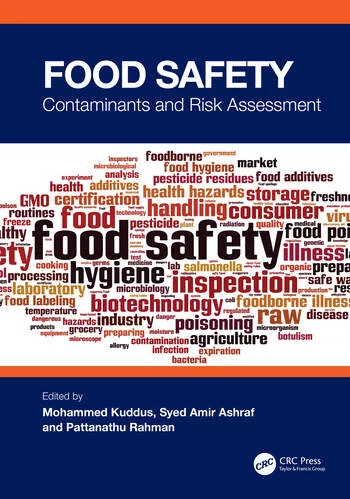
    Food Safety Contaminants and Risk Assessment

  • 1119071127.jpg

    Food Safety, Risk Intelligence and Benchmarking

  • 1119237963.jpg

    Food Safety in China: Science, Technology, Management and Regulation

See More Products

Related Directories

  • Plum Safety

    Plum Safety Training and Hospitality Consultants provide Environmental Health, Safety, and Food Safety solutions. Certified Food Protection Manager Certification, TiPS Responsible Alcohol Certification, Allergen & Gluten-Free Certification, CPR/AED & First Aid Certification. 3rd Party Inspections and Audits. Authorized OSHA Instructor. Lead HACCP Instructor. HACCP plan development & training.
  • We R Food Safety Inc.

    Scalable, affordable and fully customizable software designed by industry experts and backed by a world-class team of consultants and support personnel. Our proprietary software modernizes your food safety systems, provides your staff real-time data and visibility. We have the ability to construct custom reporting providing you information that is important to your business.
×

Never miss the latest news and trends driving the food safety industry

eNewsletter | Website | eMagazine

JOIN TODAY!
  • RESOURCES
    • Advertise
    • Contact Us
    • Directories
    • Store
    • Want More
  • SIGN UP TODAY
    • Create Account
    • eMagazine
    • eNewsletter
    • Customer Service
    • Manage Preferences
  • SERVICES
    • Marketing Services
    • Reprints
    • Market Research
    • List Rental
    • Survey/Respondent Access
  • STAY CONNECTED
    • LinkedIn
    • Facebook
    • Instagram
    • X (Twitter)
  • PRIVACY
    • PRIVACY POLICY
    • TERMS & CONDITIONS
    • DO NOT SELL MY PERSONAL INFORMATION
    • PRIVACY REQUEST
    • ACCESSIBILITY

Copyright ©2025. All Rights Reserved BNP Media.

Design, CMS, Hosting & Web Development :: ePublishing