With support from FAO, ten African Union (AU) countries completed assessments of their national food control systems, culminating in a report that outlines strengths, opportunities, and strategic actions.
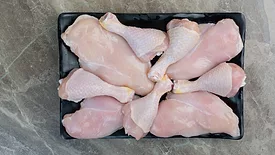
Following the withdrawal of the previously proposed strategy for reducing Salmonella in poultry, USDA-FSIS will host a public meeting on January 14 to advance work on a new approach, facilitating a discussion on “practical strategies” that “reflect both public health goals and industry realities.”
The nationwide infant botulism outbreak associated with ByHeart infant formula has grown to 39 cases in 18 states. All 39 infants were hospitalized; no deaths have been reported.
Posted to the Unified Agenda in September, FDA’s developing proposed rule to tighten Generally Recognized as Safe (GRAS) oversight has been sent to the White House for review—the final step before publication.
Although the estimated cost per disease incident ranged from $341 USD in Africa to $2,194 in Europe, the total economic burden of invasive non-typhoidal Salmonella was highest in Africa—especially sub-Saharan Africa—due to its prevalence and overall impact to public health in the region.
As part of the EU authorization procedure for a new food additive application, EFSA conducted a risk assessment for jagua (genipin-glycine) blue, which concluded no safety concern and established an acceptable daily intake (ADI). The fruit-derived food dye is already permitted in the U.S.
This episode of Food Safety Five discusses a farm-to-fork quantitative microbial risk assessment (QMRA) for Listeria monocytogenes in cantaloupe, a study demonstrating the efficacy of antimicrobial peptides for reducing Salmonella in poultry, and the adoption of new international standards at the 48th session of the Codex Alimentarius Commission.
A European Food Safety Authority (EFSA) draft scientific opinion, which lowers the tolerable weekly intake (TWI) for dioxins and dioxin-like polychlorinated biphenyls (PCBs), is available for public feedback. The new TWI is exceeded by Europeans in all age groups.
After withdrawing its previously proposed regulatory framework for Salmonella in raw poultry in April, USDA-FSIS is indefinitely delaying verification activities for Salmonella in not-ready-to-eat, breaded and stuffed chicken products, and is reconsidering its strategy to reduce Salmonella in poultry with an exploratory public meeting in January.
A new study demonstrated how public health and regulatory initiatives targeting “ultra-processed foods” (UPFs) may have unintended consequences if definitions for the category and mechanistic understandings of processing are not refined.