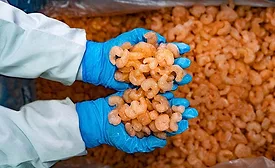
This article focuses on the fundamentals of shrimp processing and the various steps in which facilities can manage food safety and quality challenges to generate wholesome and safe products for global markets.
From food additive bans and obligatory food packaging changes to consumer right-to-know laws and labeling requirements, keeping abreast of the flurry of legislative and policy activity that is impacting the food industry may seem like an impossible task. This article discusses what you need to know and how best to prepare for upcoming food safety changes.
Most prominent among wartime threats for food, agriculture, and water systems is the probability of continuous and coordinated cyberattacks and other forms of sabotage
Most prominent among wartime threats for U.S. food, agriculture, and water systems is the probability of continuous and coordinated cyberattacks and other forms of sabotage.
By examining global standards such as HACCP, GFSI, and SQF, this article explores the gaps in current competency assessments and the risks posed by these gaps. It also provides actionable strategies to empower frontline leaders and quality assurance teams to improve where necessary.
This article discusses the results of a survey of food processors worldwide regarding food safety culture and the preventive controls-aligned key performance indicators (KPIs) used to measure daily operations and continuous improvement.
This article discusses how an operation should develop, document, implement, and maintain a program to properly manage the many chemicals that are used in food processing.
Several tools and data sources are used in signal detection to evaluate genetic and epidemiologic information linked to foodborne outbreak investigations
This article provides background information about FDA’s CORE+EP Signals team's day-to-day work in detecting foodborne illness outbreaks and triaging incidents, and highlights some real-world examples and partnerships that have occurred to improve food safety and protect consumers.
The Regulatory and Laboratory Training System (RLTS), built on the National Curriculum Standards, represents the next generation of training for regulatory food protection professionals. It is guided by a national steering committee that includes FDA, CDC, USDA, NEHA, NACCHO, APHL, AFDO, and other organizations.
As consumers encounter more reports of detectable impurities in everyday foods, concern is likely to grow unless these findings are clearly communicated in the context of potential health risk
Monitoring impurities in foods is an important tool for protecting vulnerable populations. However, as consumers encounter more reports of detectable impurities in everyday foods, concern is likely to grow unless these findings are clearly communicated in the context of potential health risk.
Supplier preventive controls are a key element of food safety assurance in the end-to-end supply chain of food manufacturing to retail foodservice and sales
This article explores how supplier preventive controls are a key element of food safety assurance in the end-to-end supply chain of food manufacturing to retail foodservice and sales.
 RSS
RSS