Researchers from the U.S. Department of Agriculture’s Agricultural Research Service are using a bioplastic coating to naturally shield seeds from Aspergillus, a type of fungi that produces aflatoxin. Exposure to aflatoxins is a food safety issue due to the compound’s carcinogenic and other harmful effects.
UKHospitality, in partnership with the Food Standards Agency (FSA) and Food Standards Scotland (FSS), has launched an updated version of its industry-recognized hygiene standards guide for caterers.
Robust food traceability systems serve several roles in advancing foodsafety and sustainability.Traceability systems are inherently collaborative and require allmembersofa product supply chain to collect, store, and share data.
The Global Food Safety Initiative (GFSI) has released its first Science and Technology Advisory Group (STAG) Report, which focuses on four themes impacting food safety: “Big Data,” the role of the microbiome, emerging foodborne pathogens, and food system resilience.
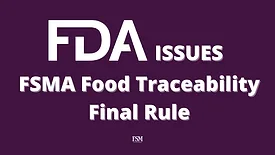
On November 15, 2022, the U.S. Food and Drug Administration (FDA) issued its final rule on Requirements for Additional Traceability Records for Certain Foods (Food Traceability Final Rule) under the Food Safety Modernization Act (FSMA) Section 204(d).
The Washington State Department of Agriculture and its partners have developed an online, animated tool with learning modules to help growers comply with the sanitation requirements of the Food Safety Modernization Act (FSMA) Produce Safety Rule.
Setup fees are now being waived for the ReposiTrak Traceability Network, which enables independent retailers and suppliers to be prepared for FDA food traceability requirements.
The U.S. Food and Drug Administration (FDA) will hold several instructor-led workshops, both virtually and in-person, on conducting self-assessment and verification audits for the Voluntary National Retail Food Regulatory Program Standards (Retail Program Standards) throughout 2023.
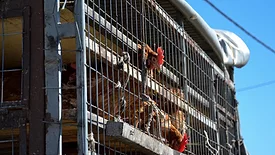
The European Food Safety Authority (EFSA) has published a scientific opinion on mitigation strategies for the spread of antimicrobial resistance (AMR)—a global food safety and public health threat—among food-producing animals during transport.
 RSS
RSS