Fish and shellfish farm-raised in the U.S. must meet rigorous standards for food safety and quality, as well as environmental impact. Seafood processors, packers, and warehouses comply with the mandatory requirements of the Food and Drug Administration's Hazard Analysis and Critical Control Points (HACCP). This article takes a deep dive into the many regulations that make U.S. farm-raised seafood one of the safest, healthiest, and most sustainable foods available to the consumer.
The European Food Safety Authority (EFSA) announced that it cannot determine the safety of cannabidiol as a novel food, citing significant knowledge gaps and several causes for concern.
The U.S. Food and Drug Administration (FDA) has published a new webpage with resources for farmers and producers of human and animal food whose crops are adversely affected by severe weather incidents.
In response to a petition, the U.S. Department of Agriculture’s Food Safety and Inspection Service (USDA’s FSIS) has decided not to revise the mandatory safe handling instruction (SHI) label for raw and partially cooked meat and poultry products.
In honor of World Food Safety Day 2022, ISO has published new standards—ISO 22003 Parts 1 and 2—for the accreditation of certification bodies that audit food safety management systems or food safety systems.
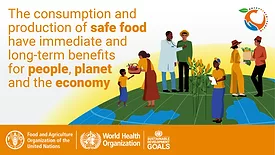
The theme of World Food Safety Day 2022 is “safer food, better health.” Worldwide organizations explain why and how the global community should prioritize ensuring the safety of food.
The U.S. Food and Drug Administration (FDA) has answered frequently asked questions (FAQs) about the Food Safety Modernization Act (FSMA) final rule on the Laboratory Accreditation for Analyses of Foods (LAAF).
The European Food Safety Authority (EFSA) published a concept paper that outlines the agency’s future work and goals for improving risk communication across the EU food safety system.
The U.S. Senate has introduced a bill that would enforce stricter regulation of the Generally Recognized as Safe (GRAS) rule and that calls for the creation of a new office within the U.S. Food and Drug Administration that would assess chemicals in food.
The European Commission released a report on EU Member States’ official controls in 2019–2020, highlighting areas for improvement in relation to food safety.
 RSS
RSS