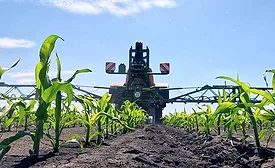
This episode of Food Safety Five covers new research on the impact of spray application on sanitizer efficacy, ROI of WGS for foodborne pathogen surveillance, effect of common food additives on gut health and implications for safety assessment, and contribution of industrial poultry farming to global Campylobacter spread.
The resource outlines the German Federal Institute for Risk Assessment’s (BfR’s) approach to risk assessment of NIAS in FCMs. It is primarily intended to support dossiers for new substances in Germany.
This article focuses on two main questions: first, why do food safety failures persist in high-velocity manufacturing settings despite the presence of comprehensive technical controls? And secondly, how do organizational beliefs and governance models influence ongoing risk exposure in these environments?
The qualitative, risk-based framework is designed to help manufacturers, foodservice operators, suppliers, and buyers evaluate microbiological hazards associated with dried fruits, vegetables, herbs, and spices, and appropriate pathogen mitigation measures.
Researchers observed inflammatory responses, gut barrier damage, and immune effects relevant to allergy development in experiments with two emulsifiers, soy lecithin and DATEM. Study author Dr. Cezmi Akdis said the findings support a more comprehensive framework for evaluating food additive safety.
The European Food Safety Authority published an updated scientific opinion on emerging and novel brominated flame retardants in food. Insufficient data prevented full risk assessments for most of the 27 chemicals evaluated.
The review also identifies six health effect categories for further evaluation as part of efforts to support the development of health-based values for the “forever chemicals.”
In this episode of Food Safety Matters, we speak to exposure scientist and toxicologist Dr. Alex LeBeau about the generation, interpretation, and responsible communication of food contaminant testing data—a conversation raised by recent reports on arsenic in candy from Florida officials.
Dioxins and dioxin-like polychlorinated biphenyls (DL-PCBs) are environmental contaminants generated as byproducts of industrial processes and waste incineration. EFSA’s risk assessment resulted in a lower tolerable weekly intake, which Europeans generally exceed.
 RSS
RSS








.webp?height=168&t=1691503719&width=275 "FoodSafetyMattersFinal-900x550-(002).jpg")