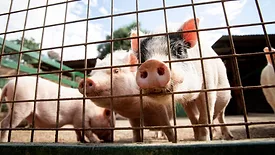
A study used machine learning to analyze WGS data for Salmonella isolates from ten European nations. The findings reveal that poultry and pigs remain the dominant sources of human salmonellosis. Notable cross-border transmission underscores the need for internationally harmonized control strategies.
To support the work of the Joint Expert Meeting on Microbiological Risk Assessment (JEMRA), FAO/WHO are seeking experts and data on the use of omics-based technologies for pathogen detection, outbreak root cause analyses, surveillance, food process monitoring programs, and microbiological risk assessments.
Recognized for its competence in responding to food safety emergencies, the Korean Ministry of Food and Drug Safety was recently designated the world’s first Collaboration Center for FAO/WHO’s International Food Safety Authorities Network (INFOSAN).
Belize and UAE are the latest countries to complete national food safety system reviews using the FAO/WHO Food Control System Assessment Tool, resulting in the development of strategic action plans to advance competencies and align with internationally recognized food safety standards.
Based on extensive global dialogue and a survey of auditors and industry professionals, a new report published by World of Auditing reveals that food safety auditing is at a pivotal turning point, outlining longstanding challenges and significant opportunities for modernization.
Although the estimated cost per disease incident ranged from $341 USD in Africa to $2,194 in Europe, the total economic burden of invasive non-typhoidal Salmonella was highest in Africa—especially sub-Saharan Africa—due to its prevalence and overall impact to public health in the region.
This episode of Food Safety Five discusses a farm-to-fork quantitative microbial risk assessment (QMRA) for Listeria monocytogenes in cantaloupe, a study demonstrating the efficacy of antimicrobial peptides for reducing Salmonella in poultry, and the adoption of new international standards at the 48th session of the Codex Alimentarius Commission.
To support Codex committee deliberations, an ad hoc joint FAO/WHO committee convened to recommend a gluten reference dose (RfD) in a risk-based precautionary allergen labeling (PAL) framework to ensure food safety for people with both celiac and immunoglobulin E (IgE)-mediated wheat allergies.
An ongoing outbreak of foodborne enterohemorrhagic Escherichia coli (EHEC) O45:H2 infections is sweeping Germany. More than 400 confirmed and possible cases have been reported, with three associated deaths. The vehicle of illness is likely foodborne, but has not yet been identified.
The European Commission recently published a dashboard that maps all food fraud cases covered in the Joint Research Center (JRC’s) monthly food fraud reports since 2016, including more than 2,000 cases and counting.
 RSS
RSS