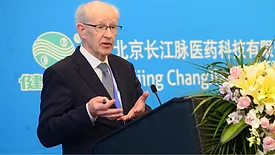
With a six-decade career that includes founding the Global Harmonization Initiative, Mr. Lelieveld was formerly a longtime member of Food Safety Magazine's(FSM’s)Editorial Advisory Board and a past recipient of the FSM Distinguished Service Award.
A JEMRA meeting was convened to help inform discussions about potential updates to Codex Alimentarius guidance, reflecting how scientific advances could strengthen microbiological risk assessments for food safety.
In this episode of Food Safety Matters, we speak to UK food law expert Chris McGarvey about the implications of dynamic UK/EU regulatory trends and how businesses can navigate changing legislation related to trade, food substances, novel foods and technologies, and allergen labeling.
WHO assessed the overall public health risk as “moderate,” citing the vulnerability of infants, uncertainty around the extent of contamination, and gaps in surveillance and traceability.
The information gathered will be used to support FAO/WHO scientific advice intended to inform future Codex Alimentarius discussions on frozen food handling guidance.
Ready-to-eat (RTE) pâté en croute contaminated with Listeria monocytogenes and produced by Drôme Ardèche Tradition has sickened 12 people across France, resulting in two deaths. All patients were hospitalized.
Marking the country’s first use of whole genome sequencing (WGS) in an active foodborne illness outbreak investigation, advanced genomics enabled Moldovan authorities to rapidly solve and respond to a salmonellosis outbreak that sickened more than 140 people in 2025.
UK businesses will be required to align with relevant EU regulatory requirements within the scope of the Sanitary and Phytosanitary (SPS) agreement, regardless of whether they export to the EU or sell only to the UK market.
TraceMap supports national authorities in identifying food safety threats and improving EU-wide coordinated response. A pilot version of TraceMap was recently used to support the investigation of globally distributed cereulide-contaminated infant formula.
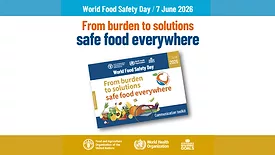
The theme, “From Burden to Solutions—Safe Food Everywhere,” stresses the role of evidence-based action, promoting the forthcoming updated WHO global foodborne disease estimates as a data source to inform targeted food safety and public health interventions.
 RSS
RSS

.webp?height=168&t=1691503719&width=275 "FoodSafetyMattersFinal-900x550-(002).jpg")