As of November 19, the number of infant botulism cases linked to consumption of ByHeart formula has grown to 31 across 15 states. ByHeart's testing of its own product has confirmed the presence of Clostridium botulinum.
Health Canada has determined that foods derived from cloned cattle and swine are safe and should no longer be considered novel foods, and has proposed policy revisions that would regulate these foods in the same manner as their traditional counterparts.
The Spanish Federation of Agricultural Cooperatives of Murcia (Fecoam) points to recent RASFF food safety notifications about U.S. nuts demonstrating dangerous levels of aflatoxin contamination—with almonds exceeding EU maximum levels by three times in one instance—and calls for stricter import controls.
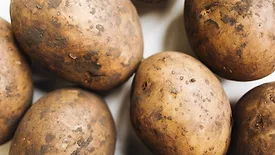
A laboratory study has provided new insights into the efficacy of peroxyacetic acid (PAA) and chlorine dioxide against Escherichia coli, Listeria monocytogenes, and norovirus in wash water during potato processing, and investigated cross-contamination risks in batch washing and water reuse scenarios.
A recent literature analysis of One Health-labeled studies described food safety’s representation as a research topic and its intersection with other facets of the One Health framework.
In the U.S., as part of the appropriations bill ending the government shutdown, Congress closed the 2018 Farm Bill loophole allowing the sale of hemp-derived THC products, such as edibles and beverages. At the same time, in the EU, the European Food Safety Authority (EFSA) set a safe intake level for Delta-8 THC in food.
This episode of Food Safety Five discusses research on Listeria biofilms, including sanitizer efficacy and evolutionary insights, and on a persisting Escherichia coli strain in leafy greens. It also covers regulatory developments in the UK, Canada, and the UAE, as well as a potential U.S. ultra-processed foods (UPFs) definition.
FDA recently released a warning letter dated September 5, 2025, issued to Fresh and Ready Foods LLC, a ready-to-eat (RTE) foods producer that was implicated in a multi-state, multi-year listeriosis outbreak.
Clostridium botulinum-contaminatedByHeart-brand formula has sickened at least 23 babies across 13 states. FDA inspection reports and warning letters have come to light showing a history of food safety and hygiene violations at the company’s production facilities.
A new analysis of U.S. Office of Personnel Management (OPM) data conducted by the National Sustainable Agriculture Coalition (NSAC) quantified the impact of federal workforce cuts on experts and inspectors within USDA-FSIS and USDA-APHIS.
 RSS
RSS