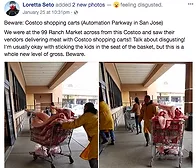
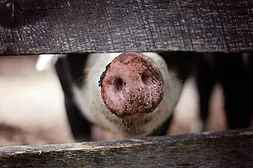
The Santa Clara County Department of Environmental Health is investigating photos taken of raw, unpackaged pork being delivered in shopping carts to a grocery store in San Jose, CA.
Yesterday, the U.S. Food and Drug Administration (FDA) issued five guidance documents to help importers and food producers meet key food safety provisions mandated by the FDA Food Safety Modernization Act (FSMA).
Late last week, the U.S. Department of Agriculture (USDA) announced the proposal of a new rule that would overhaul current legislation for meat inspection at pork processing plants.
The National Institute for Communicable Diseases (NICD) has confirmed nearly 750 cases of Listeria in South Africa, including 67 deaths. This makes the Listeria outbreak the worst ever on record.
Today, the U.S. Food and Drug Administration’s (FDA) Office of Enforcement and Import Operations director, Douglas Stearn, issued a notice stating plans to expedite public notification of products being recalled, including food products.
A new study by Utrecht University in the Netherlands and published in Veterinary Record—a British scholarly journal—says that raw pet foods (available in fresh, frozen and dried varieties) can be contaminated with a plethora of pathogens--Shiga toxin-producing Escherichia coli (STEC) O157:H7, Listeria monocytogenes and Salmonella.
 RSS
RSS