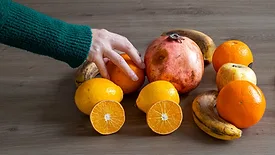
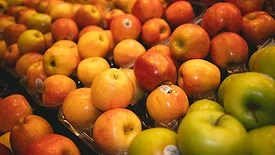
Supported by the Center for Produce Safety (CPS), Cornell researchers are developing a quantitative microbial risk assessment (QMRA) model to evaluate how quality defects affect Listeria and E. coli growth on produce, helping identify effective interventions and improve processes.
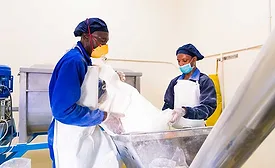
Respondents generally reported sanitation practices intended to minimize water introduction, but opportunities remained to improve relative humidity management, standardize understanding of sanitation breaks, and better characterize the relationship between moisture management and microbial contamination risks.
Food industry leaders shared that they recognize the potential benefits of pooling confidential food safety data, such as strengthening predictive modeling and enabling earlier identification of emerging risks, but concerns about trust, liability, confidentiality, and competitive disadvantage continue to hinder data-sharing.
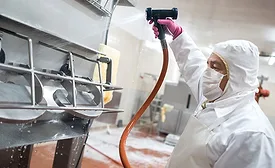
Longer application times, shorter nozzle distances, and spray patterns that deliver sufficient physical force to surfaces may contribute to improved microbial reduction. Sanitizer efficacy experiments could misrepresent real-world sanitation outcomes when shear stress and application time are not considered.
Intended for professional sanitarians, food safety leaders, hygienic design specialists, and managers working in low-moisture food manufacturing, the event will take place October 26–27, 2026 in Beloit, Wisconsin.
Studies funded by the Center for Produce Safety (CPS) are investigating ways to improve produce packinghouse brush sanitation, including the use of antimicrobial light and choosing the best time to replace brushes.
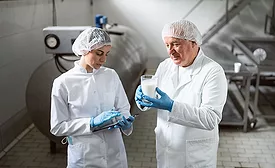
A survey of food safety and quality professionals in the dairy industry found that digital transformation is inconsistent and weighted toward larger companies. Current uses of digital tools and barriers to adoption were identified.
Researchers have developed a new, farm-to-fork quantitative microbial risk assessment (QMRA) model to evaluate the risk of Listeria monocytogenes contamination in fresh-cut cantaloupe.
This episode of Food Safety Five discusses hoses as reservoirs for biofilms in food processing facilities, the presence of Listeria monocytogenes and Campylobacter on retail beef and chicken, a new Salmonella serovar database, and microplastics release from food contact materials.
An analysis conducted by Cornell University researchers sought to better understand the genomic characteristics associated with an important reoccurring, emerging, and persistent (REP) Salmonella strain, S. Infantis REPJFX01, to help inform targeted interventions.