Food Safety
search
Ask Food Safety AI
cart
facebook twitter linkedin instagram youtube
  • Sign In
  • Create Account
  • Sign Out
  • My Account
Food Safety
  • NEWS
    • Latest News
    • Food Safety Five Newsreel
  • PRODUCTS
  • TOPICS
    • Contamination Control
    • Food Types
    • Management
    • Process Control
    • Regulatory
    • Sanitation
    • Supply Chain
    • Testing and Analysis
  • PODCAST
  • EXCLUSIVES
    • eBooks
    • Sponsored Insights
    • Sponsored White Papers
    • FSM Distinguished Service Award
    • Interactive Product Spotlights
    • Videos
  • MORE
    • BUYER'S GUIDE
    • NEWSLETTERS >
      • Archive Issues
      • Subscribe to eNews
    • Store
    • ASK FSM AI
  • WEBINARS
  • FOOD SAFETY SUMMIT
  • FSM FEATURES
    • FSM Features Collection
    • eMag Archives
    • Editorial Advisory Board
    • Contact
    • Advertise
  • SIGN UP!
NewsContamination ControlFood TypeManagementRisk AssessmentMicrobiological ControlProduce

Researchers Developing Risk Assessment Model to Evaluate Food Safety Impacts of Produce Defects
By Food Safety Magazine Editorial Team
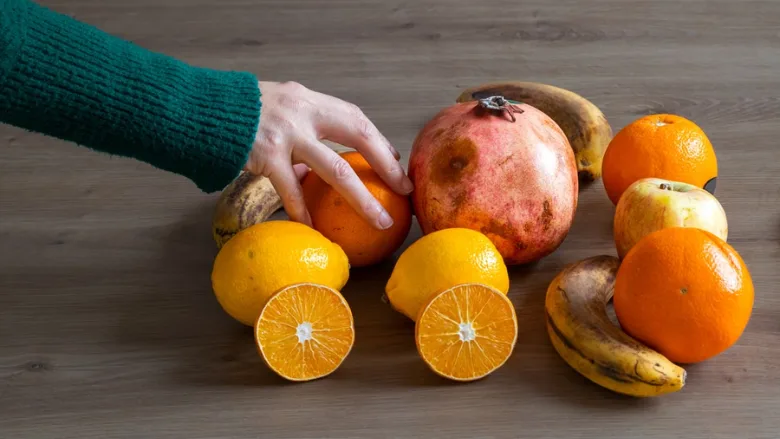
bruised fruit
Image credit: Özkan AYGÜN via Pexels
October 22, 2026

Supported by the Center for Produce Safety (CPS), researchers at Cornell University are developing a quantitative microbial risk assessment (QMRA) model to evaluate how post-harvest produce quality defects may affect food safety risks, particularly during the final stages of the supply chain.

Led by Martin Wiedmann, Ph.D., D.V.M., the project, “Quantitative Microbial Risk Assessments Need to Consider Quality Parameters to Accurately Predict Produce Food Safety Risk,” focuses on the effects of produce damage and defects on the growth and survival of Listeria monocytogenes and enterohemorrhagic Escherichia coli (EHEC).

Although produce quality and food safety have traditionally been considered separate issues, Dr. Wiedmann explained that certain quality defects, including damage caused by equipment, freezing, or pests, may influence microbial food safety risks.

“If it doesn't look good, if it doesn't taste right, very broadly speaking that doesn't mean it's unsafe. Similarly, product may carry an increased food safety risk even though it looks, smells, and tastes perfectly fine,” Dr. Wiedmann said. “Those are separate things, but I think the reality is quality defects can and may impact food safety risks.”

The researchers aim to develop a computerized model that will allow produce industry stakeholders to evaluate how different post-harvest conditions and quality defects may affect pathogen growth, survival, and the likelihood of foodborne illness.

Standardizing Produce Quality Defect Definitions

An early challenge identified by the researchers was the lack of standardized terminology used by produce handlers and processors to describe quality defects.

According to Dr. Wiedmann, industry stakeholders often used the same terms to describe different defects, or different terms to describe the same defect. For example, definitions of "watersoak" and other quality issues varied across industry.

Looking for quick answers on food safety topics?
Try Ask FSM, our new smart AI search tool.
Ask FSM →

Working with the CPS Industry Advisory Council and industry contacts, the research team has sought to establish more consistent definitions for common produce defects.

Although certain defects, such as mechanical damage, were relatively consistently defined, others had multiple interpretations or required further clarification.

Standardizing defect terminology may represent an additional benefit of the research, potentially supporting more consistent produce quality assessments throughout the supply chain.

Developing and Validating the Quantitative Microbial Risk Assessment Model

To develop the QMRA model, the researchers drew on existing scientific literature and unpublished research, supplemented by laboratory inoculation experiments to address data gaps.

For the experiments, the team developed procedures to create standardized defects in finished produce products. The researchers then inoculated the products with L. monocytogenes and EHEC to evaluate pathogen growth under different conditions.

The researchers are validating the model by comparing its predictions with the results of additional inoculation experiments to determine how accurately it estimates microbial behavior.

Once validated, the QMRA will be used to simulate different scenarios during the final stages of the produce supply chain, allowing researchers to assess the effects of post-harvest quality defects on food safety risks.

The model will also enable the researchers to rank risk factors associated with produce defects according to their effects on pathogen growth and survival, as well as the likelihood of causing foodborne illness.

Potential Applications for Produce Industry Risk Management

Dr. Wiedmann expects the QMRA model to help produce industry stakeholders make more informed decisions about quality management, processing practices, and food safety interventions.

For example, the model could be used to compare how different cooling methods, such as vacuum-cooling and hydro-cooling, may affect produce quality and microbial food safety risks. Such assessments could help operators evaluate whether changes to processing practices would provide meaningful food safety benefits relative to their costs.

Dr. Wiedmann also suggested that the model could encourage more standardized produce quality assessments by demonstrating their potential value for managing both food safety and product quality.

Ultimately, the researchers intend for the QMRA to support evidence-based decision-making by allowing industry stakeholders to compare potential interventions and prioritize investments based on their expected effects on food safety.

“With these QMRAs, the biggest opportunity is to help people make sure they're putting their money where they get the biggest bang for their buck, because sometimes decision-making can be based on anecdotal evidence and it can be hard for people to rationally assess different alternatives,” Dr. Wiedmann said.


KEYWORDS: Center for Produce Safety Cornell University E. coli listeria study

Share This Story

Fsm purple logo 200x200

The Food Safety Magazine editorial team comprises Bailee Henderson, Director of Content Strategy and news editor ✉, and Adrienne Blume, M.A., Director of Editorial and Industry Engagement.

Recommended Content

JOIN TODAY
to unlock your recommendations.

Already have an account? Sign In

  • people holding baby chicks

    Serovar Differences Matter: Utility of Deep Serotyping in Broiler Production and Processing

    This article discusses the significance of Salmonella in...
    Contamination Control
    By: Nikki Shariat Ph.D.
  • woman washing hands

    Building a Culture of Hygiene in the Food Processing Plant

    Everyone entering a food processing facility needs to...
    Sanitation
    By: Richard F. Stier, M.S.
  • graphical representation of earth over dirt

    Climate Change and Emerging Risks to Food Safety: Building Climate Resilience

    This article examines the multifaceted threats to food...
    Management
    By: Maria Cristina Tirado Ph.D., D.V.M. and Shamini Albert Raj M.A.
Manage My Account
  • eMagazine Subscription
  • Subscribe to Newsletters
  • Manage My Preferences
  • Website Registration
  • Subscription Customer Service

More Videos

Sponsored Content

Sponsored Content is a special paid section where industry companies provide high quality, objective, non-commercial content around topics of interest to the Food Safety Magazine audience. All Sponsored Content is supplied by the advertising company and any opinions expressed in this article are those of the author and not necessarily reflect the views of Food Safety Magazine or its parent company, BNP Media. Interested in participating in our Sponsored Content section? Contact your local rep!

close
  • Top view portrait of two factory workers standing by conveyor belt during quality inspection at food production, copy space
    Sponsored byFlexXray

    Foreign Material By the Numbers: What the 2026 Benchmark Report Reveals

  • a conveyorized industrial metal detector system that appears to resemble a Loma Systems IQ4 Metal Detector setup with an integrated conveyor belt and control panel for food or package inspection.
    Sponsored byMettler Toledo

    Beyond Detection: How to Avoid Physical Contamination in Food Through a Smarter Inspection Strategy

  • The image displays a bottling plant production line, commonly used in the beverage industry for filling and packaging soft drinks.
    Sponsored byBIOIONIX

    Sustainability with ROI: A Beverage Producer Case Study in Water Savings

Popular Stories

chemicals in beakers fda logo overlay

FDA Quietly Included Provision in GRAS Proposed Rule to Expand One ‘Loophole’ While Tightening Another

Genome sequencing data and lab equipment

Whole Genome Sequencing in Food Safety: Non-Technical Systems Barriers and Opportunities for Enhanced Global Use

couple of customers buying food together in grocery store, wheeling cart. Buyers shopping in supermarket. Choosing fresh food concept

Refrigerator Cyberattack at Hundreds of Stores in France, Other Countries Results in Mass Food Losses

allergens ebook

Events

October 29, 2026

FDA Proposes Major GRAS Reform: What It Could Mean for Your Business

Live: October 29, 2026 at 2:00 pm EDT: Attend this webinar to examine potential implications for self-GRAS, Flavor and Extract Manufacturers Association (FEMA) GRAS, and food-contact substances.

November 5, 2026

How Middle Managers Shape Food Safety Culture and Risk Performance

Live: November 5, 2026 at 11:00 am EST: From this webinar, attendees will learn how investing in middle managers improves both FSQ strategy implementation and accountability across all levels of the company.

November 12, 2026

From Data Overload to Actionable Food Safety Risk Intelligence

Live: November 12, 2026 at 11:00 am EST: This webinar explores how data integration, advanced analytics, and digital technologies can help transform disparate information into meaningful risk intelligence.

View All

Products

Global Food Safety Microbial Interventions and Molecular Advancements

Global Food Safety Microbial Interventions and Molecular Advancements

See More Products

Related Articles

  • lettuce leaf up close

    Researchers Developing Model to Evaluate Contamination Risks and Control Strategies Along Produce Supply Chain

    See More
  • swallow (bird) on a branch

    Researchers Developing Food Safety Risk Assessment for Wild Birds in Agriculture

    See More
  • black and brown cattle outdoors in a feedlot looking at the camera

    Researchers to Develop E. coli Risk Assessment Model for Produce Grown Near Animal Feedlots

    See More

Related Products

See More Products
  • food safety.jpg

    Food Safety Contaminants and Risk Assessment

  • 1119160553.jpg

    Food Safety: Innovative Analytical Tools for Safety Assessment

  • 1119071127.jpg

    Food Safety, Risk Intelligence and Benchmarking

See More Products

Events

View AllSubmit An Event
  • May 6, 2026

    Allergen Uncertainty: Risk Assessment, Reference Doses, and Codex Management Guidance

    On Demand: Attendees will gain insight into the importance of preparing for the industry's shift from detection-based methods to risk-based allergen management.
  • November 12, 2026

    From Data Overload to Actionable Food Safety Risk Intelligence

    Live: November 12, 2026 at 11:00 am EST: This webinar explores how data integration, advanced analytics, and digital technologies can help transform disparate information into meaningful risk intelligence.
View AllSubmit An Event

Related Directories

  • Food Safety News

    Food Safety News advances public health by delivering timely, accurate, and comprehensive coverage of foodborne illness outbreaks, recalls, and regulatory developments that impact the safety of our global food supply.
  • Active Food Safety

    Active Food Safety consists of an experienced team of food safety professionals who are thought-leaders in the food industry, and have each led enterprise level food safety management programs in several of the most well-known and respected brands in the food industry. We continuously help our clients ensure food safety based on proven business best practices designed specifically to the brand - to maximize risk reduction to prevent foodborne disease illnesses and outbreaks, to meet all government regulatory requirements, and to improve sales and brand reputation.
  • Institute for Food Safety and Health (IFSH) - Illinois Tech

    IFSH is a one-of-a-kind applied food science research consortium comprised of the Illinois Tech, the U.S. FDA, and the food industry. In collaboration with the FDA, we provide stakeholders with the opportunity to develop and exchange knowledge, experience, and expertise in the areas of food safety, food defense, and nutrition.
×

Never miss the latest news and trends driving the food safety industry

Newsletters | Website | FSM Features Collection

JOIN TODAY!
  • RESOURCES
    • Advertise
    • Contact Us
    • Directories
    • Store
    • Want More
  • SIGN UP TODAY
    • Create Account
    • eMagazine
    • Newsletters
    • Customer Service
    • Manage Preferences
  • SERVICES
    • Marketing Services
    • Reprints
    • Market Research
    • List Rental
    • Survey/Respondent Access
  • STAY CONNECTED
    • LinkedIn
    • Facebook
    • Instagram
    • X (Twitter)
  • PRIVACY
    • PRIVACY POLICY
    • TERMS & CONDITIONS
    • DO NOT SELL MY PERSONAL INFORMATION
    • PRIVACY REQUEST
    • ACCESSIBILITY

Copyright ©2026. All Rights Reserved BNP Media, Inc. and BNP Media II, LLC.

Design, CMS, Hosting & Web Development :: ePublishing