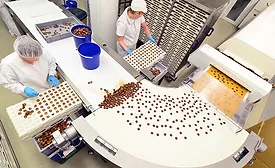
IAFNS-supported researchers have developed a low-moisture cleaning solution that is not only effective and less of a hazard for workers and plants, but also has the potential to save cleaning time.
The Institute for the Advancement of Food and Nutrition Sciences’ (IAFNS’) Annual Summer Science Symposium will take place June 24–25 in Washington D.C.
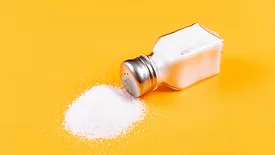
A new study led by the University of Toronto and supported by IAFNS highlights a critical tension in sodium reduction policy, in that many of the foods contributing most to sodium intake also provide essential nutrients.
The opportunity is open to current graduate students. Project areas may include research on reducing heavy metals and toxic elements and on frameworks to identify indicators of high-quality science.
Contributing to the current conversation around food processing (e.g., “ultra-processed foods”), the Institute for the Advancement of Food and Nutrition Sciences (IAFNS) has published a set of governing principles for food formulation and processing classification systems.
The Institute for the Advancement of Food and Nutrition Sciences (IAFNS) is now accepting applications for its 2026 Emerging Leaders Award to recognize excellence in food safety and nutrition sciences.
The threats to food safety are evolving, and so must our approaches. The traditional boundaries between safety, nutrition, and public health are increasingly artificial—and increasingly counterproductive.
The research can serve as a foundation for updating or developing new Restricted Substances Lists to mitigate potential risks to human and environmental health posed by hazardous chemicals used food contact materials.