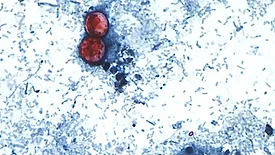
The outbreak cluster includes more than 1,600 people in Indiana, Kentucky, Michigan, Ohio, and West Virginia. Outside of the outbreak cluster, Michigan and other parts of the U.S. continue to experience elevated rates of Cyclospora infections compared to previous years.
Public health experts say the ongoing cyclosporiasis situation exposes growing weaknesses in national foodborne illness surveillance, highlighting how funding and program cuts and CDC staff attrition could undermine outbreak detection and delay response, affecting public health communication and consumer confidence in food safety.
More than 400 cases in Michigan, Ohio, Kentucky, and West Virginia appear to be epidemiologically linked, although a food source has not been confirmed. Michigan alone reports more than 3,300 Cyclospora infections.
Per CDC, 843 domestically acquired cyclosporiasis cases have been confirmed in 31 states, plus another 1,500 pending analysis. Michigan alone has reported more than 2,600 cases and is looking at lettuce as a potential vehicle of illness.
Cyclosporiasis is surging across the U.S., with CDC and state public health officials reporting a growing number of cases. Michigan alone has reported more than 1,200 Cyclospora infections since June, resulting in at least 44 hospitalizations.
Four infants in three states have been hospitalized with botulism after consuming Nara Organics Whole Milk Organic Powdered Infant Formula. California public health officials have detected Clostridium botulinum in an open can of Nara Organics formula collected from the home of an outbreak patient.
The Danish Annual Report on Zoonoses summarizes trends in foodborne disease, zoonotic pathogens, and surveillance activities across humans, animals, food, and the environment.
At least 106 people have been infected by the outbreak strain in 13 European countries. Young people are disproportionately affected. Some sickened children reported eating the noodles and seasoning dry, without adding boiling water as instructed on the package.
Traceability investigations identified a common seed supplier, with implicated alfalfa seeds imported from India and distributed throughout Europe. Available evidence suggested the seeds were likely contaminated before entering the EU.
Only six deaths were reported in 2024. The majority (nine) of the 12 fatalities in 2025 were included in one E. coli outbreak linked to ground beef served at long-term care facilities nationwide.