Per- and polyfluoroalkyl substances (PFAS) are ubiquitous in food, cosmetics, and pharmaceuticals. Part 2 of this article series discusses the application of several problem-solving analytical tools to the PFAS crisis, as well as the impacts of PFAS on the United Nations' Sustainable Development Goals (SDGs) for 2030.
In May 2025, EPA rolled back Biden-era drinking water limits for per- and polyfluoroalkyl substances (PFAS) of concern. A new map visualizing EPA testing data shows that more than 30 million Americans are served by drinking water systems containing one of four PFAS for which the limits have been revoked.
PPG is expanding its easy-open end coatings for aluminum beverage cans to include lid coating series that have been formulated without the use of bisphenol A (BPA) or per- and polyfluoroalkyl substances (PFAS).
Denmark has banned 23 pesticides containing six active ingredients known to break down into trifluoroacetic acid (TFA), a toxic per- and polyfluoroalkyl substance (PFAS) that easily contaminates water and has been found in food products.
Per- and polyfluoroalkyl substances (PFAS) are ubiquitous in food, cosmetics, and pharmaceuticals. This article discusses different PFAS, their connection to microplastics, and their global impacts on public health and the environment.
USDA’s Food Safety and Inspection Service (USDA-FSIS) sampled and tested meat, chicken, and Siluriformes fish (catfish) for 16 per- and polyfluoroalkyl substances (PFAS), detecting “forever chemicals” in less than 0.2–0.3 percent of all sample types except wild-caught catfish, of which nearly half contained at least one PFAS.
In this episode of Food Safety Matters, we speak to industry attorney Alfredo Fernández about what the new Toxic Substances Control Act and emerging state legislation mean for food manufacturers, importers, and businesses regarding compliance with U.S. requirements for per- and polyfluoroalkyl substances (PFAS) in food contact materials and packaging.
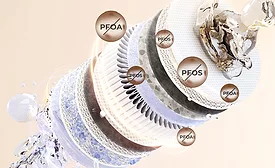
Researchers funded by the U.S. National Science Foundation (NSF) and led by the University at Buffalo have created a filtration system that can effectively remove 90 and 80 percent of per- and polyfluoroalkyl substances (PFAS) from groundwater and sewage, respectively. It is more effective and cost- and resource-efficient than activated carbon filtration.
FDA carried out a sampling and testing assignment of bottled waters for per- and polyfluoroalkyl substances (PFAS) in 2023–2024. Although PFAS were detected in ten samples, no bottled waters were found to have levels of “forever chemicals” exceeding EPA maximum limits for PFAS in drinking water.
A study demonstrated the toxic effects of exposure to per- and polyfluoroalkyl substances (PFAS) in worms—but not all PFAS were found to be equally toxic, and not all worms experienced the same harms. Identifying which genes cause PFAS susceptibility in both worms and humans could speed up PFAS testing and regulation.