A new study demonstrated the efficacy of far-UV-C light at 222 nm for inactivating human norovirus on surfaces. As it is safe for humans, researchers believe UV-C 222 could enable real-time, continuous disinfection in enclosed foodservice settings and food processing environments.
Polycyclic aromatic hydrocarbons (PAHs) are potentially carcinogenic compounds formed during high-heat cooking. An emerging testing method known as QuEChERS—which stands for “Quick, Easy, Cheap, Effective, Rugged, and Safe”—is designed to overcome the limitations of conventional PAH tests.
A new study led by the University of Toronto and supported by IAFNS highlights a critical tension in sodium reduction policy, in that many of the foods contributing most to sodium intake also provide essential nutrients.
A series of first-of-their-kind, large-scale epidemiological studies have suggested associations between food dyes—both “natural” and artificial—and preservatives, and an increased risk of chronic health conditions like cancer, type 2 diabetes, hypertension, and cardiovascular disease.
Breading mixtures may be reused for different foods in foodservice operations. An FDA-supported study found that both shrimp and cod allergens accumulate in reused breading and transfer to subsequent foods, although the cod cross-contact risk was much greater.
In a new peer-reviewed article, researchers make a case for linking data from both routine foodservice establishment inspections and foodborne illness surveillance, while acknowledging existing challenges, like inconsistent adoption of FDA’s Food Code and electronic data collection systems.
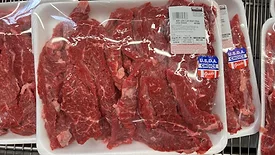
Consumers often throw away meat that is still safe to eat based on the “sell by” date. Auburn University researchers are investigating methods to predict meat spoilage based on microbial activity, which would enable more accurate “sell by” dates.
The findings, based on a novel approach and published in Nature Health, suggest that traditional chemical safety assessments may overlook combined exposures and real-life environmental conditions. Transcriptomic analysis implicated a non-genotoxic mode of action by which pesticides interfere with normal cell function and identity processes.
In 2025, a genetically unique hybrid STEC/STEC strain was the cause of a foodborne illness outbreak that affected exclusively adults, with 90 percent of patients developing hemolytic uremic syndrome (HUS) and three deaths occurring.