Food Safety
search
Ask Food Safety AI
cart
facebook twitter linkedin instagram youtube
  • Sign In
  • Create Account
  • Sign Out
  • My Account
Food Safety
  • NEWS
    • Latest News
    • White Papers
  • PRODUCTS
  • TOPICS
    • Contamination Control
    • Food Types
    • Management
    • Process Control
    • Regulatory
    • Sanitation
    • Supply Chain
    • Testing and Analysis
  • PODCAST
  • EXCLUSIVES
    • Food Safety Five Newsreel
    • eBooks
    • FSM Distinguished Service Award
    • Interactive Product Spotlights
    • Videos
  • BUYER'S GUIDE
  • MORE
    • NEWSLETTERS >
      • Archive Issues
      • Subscribe to eNews
    • Store
    • Sponsor Insights
    • ASK FSM AI
  • WEBINARS
  • FOOD SAFETY SUMMIT
  • EMAG
    • eMagazine
    • Archive Issues
    • Editorial Advisory Board
    • Contact
    • Advertise
  • SIGN UP!

Food fraud

How barcodes can help fight food fraud

Food ranks among the top five most valuable counterfeit markets
By Sean Riley PMMI
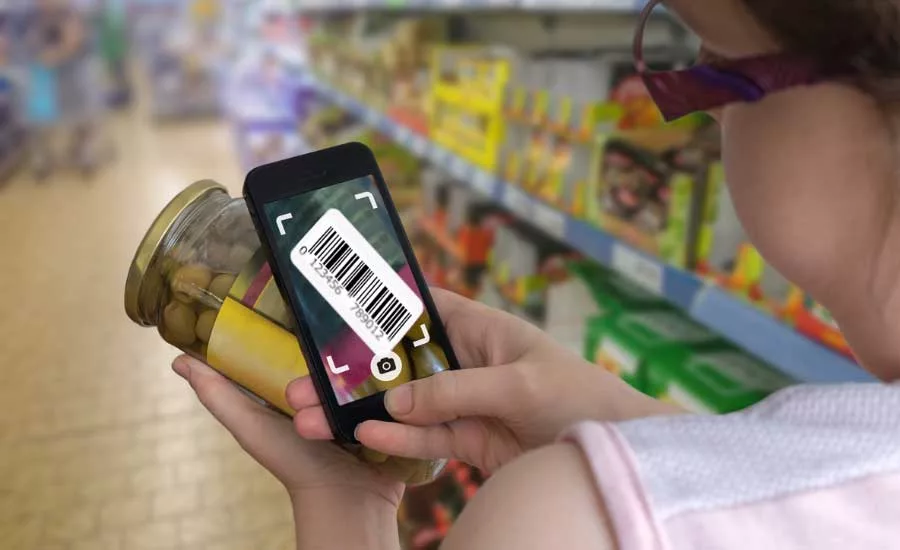
barcodes
While smart labels/tags are growing in retail and inventory tracking, the perishable goods segment—like food—projects to grow at the highest rate (especially labels).
September 28, 2017

While it’s well-known by professionals in the food industry, many consumers are surprised to find out that food ranks in the top five most valuable counterfeit markets.

Fake food is such a problem worldwide that the growth of the global anti-counterfeiting market will outpace the overall market segment growth of the food, beverage and pharmaceutical industries by roughly two to three times in the next five years, according to the Brand Protection and Product Traceability Market Research Report from PMMI, The Association for Packaging and Processing Technologies.

And, North America alone will account for nearly half of the total growth in the global anti-counterfeit food packaging market.

The entire food supply chain requires new measures of safety to close the gaps when tracking, authenticating and locating products. These solutions will go far beyond the idea of a simple fix, creating added layers of supply chain security.

Within the layered approach to brand protection are overt technologies — barcodes, holograms, watermarks, embossing and etching — and covert technologies — taggants, UV, infrared and fluorescent inks, Smart technology and radio frequency identification (RFID).

While new technologies are in research and development, 1D barcodes continue to anchor track and trace technology.

The traditional 1D barcodes are used most often by three out of four companies for tracking incoming product from the source through delivery at the food manufacturing facility, to packaging. All the goods come in dated with lot codes that are scanned upon plant entry, throughout all internal phases and back out into the supply chain. 

Looking for quick answers on food safety topics?
Try Ask FSM, our new smart AI search tool.
Ask FSM →

There will always be a need for human readable dates and markings. And consumers need to be able to easily read information on the label for so they know if the product they have is genuine.

The traditional 1D barcodes are used most often by three out of four companies for tracking incoming product from the source through delivery at the food manufacturing facility, to packaging.

All the goods come in dated with lot codes that are scanned upon plant entry, throughout all internal phases and back out into the supply chain.

However, while 1D barcodes remain dominant, 2D barcode usage growing is growing via QR codes that can hold pictures, videos and more. Three-dimensional codes are emerging but only offer a colored pattern 2D barcode. Smaller or even invisible barcode technology will expand as the push toward “uncluttered packaging” encourages clean-labeling, clear packaging and imperceptible embedded codes.

While smart labels/tags are growing in retail and inventory tracking, the perishable goods segment—like food—projects to grow at the highest rate (especially labels).

Learn more at PMMI.org.

This article was originally posted on www.foodengineeringmag.com.

This article was originally posted on www.foodengineeringmag.com.

KEYWORDS: food fraud PMMI

Share This Story

Sean Riley is the senior director, Media and Industry Communications for PMMI.

Recommended Content

JOIN TODAY
to unlock your recommendations.

Already have an account? Sign In

  • people holding baby chicks

    Serovar Differences Matter: Utility of Deep Serotyping in Broiler Production and Processing

    This article discusses the significance of Salmonella in...
    Contamination Control
    By: Nikki Shariat Ph.D.
  • woman washing hands

    Building a Culture of Hygiene in the Food Processing Plant

    Everyone entering a food processing facility needs to...
    Personal Hygiene/Handwashing
    By: Richard F. Stier, M.S.
  • graphical representation of earth over dirt

    Climate Change and Emerging Risks to Food Safety: Building Climate Resilience

    This article examines the multifaceted threats to food...
    Best Practices
    By: Maria Cristina Tirado Ph.D., D.V.M. and Shamini Albert Raj M.A.
Manage My Account
  • eMagazine Subscription
  • Subscribe to Newsletters
  • Manage My Preferences
  • Website Registration
  • Subscription Customer Service

More Videos

Sponsored Content

Sponsored Content is a special paid section where industry companies provide high quality, objective, non-commercial content around topics of interest to the Food Safety Magazine audience. All Sponsored Content is supplied by the advertising company and any opinions expressed in this article are those of the author and not necessarily reflect the views of Food Safety Magazine or its parent company, BNP Media. Interested in participating in our Sponsored Content section? Contact your local rep!

close
  • This image depicts a healthcare professional managing a large volume of paperwork and transitioning to a digital workflow.
    Sponsored bySafetyChain

    The Invisible Plant Tax Starts with Your Records

  • Salmon on rice cracker
    Sponsored byThermoFisher

    Food Microbiology Testing Methods: Listeria species

  • The image displays a person selecting packaged fresh chicken meat from a supermarket display cooler.
    Sponsored byCorbion

    Developing a Future-Proof Food Safety Strategy for Meat and Poultry Products

Popular Stories

chocolate hazelnut spread on toast

40 Sick, One Dead in German Salmonella Outbreak Involving Chocolate-Hazelnut Spread

cheddar cheese wedge on a fork

FDA Finds E. coli in Raw Farm Cheese Matching a Second Outbreak

red barn, silo, and farmhouse on farmland in iowa

USDA Announces Reorganization of Food Safety and Inspection Service


Events

May 6, 2026

Allergen Uncertainty: Risk Assessment, Reference Doses, and Codex Management Guidance

Live: May 6, 2026 at 2:00 pm EDT: Attendees will gain insight into the importance of preparing for the industry's shift from detection-based methods to risk-based allergen management.

May 11, 2026

The Food Safety Summit

Stay informed on the latest food safety trends, innovations, emerging challenges, and expert analysis. Leave the Summit with actionable insights ready to drive measurable improvements in your organization. Do not miss this opportunity to learn from experts about contamination control, food safety culture, regulations, sanitation, supply chain traceability, and so much more.

May 12, 2026

Leveraging AI for Food Safety: From Strategy to Impact

Live Streaming from Food Safety Summit: This dynamic workshop brings together leaders from industry, academia, and government to demonstrate how AI can be practically applied in food safety—from data strategy to daily execution.

View All

Products

Global Food Safety Microbial Interventions and Molecular Advancements

Global Food Safety Microbial Interventions and Molecular Advancements

See More Products

Related Articles

  • How Whole-Genome Sequencing Can Help Fight Foodborne Illness

    See More
  • Cybersecurity

    How food and beverage processors can fight cyberattacks

    See More
  • employee wearing protective clothing

    How food processors can fight cross-contamination

    See More

Related Products

See More Products
  • 1119053595.jpg

    Food Safety for the 21st Century: Managing HACCP and Food Safety throughout the Global Supply Chain, 2E

  • 9781138198463.jpg

    Food Safety Management Programs: Applications, Best Practices, and Compliance

  • 9781498721776.jpg

    Handbook of Food Processing: Food Safety, Quality, and Manufacturing Processes

See More Products

Related Directories

  • Michigan State University Online Food Safety Program

    MSU's Online Food Safety program strives to educate professionals on how to make global food systems safe. The program consists of a master’s degree and graduate certificate, both entirely online. Each program will provide students with applicable knowledge to navigate the ever-changing concerns surrounding food safety, food protection, and public health.
  • Douglas Products

    Douglas Products leverages more than 100 years of expertise to help food manufacturers and their distribution partners mitigate quality assurance risks ensuring a healthier, more sustainable future. To learn how Douglas Products’ fumigation solutions help to protect food safety, public health and brand reputation, visit ProFume.com.
×

Never miss the latest news and trends driving the food safety industry

Newsletters | Website | eMagazine

JOIN TODAY!
  • RESOURCES
    • Advertise
    • Contact Us
    • Directories
    • Store
    • Want More
  • SIGN UP TODAY
    • Create Account
    • eMagazine
    • Newsletters
    • Customer Service
    • Manage Preferences
  • SERVICES
    • Marketing Services
    • Reprints
    • Market Research
    • List Rental
    • Survey/Respondent Access
  • STAY CONNECTED
    • LinkedIn
    • Facebook
    • Instagram
    • X (Twitter)
  • PRIVACY
    • PRIVACY POLICY
    • TERMS & CONDITIONS
    • DO NOT SELL MY PERSONAL INFORMATION
    • PRIVACY REQUEST
    • ACCESSIBILITY

Copyright ©2026. All Rights Reserved BNP Media, Inc. and BNP Media II, LLC.

Design, CMS, Hosting & Web Development :: ePublishing