Food Safety
search
Ask Food Safety AI
cart
facebook twitter linkedin instagram youtube
  • Sign In
  • Join Today
  • Sign Out
  • My Account
Food Safety
  • NEWS
    • Latest News
    • Food Safety Five Newsreel
  • PRODUCTS
  • TOPICS
    • Contamination Control
    • Food Types
    • Management
    • Process Control
    • Regulatory
    • Sanitation
    • Supply Chain
    • Testing and Analysis
  • PODCAST
  • EXCLUSIVES
    • eBooks
    • Sponsored Insights
    • Sponsored White Papers
    • FSM Distinguished Service Award
    • Interactive Product Spotlights
    • Videos
  • MORE
    • BUYER'S GUIDE
    • Store
    • ASK FSM AI
  • WEBINARS
  • FOOD SAFETY SUMMIT
  • FSM FEATURES
    • FSM Features Collection
    • eMag Archives
    • Op-Eds
    • Editorial Advisory Board
    • Contact
    • Advertise
  • JOIN
NewsRegulatoryUSDA

USDA Updates Strengthening Organic Enforcement Final Rule

shelves of produce

Credit: PhotoMIX Company (wdnet) via Pexels

January 18, 2023

The U.S. Department of Agriculture’s National Organic Program (USDA’s NOP) has updated the Strengthening Organic Enforcement (SOE) final rule, which relates to the oversight and enforcement of the production, handling, and sale of organic products. Updates to the SOE final rule are intended to mitigate the fraudulent sale of food using the USDA organic seal.

The SOE final rule implements 2018 Farm Bill mandates, responds to industry requests for updates to the USDA organic regulations, and addresses National Organic Standards Board (NOSB) recommendations. The goal of the SOE final rule is to support strong organic control systems, improve farm-to-market traceability, increase import oversight authority, and provide robust enforcement of organic regulations. Key updates to SOE include:

  • Requiring certification of more of the businesses, like brokers and traders, at critical links in organic supply chains
  • Requiring NOP Import Certificates for all organic imports
  • Requiring organic identification on nonretail containers
  • Increasing authority for more rigorous on-site inspections of certified operations
  • Requiring uniform qualification and training standards for organic inspectors and certifying agent personnel
  • Requiring standardized certificates of organic operation
  • Requiring additional and more frequent reporting of data on certified operations
  • Creating authority for more robust recordkeeping, traceability practices, and fraud prevention procedures.
  • Specify certification requirements for producer groups.

Organic operations, certifying agents, and other organic stakeholders affected by the rule will have one year from the effective date of the rule to comply with the changes.

Looking for quick answers on food safety topics?
Try Ask FSM, our new smart AI search tool.
Ask FSM →

KEYWORDS: food defense food fraud organic foods USDA

Share This Story

Recommended Content

JOIN TODAY
to unlock your recommendations.

Already have an account? Sign In

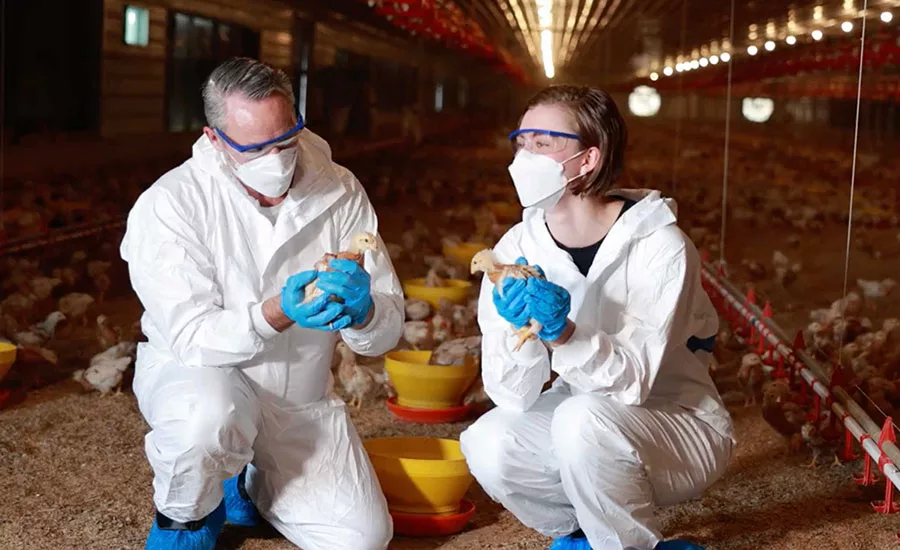
  • people holding baby chicks

    Serovar Differences Matter: Utility of Deep Serotyping in Broiler Production and Processing

    This article discusses the significance of Salmonella in...
    Methods
    By: Nikki Shariat Ph.D.
  • woman washing hands

    Building a Culture of Hygiene in the Food Processing Plant

    Everyone entering a food processing facility needs to...
    Training
    By: Richard F. Stier, M.S.
  • graphical representation of earth over dirt

    Climate Change and Emerging Risks to Food Safety: Building Climate Resilience

    This article examines the multifaceted threats to food...
    Management
    By: Maria Cristina Tirado Ph.D., D.V.M. and Shamini Albert Raj M.A.
Manage My Account
  • Join Food Safety Magazine
  • Manage My Preferences
  • Customer Service

More Videos

Sponsored Content

Sponsored Content is a special paid section where industry companies provide high quality, objective, non-commercial content around topics of interest to the Food Safety Magazine audience. All Sponsored Content is supplied by the advertising company and any opinions expressed in this article are those of the author and not necessarily reflect the views of Food Safety Magazine or its parent company, BNP Media. Interested in participating in our Sponsored Content section? Contact your local rep!

close
  • pre-packaged salads, noodles, and prepared meals stocked on multi-tier grocery store refrigerator shelves
    Sponsored byCorbion

    How Many Days of Shelf Life Are You Leaving on the Table?

  • Top view portrait of two factory workers standing by conveyor belt during quality inspection at food production, copy space
    Sponsored byFlexXray

    Foreign Material By the Numbers: What the 2026 Benchmark Report Reveals

  • a conveyorized industrial metal detector system that appears to resemble a Loma Systems IQ4 Metal Detector setup with an integrated conveyor belt and control panel for food or package inspection.
    Sponsored byMettler Toledo

    Beyond Detection: How to Avoid Physical Contamination in Food Through a Smarter Inspection Strategy

Popular Stories

Heidi Overton

White House Pulls Dr. Heidi Overton as Nominee for FDA Commissioner

scoop of infant formula and bottle

Codex Committee on Food Hygiene Green-Lights New Work on Infant Formula Standards at 56th Session

AI on a smartphone

How FDA’s Human Foods Program Is Using AI to Support Food Safety Oversight

AI and Advanced Analytics ebook

Events

December 2, 2026

Beyond Surface Clean: Tackling Biofilms and Persistent Pathogens

Live: December 2, 2026 at 11:00 am EST: Attend this webinar to understand why chlorine dioxide is not chlorine, and what “ultra-pure” means for residues, byproducts, and effectiveness.

December 3, 2026

How to Use AI to Improve Workforce Training

Live: December 3, 2026 at 11:00 am EST: This webinar will cover best practices for reviewing, refining, and governing AI-generated training content for accuracy and consistency.

December 8, 2026

Best Practices for Responding to a Foodborne Outbreak Investigation

Live: December 8, 2026 at 2:00 pm EST: Attendees will gain practical insight into the roles and expectations of industry and government during foodborne illness investigations, and how effective collaboration can support timely investigations and the best possible public health outcome.

View All

Products

Global Food Safety Microbial Interventions and Molecular Advancements

Global Food Safety Microbial Interventions and Molecular Advancements

See More Products

Related Articles

  • USDA FSIS logo

    USDA-FSIS Webinars on Generic Label Approval Expansion Final Rule

    See More
  • Regulatory Watch

    USDA final rule amends the handling of California raisins

    See More
  • Regulatory Watch

    Final rule amends national list of allowed, prohibited substances

    See More

Related Products

See More Products
  • food-safety-making.jpg

    Food Safety: Making Foods Safe and Free From Pathogens

  • 1118474600.jpg

    Practical Food Safety: Contemporary Issues and Future Directions

  • 9781138198463.jpg

    Food Safety Management Programs: Applications, Best Practices, and Compliance

See More Products

Events

View AllSubmit An Event
  • March 3, 2026

    FDA/USDA Regulatory Updates: Food Safety Work Plans for 2026

    On Demand: In this high-level, exclusive webinar, FDA Deputy Commissioner for Human Foods Kyle Diamantas and USDA Under Secretary for Food Safety Mindy Brashears, Ph.D. will share their agencies' regulatory priorities and work plans for 2026 and beyond.
View AllSubmit An Event

Related Directories

  • Innovative Waste Recycling

    What sets IWR apart from other waste recycling companies is our deep understanding of the production and operational capabilities and constraints of our customers. We specialize in handling food and organic waste, recognizing the distinct requirements and rules associated with it. Unlike standard solid waste, food and organic waste require a unique approach and expertise.
  • MDB

    MDB is a specialized advisory firm focused on supply chain traceability, transparency, and sustainability for food, CPG, and pharmaceutical organizations. We support clients in navigating evolving regulatory requirements, including FSMA Rule 204, while building capabilities that enhance operational efficiency, risk management, and data-driven decision-making.
  • DNV

    DNV is an independent global expert in assurance and risk management, operating in over 100 countries. Through certification, training, and technical expertise, we support organizations—especially in food and beverage—to manage risk, ensure compliance, strengthen food safety and quality, and drive sustainable, trusted performance across value chains.
×

Never miss the latest news and trends shaping the food safety industry

Newsletters | Website | FSM Features Collection

JOIN TODAY!
  • RESOURCES
    • Advertise
    • Contact Us
    • Directories
    • Store
  • JOIN TODAY
    • Create Account
    • FSM Features Collection
    • Newsletters
    • Customer Service
    • Manage Preferences
  • SERVICES
    • Marketing Services
    • Reprints
    • Market Research
    • List Rental
    • Survey/Respondent Access
  • STAY CONNECTED
    • LinkedIn
    • Facebook
    • Instagram
    • X (Twitter)
    • YouTube
  • PRIVACY
    • PRIVACY POLICY
    • TERMS & CONDITIONS
    • DO NOT SELL MY PERSONAL INFORMATION
    • PRIVACY REQUEST
    • ACCESSIBILITY

Copyright ©2026. All Rights Reserved BNP Media, Inc. and BNP Media II, LLC.

Design, CMS, Hosting & Web Development :: ePublishing