Food Safety
search
Ask Food Safety AI
cart
facebook twitter linkedin instagram youtube
  • Sign In
  • Create Account
  • Sign Out
  • My Account
Food Safety
  • NEWS
    • Latest News
    • White Papers
  • PRODUCTS
  • TOPICS
    • Contamination Control
    • Food Types
    • Management
    • Process Control
    • Regulatory
    • Sanitation
    • Supply Chain
    • Testing and Analysis
  • PODCAST
  • EXCLUSIVES
    • Food Safety Five Newsreel
    • eBooks
    • FSM Distinguished Service Award
    • Interactive Product Spotlights
    • Videos
  • BUYER'S GUIDE
  • MORE
    • NEWSLETTERS >
      • Archive Issues
      • Subscribe to eNews
    • Store
    • Sponsor Insights
    • ASK FSM AI
  • WEBINARS
  • FOOD SAFETY SUMMIT
  • EMAG
    • eMagazine
    • Archive Issues
    • Editorial Advisory Board
    • Contact
    • Advertise
  • SIGN UP!

The state of food safety 2020: making sense of the chaos

By Andrew Lorenz
petri dish
October 12, 2020

COVID-19 has been brutal on the industry. We have seen major producers temporarily shut down, entire segments put out of business, regional disruptions and politicians getting involved in the manufacture and distribution of meat and poultry. I am not telling you anything you don’t know; we have all lived it.

There have been some silver linings, though. By implementing virus controls to protect our employees, we have also inadvertently implemented controls that have a positive impact on the control of norovirus, hepatitis A, etc. And our small producers were able to dramatically increase production and harvest volumes to help offset larger production shortages. While most were regional, the impact of small to midsize operators was greatest. A 20-person shop in a town of 30,000 operating as the sole supplier of ground beef became a pretty amazing place to be.

State of the Industry 2020

Overview
Beef (NCBA)
Beef (FQF)
Pork *going live Oct. 12
Chicken
Turkey *going live Oct. 8
Veal *going live Oct. 9
Lamb *going live Oct. 14
Seafood *going live Oct. 15
Food Safety *going live Oct. 8
Workforce *going live Oct. 16
Sustainability *going live Oct. 19
Packaging *going live Oct. 20

Watch the 2020 State of the Industry Webinar
Register for free today!

On the downside, we have lost friends and colleagues and seen our industry get a black eye.


Regulatory science

While dealing with COVID-19, we have also seen the U.S. Department of Agriculture (USDA) pushing the expectations of what we maintain for science. In public meetings, USDA officials have admitted they don’t have the hard science they need and have asked industry to provide it. The real issue is they haven’t stopped putting out policy and other regulatory findings that, in many cases, directly contradict how we produce food.

We are seeing this in USDA Farm Service Agency (FSA) findings, mainly pointed at smaller facilities, which seem to want wholesale changes in production. An example is statements on heat-resistant Salmonella. There is science that discusses two ways bacteria become heat resistant: by producing additional proteins when the cell detects increased heat, or by reducing internal moisture content to reduce the volume inside the cell to help proteins maintain their shape. USDA Food Safety and Inspection Service (FSIS) policy fails to address this and instead focuses on the hypothesis that by using standard manufacturing processes we are producing adulterated food.  

Fortunately, companies and universities are working to demonstrate through science that we are in fact producing safe meat and poultry products. The studies referenced by FSIS fail to identify a true issue. As an example, we recently read an FSA report that asserted bacon was dangerous because it used the Appendix B cooling parameters for cured product. This was the 1999 version. A quick review of CDC foodborne outbreaks shows three instances of bacon being a vector — all were norovirus and the contamination was at a restaurant. Yet FSIS policy insists on in-house micro studies to validate that the procedure used for years in the industry will produce a safe product.


GFSI

We saw a nearly complete suspension of audits in some regions. In others, it appeared as if there were more availability. One thing that auditors are keying in on is how you are handling COVID-19 controls in your plant. While it isn’t a food-safety issue we typically see, the food-safety teams have to take the lead in vetting and assuring compliance with controls. There are a lot of recommendations out there. The key is getting the right controls for your facilities in place and routinely ensuring they are properly implemented.

Looking for quick answers on food safety topics?
Try Ask FSM, our new smart AI search tool.
Ask FSM →


Pulling it together

I must admit to being somewhat amazed at how well the industry has endured the chaos wrought by COVID-19 and kept a focus on food safety. The production ramp-ups, shut-downs, sudden loss of key employees, etc. all put an enormous strain on the industry as a whole and FS&Q teams in particular. Yet we managed to dramatically increase production to meet a sudden need and meet it safely.

We have seen innovative products such as Biomist and other alcohol vapor systems become very popular as well as increased scrutiny over basic sanitation such as hand-washing. As an industry, we responded rapidly when suddenly no one could go to a restaurant, schools were closed and parents had to suddenly feed kids (and themselves) at home. The product mix needed by the American consumer changed overnight, and the industry with cooperation of FSIS made it happen.


Crystal ball

Going forward, one big change we all must face is employee training. Bringing people together just isn’t feasible for the foreseeable future. While there are digital platforms available for training, they leave a lot to be desired. The different trade associations have done a good job of putting together digital training for their members, yet it isn’t enough. We need a standardized online food-safety training system that is universally recognized.

It is also an election year, which makes predictions a murky business. Democratic presidential candidate Joe Biden has called for more regulatory oversight of food facilities. The current administration has taken a much more balanced approach. The leadership team at FSIS has been very responsive to the industry needs. Yes, we will be arguing about science; however, they have managed to listen and work with industry when we had to suddenly shift priorities.


Closing thoughts

I am proud to be working in an industry that stepped up to the challenges of 2020. I believe we all learned a lot. Specifically, we can’t count on the government to give us the answers we need in a crisis. Our small and medium-sized processors have seen a dramatic jump in volume, and our large processors have been able to spin product mixes at an astounding pace to keep up with consumer demand.

The coming science discussions — be they about thermal lethality, antimicrobial interventions or some other issue — just cannot be left up to the government. We are the industry that feeds America and we must take the lead. We have the knowledge and technology. Now we need to leverage it so the rules and regulations of the future make sense. NP


This article was originally posted on www.provisioneronline.com.
KEYWORDS: coronavirus and food safety Meat/Poultry state of the industry

Share This Story

Andrewlorenz

Andrew Lorenz is president of We R Food Safety! For more information, email him at andrew@werfoodsafety.com.

Recommended Content

JOIN TODAY
to unlock your recommendations.

Already have an account? Sign In

  • people holding baby chicks

    Serovar Differences Matter: Utility of Deep Serotyping in Broiler Production and Processing

    This article discusses the significance of Salmonella in...
    Testing & Analysis
    By: Nikki Shariat Ph.D.
  • woman washing hands

    Building a Culture of Hygiene in the Food Processing Plant

    Everyone entering a food processing facility needs to...
    Training
    By: Richard F. Stier, M.S.
  • graphical representation of earth over dirt

    Climate Change and Emerging Risks to Food Safety: Building Climate Resilience

    This article examines the multifaceted threats to food...
    Management
    By: Maria Cristina Tirado Ph.D., D.V.M. and Shamini Albert Raj M.A.
Manage My Account
  • eMagazine Subscription
  • Subscribe to Newsletters
  • Manage My Preferences
  • Website Registration
  • Subscription Customer Service

More Videos

Sponsored Content

Sponsored Content is a special paid section where industry companies provide high quality, objective, non-commercial content around topics of interest to the Food Safety Magazine audience. All Sponsored Content is supplied by the advertising company and any opinions expressed in this article are those of the author and not necessarily reflect the views of Food Safety Magazine or its parent company, BNP Media. Interested in participating in our Sponsored Content section? Contact your local rep!

close
  • NEVIFIT 3 Compartment BPA-FREE
    Sponsored byCorbion

    The Risks of Ready-to-Eat: Five Ways to Protect Today's Prepared Meals

  • a group of workers in a food production facility
    Sponsored bySkillUp by Registrar Corp

    How to Build a Better Training Program: Data and Insights from the Global Food Safety Training Survey

  • the use of dual-energy X-ray food inspection technology to identify foreign contaminants.
    Sponsored byEagle by METTLER TOLEDO

    Precision Inspection Starts with the Right X-ray Detector

Popular Stories

green powder/moringa in wooden mortar

FDA Opens Third Salmonella–Moringa Outbreak Investigation of the Year

fermented meat

Study is First to Analyze Trends in Foodborne Illness Outbreaks Linked to Non-Dairy Fermented Products

lab scientist investigating a strawberry

FDA Modernizes Oversight of Pesticides in Food

a practical guide to spoilage investigation webinar

Events

June 10, 2026

A Practical Guide to Spoilage Investigation and Prevention

Live: June 10, 2026 at 11:00 am EDT: Join this webinar to learn how to identify spoilage root causes, reduce risk, and apply data-driven strategies for prevention.

June 16, 2026

Sustainable Food Contact Materials: Where Regulation Meets Analytical Testing

Live: June 16, 2026 at 11:00 am EDT: This webinar explores how sustainability regulations are changing food contact material requirements, including packaging compliance, unintended substances, and per- and polyfluoroalkyl substances.

June 17, 2026

Living HACCP: Practical Steps for Implementation

Live: June 17, 2026, at 12:00 pm EDT: From this webinar, attendees will understand how social norms shape the way hazards are understood, how decisions are made, and how well risks are understood and acted on across companies.

View All

Products

Global Food Safety Microbial Interventions and Molecular Advancements

Global Food Safety Microbial Interventions and Molecular Advancements

See More Products

Related Articles

  • The State of Food Safety: Regulation, Collaboration and the Advancement of a Globally Safe Food Supply

    See More
  • chinese flag

    The State of Food Safety in China

    See More
  • Bucking Bronco Image Representing the Wild Ride of the Food Safety Industry

    State of Food Safety 2017: Another wild ride

    See More

Related Products

See More Products
  • 1444333348.jpg

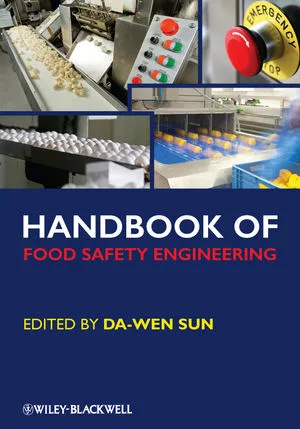
    Handbook of Food Safety Engineering

  • 9781498721776.jpg

    Handbook of Food Processing: Food Safety, Quality, and Manufacturing Processes

  • 1119053595.jpg

    Food Safety for the 21st Century: Managing HACCP and Food Safety throughout the Global Supply Chain, 2E

See More Products

Related Directories

  • Saldesia "Goddess of Food Safety"

    Saldesia is a distributor of Food Safety products and solutions. We are focused on supplying the Quality, Production, Safety and Sanitation departments. Product lines include Color Coded, Metal Detectable, Antimicrobial Flooring & Mats, Workwear, Footwear, Spray Nozzles, and more!
  • Michigan State University Online Food Safety Program

    MSU's Online Food Safety program strives to educate professionals on how to make global food systems safe. The program consists of a master’s degree and graduate certificate, both entirely online. Each program will provide students with applicable knowledge to navigate the ever-changing concerns surrounding food safety, food protection, and public health.
  • Institute of Food Technologists

    Since 1939, the Institute of Food Technologists (IFT) has served as the voice of the global food science community. IFT advocates for science, technology, and research to address the world’s greatest food challenges, guiding our community of more than 200,000. IFT convenes professionals from around the world – from producers and product developers to innovators and researchers across food, nutrition, and public health – with a shared mission to help create a global food supply that is sustainable, safe, nutritious, and accessible to all. IFT provides its growing community spanning academia, industry, and government with the resources, connections, and opportunities necessary to stay ahead of a rapidly evolving food system as IFT helps feed the minds that feed the world. For more information, please visit ift.org.
×

Never miss the latest news and trends driving the food safety industry

Newsletters | Website | eMagazine

JOIN TODAY!
  • RESOURCES
    • Advertise
    • Contact Us
    • Directories
    • Store
    • Want More
  • SIGN UP TODAY
    • Create Account
    • eMagazine
    • Newsletters
    • Customer Service
    • Manage Preferences
  • SERVICES
    • Marketing Services
    • Reprints
    • Market Research
    • List Rental
    • Survey/Respondent Access
  • STAY CONNECTED
    • LinkedIn
    • Facebook
    • Instagram
    • X (Twitter)
  • PRIVACY
    • PRIVACY POLICY
    • TERMS & CONDITIONS
    • DO NOT SELL MY PERSONAL INFORMATION
    • PRIVACY REQUEST
    • ACCESSIBILITY

Copyright ©2026. All Rights Reserved BNP Media, Inc. and BNP Media II, LLC.

Design, CMS, Hosting & Web Development :: ePublishing