EU-Funded Project to Develop Novel Technologies for Continuous Microbial Monitoring in Poultry Supply Chain
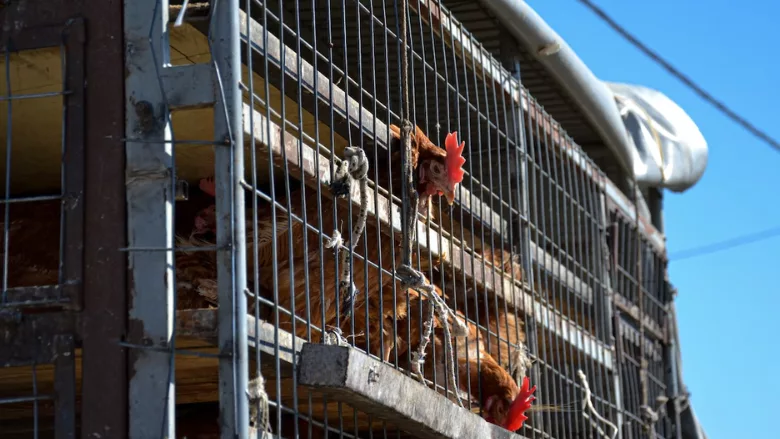
A European research project is developing photonic sensing technologies combined with artificial intelligence (AI) to detect food safety, quality, and animal welfare issues across the poultry supply chain in real time.
The Sensor4Food project will develop five photonic sensing technologies intended to identify contamination, disease, and quality issues at critical points in poultry production. Researchers will also investigate whether data collected throughout the supply chain could support a digital identification system, described by the project as a “poultry passport,” linking information about poultry production, transport, welfare, and processing.
Supported by a €6.98 million Horizon Europe Innovation Action grant, Sensor4Food is coordinated by Turku University of Applied Sciences in Finland and will run through February 2030. The consortium includes 21 organizations across Europe, including research institutions, subject matter experts, industry partners, and the Association of Poultry Processors and Poultry Trade in the EU Countries (AVEC).
Particular Focus on Campylobacter
The project is partly focused on improving the detection of Campylobacter, the most frequently reported foodborne illness in the EU. The European Food Safety Authority (EFSA) has estimated that approximately 9 million cases of human campylobacteriosis occur annually in the EU, and that chickens and chicken meat may directly account for 20–30 percent of cases.
Continuous, Real-Time Monitoring
“Europe’s poultry system moves at extraordinary speed, processing up to 20,000 chickens per facility per day, yet our safety checks still rely on lagging, analogue methods,” said David Oliva, Ph.D., Head of Cognitive Technologies at Turku University of Applied Sciences and principal investigator of Sensor4Food. “Taking a handful of random samples from a truck and waiting a day for a lab report creates a significant blind spot. Our ambition is to replace some of those blind spots with much more comprehensive, real-time information.”
For example, at one poultry producer involved in the project, animal feed is currently checked by collecting samples at selected points from each truckload and sending them for laboratory analysis, with results taking approximately one day. Sensor4Food researchers will investigate whether photonic sensing could instead continuously analyze feed as a truck is unloaded, potentially enabling monitoring of nearly the entire load rather than relying on random samples.
Photonic Technologies for Poultry Food Safety and Quality
Sensor4Food will scale five photonic technologies from laboratory validation, or Technology Readiness Level (TRL) 4, to live industrial deployment, or TRL 7. The technologies include mid-infrared sensing, silicon-photonics biosensing, hyperspectral imaging, radio-frequency sensing, and ultrasound.
Looking for quick answers on food safety topics?
Try Ask FSM, our new smart AI search tool.
Ask FSM →
An AI system will combine information from the photonic technologies with real-time data on environmental conditions, acoustics, transportation, and volatile organic compounds (VOCs).
“Photonics allows us to see what conventional inspection methods cannot,” Dr. Oliva explained. “By analyzing how light interacts with biological materials, we can identify risks earlier and with greater precision, without slowing food production."
Investigating Links Between Poultry Welfare and Meat Quality
In addition to food safety applications, Sensor4Food researchers will investigate whether data collected across the poultry production chain can provide information about animal welfare.
The researchers will combine information about environmental and transportation conditions with photonic analysis of poultry meat to explore whether measurable quality issues can be associated with conditions experienced by birds during growth and transportation. The project aims to identify patterns that could help poultry producers improve animal welfare and meat quality.
Proposed Digital “Poultry Passport” for Traceability
Sensor4Food will also investigate whether data generated throughout the poultry supply chain could eventually be consolidated into a digital “poultry passport.”
The proposed system would link information about where birds were raised, feed quality, environmental conditions, transportation, animal welfare, and processing into a continuous record. Researchers will explore the extent to which this traceability could be applied, potentially reaching the level of individual birds or poultry products.
The digital passport remains a research concept, and the project will investigate its feasibility as Sensor4Food progresses.
Photonic Sensing Could Support Food Waste Reduction
Researchers will also examine applications of photonics for reducing food waste. In Norway, mid-infrared sensing will be used to assess the quality of proteins recovered from poultry side streams. The project will investigate whether this approach could support the use of lower-value processing byproducts as higher-value ingredients.