Live From IAFP with USDA Leaders—New Strategies for Salmonella, AI, and Inspection Tech
.webp?t=1691503719)
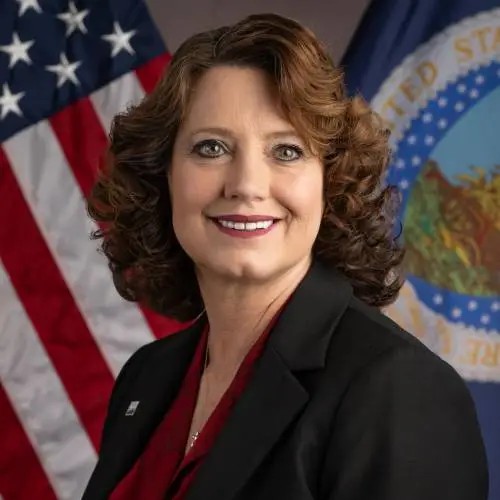
Mindy Brashears, Ph.D. is the USDA's Under Secretary for Food Safety. Dr. Brashears previously served as Under Secretary for Food Safety from 2020–2021, and Deputy Under Secretary in 2019. Dr. Brashears returns to USDA from Texas Tech University, where she was a Paul Whitfield Horn Distinguished Professor of Food Safety and Public Health, the Roth and Letch Family Endowed Chair for Food Safety, and the Director of the International Center for Food Industry Excellence.
Dr. Brashears' research program has advanced food safety in meat and poultry production, with a focus on public health. Her work evaluated interventions in pre- and post-harvest environments and antimicrobial drug resistance in animal feeding systems. She has led international research teams across the globe to enhance food safety, security, and sustainable agriculture systems. Her research has resulted in more than 20 patents and patents pending for innovations in food safety.
Beyond academia, Dr. Brashears has held leadership roles on boards and advisory committees, including the American Meat Science Association, the Development Council, the International Stockman's Educational Foundation, and the Protein Pact. She was a founding member of the SAFE Think Tank and has chaired the National Alliance for Food Safety and Security and the USDA's multi-state research group. Her contributions have earned national and international recognition, including induction into the Meat Industry Hall of Fame, Fellow status in the American Meat Science Association (AMSA) and the National Academy of Inventors, and numerous awards from leading associations.
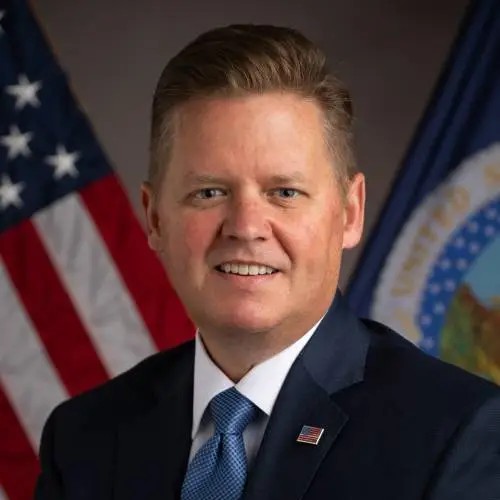
Justin Ransom, Ph.D. is Administrator of USDA's Food Safety and Inspection Service (FSIS), where he oversees FSIS' mission to ensure the safety, wholesomeness, and proper labeling of America's commercial supply of meat, poultry, and processed egg products. He leads the agency's modernization efforts, streamlining inspection systems, strengthening public health protections, and advancing science-based policies.
Dr. Ransom brings more than 20 years of executive leadership in food safety, quality systems, animal welfare and sustainability. Immediately prior to his appointment, he served as senior director of sustainable food strategy at Tyson Foods, where he spearheaded enterprise-wide sustainability programs. His diverse industry experience also includes roles at McDonald's and OSI Group, where he managed and advanced complex food supply chains across global markets.
With roots in production agriculture, Dr. Ransom has worked as a scientist, livestock breeder, and global supply chain leader, deepening his first-hand knowledge of end-to-end food system management. He began his public service career at USDA's Agricultural Marketing Service, contributing to the development of technical standards for the National School Lunch Program, instrument grading systems, and international trade facilitation.
Dr. Ransom holds a B.S. degree in Agricultural Communications from Texas Tech University and earned an M.S. degree and a Ph.D. in Animal Science from Michigan State University and Colorado State University, respectively.
Looking for quick answers on food safety topics?
Try Ask FSM, our new smart AI search tool.
Ask FSM →
Follow this link to subscribe on your favorite podcast player
In this episode of Food Safety Matters, we speak with Dr. Brashears [4:35] about:
- USDA-FSIS' in-progress plans for its Salmonella SAFE Strategy, encompassing a new Salmonella Gold Standard
- The data FSIS will be gathering across all poultry facilities and at individual establishments producing higher-risk products
- How the new data-gathering initiatives will help FSIS spot trends sooner and take faster action to address food safety issues
- FSIS' updated approach to Listeria compliance, and how it plans to address the overreliance among small establishments on compliance method Alternative 3
- FSIS' creation of a new Office of Food Safety Scientific Panel, and the areas of FSIS work in which this scientific expertise will be utilized
We also speak with Dr. Ransom [20:11] about:
- How USDA-FSIS is shifting from examining individual inspection findings to analyzing connected datasets, and how this will optimize FSIS inspection work
- FSIS' use of AI and large language models to help identify food safety risks, and the safeguards FSIS is putting in place to ensure the scientific accuracy and transparency of these tools.
- How video-enabled glasses and AI-assisted imaging could change how inspections are conducted in the field.
- How FSIS is preparing inspectors and veterinarians to work alongside new data and AI-enabled tools.
- The importance of retaining human judgment in food safety oversight as these emerging technologies are rolled out across FSIS departments.
Resources
We Want to Hear from You!
Please send us your questions and suggestions to podcast@food-safety.com






.webp?height=200&t=1691503719&width=200 "FoodSafetyMattersFinal-900x550-(002).jpg")