BIZTRACKS
Brevel, Coffeesai Explore Illuminated Fermentation for Coffee Cell Culture Production
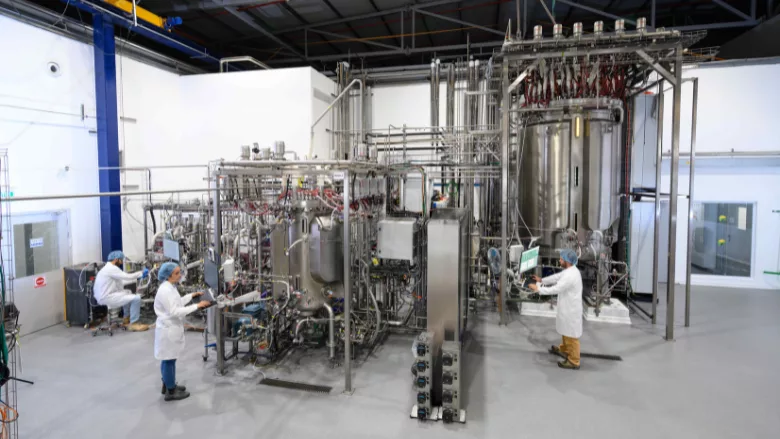
Brevel Ltd. and Coffeesai are collaborating to evaluate whether illuminated fermentation can support the scale-up of coffee cell cultures and improve production efficiency.
According to Brevel, the project is intended to validate the company's illuminated fermentation platform for plant cell culture applications and assess its ability to support commercial-scale production. Brevel also said the Israel Innovation Authority awarded the company approximately $1 million to expand the platform into plant cell culture and related industries.
Evaluating Illuminated Fermentation for Coffee Cell Cultures
Plant cell culture involves growing plant cells in controlled environments rather than through conventional agricultural production. Proponents of the technology say it can reduce dependence on environmental conditions such as weather, seasonal variability, water availability, and arable land.
As part of the collaboration, Brevel and Coffeesai are assessing the effects of controlled light exposure during fermentation on the growth and characteristics of coffee cell cultures. According to the companies, the approach combines fermentation with light exposure in a closed system to influence cellular activity and metabolite production.
Traditional coffee production, particularly for Arabica varieties, is vulnerable to temperature fluctuations and other climate-related pressures. The companies said coffee cell culture may offer an alternative production pathway that is less dependent on agricultural growing conditions.
"Our work in coffee cell cultures serves as a case study for the capabilities of our illuminated fermentation infrastructure," said Yonatan Golan, CEO and Co-Founder of Brevel. "Our recent work has demonstrated the platform's ability to achieve high cell densities while sustaining continuous growth through an advanced semi-continuous cultivation process, paving the way for scalable and efficient production."
Coffeesai is evaluating the technology's potential effects on product characteristics and future production strategies.
Looking for quick answers on food safety topics?
Try Ask FSM, our new smart AI search tool.
Ask FSM →
According to Brevel, preliminary trials examined whether specific light profiles could influence the production of compounds associated with flavor and aroma. The company said successful trials achieved stable, high-density cultivation while demonstrating measurable changes in biomass characteristics associated with light exposure.
Expansion Into Plant Cell Culture Applications
Brevel said the Israel Innovation Authority's funding is intended to support the expansion of its illuminated fermentation platform into plant cell culture and related sectors.
In addition to its collaboration with Coffeesai, Brevel said it has partnered with U.S.-based plant cell technology company Ayana Bio and a cocoa cell-culture startup to evaluate additional applications for the technology.
Platform and Scaling
According to Brevel, its illuminated fermentation platform integrates controlled light exposure into commercial-scale fermentation systems. The company said the technology is designed to support organisms and plant cells that rely on light-responsive metabolic pathways.
Brevel said the approach may address limitations associated with conventional dark fermentation by applying controlled light conditions intended to stimulate the production of compounds such as phenolic compounds and other bioactive metabolites.
The company described a three-stage commercialization model. The first stage focuses on proof-of-concept and feasibility projects. The second stage involves pilot-scale production at Brevel's manufacturing facility, which operates illuminated fermenters at 50-liter, 500-liter, and 5,000-liter scales and maintains FSSC 22000 and Hazards Analysis and Critical Control Points (HACCP) certifications. The final stage involves commercial-scale production through Brevel-operated manufacturing, joint ventures, or other production partnerships.