EU Proposes Food Safety Legislation Simplification Package
The European Commission has proposed a package of measures designed to streamline and simplify EU food and feed safety legislation without compromising public health and environmental protections.
The proposed Food and Feed Safety Simplification Package targets overlapping and disproportionate rules that burden agri-food businesses and national authorities. By cutting away "red tape," the Commission estimates annual savings of €1 billion in compliance costs, including €428 million for EU businesses and €661 million for national administrations. Combined administrative savings for both sectors could reach €939 million annually.
The legislative proposal now heads to the European Parliament and Council for review and adoption.
Key Measures in the Proposal
The package introduces practical changes across multiple regulatory areas, including plant protection, feed additives, official controls, and animal health. Highlights include:
- Accelerated market access for bio-pesticides, giving farmers a broader, more sustainable crop protection toolbox
- Targeted, faster renewal procedures for pesticides, biocides, and feed additives
- Digital labeling options for feed additives
- Streamlined measures to facilitate market access for fermentation products, including those produced with genetically modified microorganisms.
- Simplified accreditation rules for official laboratories
- Pragmatic border controls for plant products, specifically, allowing consignments of plants and plant products to be partially cleared at the border, so that the compliant part could be put on the market while controls continue on the rest
- Science-based adjustments to bovine spongiform encephalopathy (BSE) surveillance and risk mitigation requirements
- Stronger import standards for pesticide residues to ensure a level playing field for EU producers.
Driving Competitiveness and Sustainability
The changes are designed to benefit farmers, who will gain quicker access to innovative inputs and environmentally friendly plant protection products. The proposal also aligns with the Vision for Agriculture and Food, released in February 2025, which emphasizes resilience and competitiveness in the EU agri-food sector.
The simplification package is part of the European Commission’s broader effort to reduce administrative burdens by at least 25 percent (and by 35 percent for small- and medium-sized enterprises).
What the Simplification Package Says About Pesticides, Bio-Pesticides, and Biocides
According to the European Commission, regarding pesticides, the simplification package would:
- Remove the requirement for the systematic renewal of many active substance approvals based on time (excluding the most hazardous), with renewals and targeted reassessments carried out on substances when there are scientific reasons to do so
- Encourage uptake and development of more sustainable pesticides by establishing a simpler procedure to identify low-risk active substances
- Enable farmers to have a wider choice for plant protection products with simpler procedures for basic substances (e.g., vinegar, mustard seed powder, baking powder) for plant protection and accelerating the authorization of products containing substances targeting particularly damaging pests
- Provide technical and scientific support from the European Food Safety Authority (EFSA) to the Member State leading a risk assessment, to reduce delays and provide clarity on necessary risk management options
- Facilitate the authorization of low-risk pesticides in multiple Member States to create more equal availability of such products for farmers
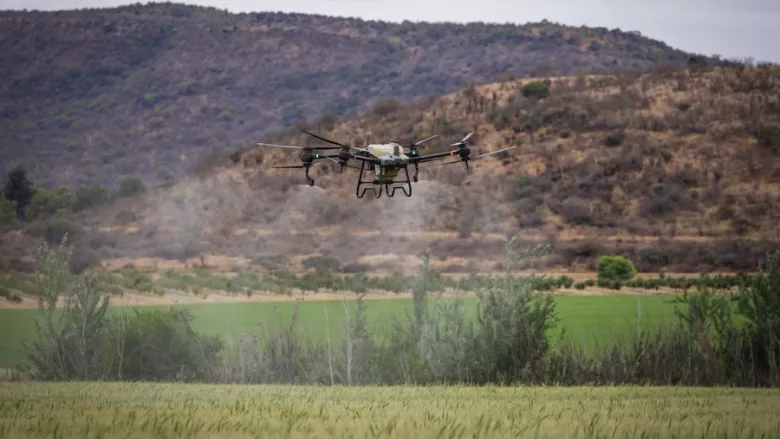
- Define how the European Commission will identify certain types of drones for spraying pesticides, with potential to lower the exposure of humans and the environment to pesticides compared to land-based spraying.
Regarding bio-pesticides, which the European Commission says are “less toxic than synthetic chemical pesticides,” the proposal would set an EU-wide definition of biocontrol active substance and create a process to accelerate their assessment and authorization, including:
- A requirement on Member States to prioritize applications for these products and the possibility to grant provisional authorizations while assessment procedures are ongoing
- Reinforced mutual recognition provisions and an option to choose EFSA for the initial safety assessment of an active substance, rather than a Member State.
For biocidal products, the simplification package proposes to replace the systematic review of all active ingredients that are already approved with a more efficient system to free up resources. This change is intended to help finalize the remaining first assessments of existing active substances and reduce costs for companies.
Pushback Against Pesticides Deregulation
Environmental protection groups have expressed concern about the simplification package’s proposed changes to pesticide and biocide rules. The Health and Environment Alliance (HEAL) specifically questioned the plan’s intent to grant “unlimited approvals to the majority of active substances in pesticides and biocides, severely limit the ability of member states to take the latest independent science into account when evaluating pesticide products, and enable an increase in the amount of time these substances are allowed to be in use even after a decision is made to phase them out due to health concerns.”
“Instead of strengthening protection, the EU Commission’s plan to roll back the current regular review of authorizations would amount to a free pass for most substances, without assessing the impacts on people's health,” said Genon K. Jensen, Executive Director of HEAL. The group asserts that any costs saved by implementing the proposed measures would be offset by health costs attributable to pesticides, estimated to be €2.3 billion annually in the EU.
Looking for quick answers on food safety topics?
Try Ask FSM, our new smart AI search tool.
Ask FSM →