Food Safety
search
Ask Food Safety AI
cart
facebook twitter linkedin
  • Sign In
  • Create Account
  • Sign Out
  • My Account
Food Safety
  • NEWS
    • Latest News
    • White Papers
  • PRODUCTS
  • TOPICS
    • Contamination Control
    • Food Types
    • Management
    • Process Control
    • Regulatory
    • Sanitation
    • Supply Chain
    • Testing and Analysis
  • PODCAST
  • EXCLUSIVES
    • Food Safety Five Newsreel
    • eBooks
    • FSM Distinguished Service Award
    • Interactive Product Spotlights
    • Videos
  • BUYER'S GUIDE
  • MORE
    • ENEWSLETTER >
      • Archive Issues
      • Subscribe to eNews
    • Store
    • Sponsor Insights
    • ASK FSM AI
  • WEBINARS
  • FOOD SAFETY SUMMIT
  • EMAG
    • eMagazine
    • Archive Issues
    • Editorial Advisory Board
    • Contact
    • Advertise
  • SIGN UP!
NewsContamination ControlProcess ControlRegulatoryChemicalPackaging

Illinois Becomes Fourth State to Set Baby Food Testing Requirements for Toxic Heavy Metals

By Bailee Henderson
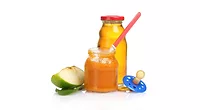
jarred baby foods and baby toys
Image credit: Freepik
September 16, 2025

Illinois is the latest state to enact legislation requiring baby food manufacturers to test their products for toxic heavy metals and make the results publicly available for consumers to view.

A similar law—the first of its kind—has already come into force in California.

Maryland (Rudy’s Law) and Virginia (the Baby Food Protection Act) have also passed legislation akin to California and Illinois’ baby food testing laws, which become effective in January 2026.

Illinois’ New Toxic Elements Testing and Disclosure Requirements for Baby Food Manufacturers 

The recently passed Illinois Senate Bill (SB) 0073—now Public Act 104-0345—amends the Illinois Food, Drug, and Cosmetic Act by adding a section on baby foods and toxic elements.

The amendment defines “baby food” as any food packaged in a jar, pouch, tub, or box sold specifically for babies and children under the age of two years old. It does not include infant formula.

Under the new regulation, producers that manufacture or sell baby food in Illinois will be required to test a “representative sample of each production aggregate of the manufacturer's final baby food product” for lead, mercury, cadmium, and arsenic (toxic elements) at a proficient laboratory. The required testing must be conducted at least once per month.

Test results must be provided to the Illinois Department of Public Health upon request.

Looking for quick answers on food safety topics?
Try Ask FSM, our new smart AI search tool.
Ask FSM →

Beginning January 1, 2027, test results for final baby food products must also be made publicly available on the manufacturer's website for a month longer than the duration of the product shelf life. Reports must include the name and level of each toxic element present in each production aggregate of a final baby food product, as well as descriptive information, including, but not limited to, the product's name, UPC, size, lot numbers, or batch numbers, to enable accurate identification of the final baby food product by consumers.

Moreover, for products tested for any toxic elements that are subject to an action level, regulatory limit, or tolerance established by the U.S. Food and Drug Administration (FDA), the manufacturer must also include a QR code next to a statement that reads, “For information about the toxic element testing on this product, scan the Quick Response (QR) Code.” The QR code must lead consumers to the test results for the toxic element(s), as well as FDA’s webpage(s) containing the most recent guidance and information about the health effects of the toxic element(s) on children.

FDA Action Levels for Toxic Elements in Baby Foods

At present, no explicit, legally enforceable limits for toxic heavy metals in food exist in the U.S. However, FDA has set an action level of 10 parts per billion (ppb) for inorganic arsenic in apple juice, as well as the following action levels for lead in packaged, processed foods that are marketed for babies and young children less than two years of age:

  • 10 parts per billion (ppb) for fruits, vegetables (excluding single-ingredient root vegetables), mixtures (including grain- and meat-based mixtures), yogurts, custards/puddings, and single-ingredient meats
  • 20 ppb for single-ingredient root vegetables
  • 20 ppb for dry infant cereals.

The action levels for lead may include ready-to-eat (RTE) foods such as purees, as well as semi-prepared foods such as dry infant cereals.

FDA has proposed or is considering other action levels for lead, arsenic, cadmium, and mercury for foods intended for babies and young children, but these levels have yet to be finalized.

Action levels are one regulatory tool FDA uses to help lower levels of contaminants in foods when a certain level of a contaminant is unavoidable. Action levels are not intended to set the lowest levels for industry to achieve, but are meant to cause manufacturers to implement agricultural and processing measures to lower lead levels in food products. Although not binding, FDA can reference action levels when considering whether to bring enforcement action in a particular case, such as when the levels of a toxic element in a food are unsafe.


KEYWORDS: arsenic baby food cadmium Illinois lead legislation mercury toxic heavy metals

Share This Story

Baileehendersonmay23

Bailee Henderson is the Digital Editor of Food Safety Magazine. She can be reached at hendersonb@bnpmedia.com.

Recommended Content

JOIN TODAY
to unlock your recommendations.

Already have an account? Sign In

  • people holding baby chicks

    Serovar Differences Matter: Utility of Deep Serotyping in Broiler Production and Processing

    This article discusses the significance of Salmonella in...
    Contamination Control
    By: Nikki Shariat Ph.D.
  • woman washing hands

    Building a Culture of Hygiene in the Food Processing Plant

    Everyone entering a food processing facility needs to...
    Personal Hygiene/Handwashing
    By: Richard F. Stier, M.S.
  • graphical representation of earth over dirt

    Climate Change and Emerging Risks to Food Safety: Building Climate Resilience

    This article examines the multifaceted threats to food...
    Best Practices
    By: Maria Cristina Tirado Ph.D., D.V.M. and Shamini Albert Raj M.A.
Manage My Account
  • eMagazine Subscription
  • Subscribe to eNewsletter
  • Manage My Preferences
  • Website Registration
  • Subscription Customer Service

More Videos

Sponsored Content

Sponsored Content is a special paid section where industry companies provide high quality, objective, non-commercial content around topics of interest to the Food Safety Magazine audience. All Sponsored Content is supplied by the advertising company and any opinions expressed in this article are those of the author and not necessarily reflect the views of Food Safety Magazine or its parent company, BNP Media. Interested in participating in our Sponsored Content section? Contact your local rep!

close
  • Salmonella bacteria
    Sponsored byThermoFisher

    Food Microbiology Testing Methods: Salmonella species

  • a diagram explaining indicator organisms
    Sponsored byHygiena

    How Proactive Listeria Testing Helps Prevent Six- and Seven-Figure Recalls

  • woman grocery shopping
    Sponsored byCorbion

    Designing Safety Into Every Bite: Proactive Risk Mitigation for Refrigerated Foods

Popular Stories

NRTE breaded stuffed chicken

USDA Indefinitely Delays Enforcement of Salmonella as Adulterant in Raw Breaded, Stuffed Chicken

non-conforming product

How to Handle Non-Conforming Product

spoonfuls of food ingredients

FDA’s Developing Rule to Tighten GRAS Oversight Moves to White House

Events

December 11, 2025

How to Develop and Implement an Effective Food Defense Strategy

Live: December 11, 2025 at 2:00 pm EDT: From this webinar, attendees will learn common areas where companies encounter challenges in their food defense strategies and how to address them.

May 11, 2026

The Food Safety Summit

Stay informed on the latest food safety trends, innovations, emerging challenges, and expert analysis. Leave the Summit with actionable insights ready to drive measurable improvements in your organization. Do not miss this opportunity to learn from experts about contamination control, food safety culture, regulations, sanitation, supply chain traceability, and so much more.

View All

Products

Global Food Safety Microbial Interventions and Molecular Advancements

Global Food Safety Microbial Interventions and Molecular Advancements

See More Products

Related Articles

  • applesauce on a spoon

    Maryland Introduces Bill to Require Toxic Heavy Metals Testing for Baby Foods, Disclosure of Results

    See More
  • young baby being fed pureed food

    Baby Food Safety Act Would Give FDA Authority to Limit Toxic Heavy Metals in Food for Children

    See More
  • baby food jar, apple juice, apple slice, binky

    California Passes Law Requiring Tests for Toxic Heavy Metals in Baby Foods, Disclosure of Results

    See More

Related Products

See More Products
  • 1119053595.jpg

    Food Safety for the 21st Century: Managing HACCP and Food Safety throughout the Global Supply Chain, 2E

  • 1118396308.jpg

    High Throughput Analysis for Food Safety

  • 1119160553.jpg

    Food Safety: Innovative Analytical Tools for Safety Assessment

See More Products

Related Directories

  • Gauer Metal Products

    Gauer Metal Products is your dependable specialist in sheet metal fabrication services in the continental USA. Our services include custom carton flow rack solutions for efficient storage, donation bin manufacturing, and professional edgers for metal finishings. With years of experience in metal fabrication, prototyping, and product development, we guarantee excellence in every aspect of our work. Whether you require custom metal fabrication or industrial machinery, our team is ready to meet your requirements. We take pride in our ability to deliver metal fabrication solutions that address the needs of our clients in the metalworking and machining industry.
  • Michigan State University Online Food Safety Program

    MSU's Online Food Safety program strives to educate professionals on how to make global food systems safe. The program consists of a master’s degree and graduate certificate, both entirely online. Each program will provide students with applicable knowledge to navigate the ever-changing concerns surrounding food safety, food protection, and public health.
×

Never miss the latest news and trends driving the food safety industry

eNewsletter | Website | eMagazine

JOIN TODAY!
  • RESOURCES
    • Advertise
    • Contact Us
    • Directories
    • Store
    • Want More
  • SIGN UP TODAY
    • Create Account
    • eMagazine
    • eNewsletter
    • Customer Service
    • Manage Preferences
  • SERVICES
    • Marketing Services
    • Reprints
    • Market Research
    • List Rental
    • Survey/Respondent Access
  • STAY CONNECTED
    • LinkedIn
    • Facebook
    • Instagram
    • X (Twitter)
  • PRIVACY
    • PRIVACY POLICY
    • TERMS & CONDITIONS
    • DO NOT SELL MY PERSONAL INFORMATION
    • PRIVACY REQUEST
    • ACCESSIBILITY

Copyright ©2025. All Rights Reserved BNP Media.

Design, CMS, Hosting & Web Development :: ePublishing