Food Safety
search
Ask Food Safety AI
cart
facebook twitter linkedin
  • Sign In
  • Create Account
  • Sign Out
  • My Account
Food Safety
  • NEWS
    • Latest News
    • White Papers
  • PRODUCTS
  • TOPICS
    • Contamination Control
    • Food Types
    • Management
    • Process Control
    • Regulatory
    • Sanitation
    • Supply Chain
    • Testing and Analysis
  • PODCAST
  • EXCLUSIVES
    • Food Safety Five Newsreel
    • eBooks
    • FSM Distinguished Service Award
    • Interactive Product Spotlights
    • Videos
  • BUYER'S GUIDE
  • MORE
    • ENEWSLETTER >
      • Archive Issues
      • Subscribe to eNews
    • Store
    • Sponsor Insights
    • ASK FSM AI
  • WEBINARS
  • FOOD SAFETY SUMMIT
  • EMAG
    • eMagazine
    • Archive Issues
    • Editorial Advisory Board
    • Contact
    • Advertise
  • SIGN UP!
ManagementRecall/Crisis Management

Crisis Management: Are You Ready?

By Richard F. Stier, M.S.
boxes floating in water in flooded warehouse

Image credit: onurdongel/iStock/Getty Images Plus via Getty Images

July 15, 2025

Is your plant or warehouse prepared for a crisis? Do you have a crisis management program in place? 

It can be surprising how many operations are not prepared. Years ago, I conducted a series of audits in Southeast Asia. Following the audits, I was jokingly called a "harbinger of doom." One facility was located by a river. As part of the audit, I asked, "Do you have a plan for the operation in the event of a flood? The given answer was, "No, this river does not flood." The next plant I visited was located close to a volcano. I asked, "Do you have a plan in place if there is an eruption or seismic activity?" Again, the answer was no. A year later, I was back at the same two plants—and you can probably guess what had happened. The plant by the river had flooded, taking on two meters of water in the facility, and the second facility had been totally cut off from shipping and receiving thanks to seismic activity. Yes, I was the "harbinger of doom," especially since the facilities had not made any effort to establish a crisis program, per my recommendations.

Who Needs a Crisis Management Program?

Every food processor, handler, or warehouse operation must establish programs to ensure that workers and the business are protected in the event of a crisis that may affect plant operations. These procedures include evacuation procedures, contingency plans to ensure that clients are satisfied in the event that production is disrupted, and protocols to handle crises or other stress situations.

What types of events should be included in a company's crisis management program? The list might include the following:

  1. Fire
  2. Wildfire
  3. Flood
  4. Tornado/storm
  5. Power outage
  6. Bomb threat
  7. Terrorism
  8. Earthquake or seismic activity
  9. Chemical leak (ammonia, for example)
  10. Supply chain disruption
  11. Damage to facility
  12. Pandemic
  13. Tsunami
  14. Worker issues (strikes)
  15. Recalls/food safety issue
  16. Other.

The management team will need to determine what specific events would be deemed a crisis and, therefore, what programs will need to be developed, documented, implemented, and maintained. As an example, a food processor in Tulsa, Oklahoma would certainly not need to have a program for a tsunami; however, given the weather, winds, and fires we saw in March 2025, it would certainly need to consider having a program to address wildfires. It is better to err on the side of caution. Look at the havoc that Hurricane Helene wreaked on Asheville, North Carolina and the surrounding area. No one expected to see such a devastating storm and floods in the Appalachian Mountains.

General Factors to Consider for Crisis Management

In a short article like this, it would be impossible to provide instruction for each possible scenario, but there are basic principles that can be applied to many of the potential crises. First and foremost is to ensure that your people are safe and protected. Failure to develop and implement programs could render the company liable if there is a catastrophic event and workers are injured. Every company should establish emergency evacuation procedures and ensure that the workforce is not only aware of the procedures but has also practiced the evacuation protocols. 

Maps should be installed around the facility to clearly direct employees to the "rally" point or the established points where roll can be taken and management can ensure that everyone is accounted for. Rally points should be located away from the buildings and easily accessible. It is also a good idea to mark the rally point in some way using paint or clearly visible signage. Training sessions and drills must also be documented so there is proof that the workforce has been properly trained.

Why is it so important to document these activities? A colleague working in chemical supply told a story that underscores the importance of training, education, and documentation. A worker got caustic in his eye, and his sight was damaged. The employee was not wearing mandated personal protective equipment (PPE) such as gloves and eye protection. His colleagues testified that he had attended workshops on chemical safety, yet he had never signed in, so there was no record that he had been trained. The end result was that the company was not only found to be liable for his injury but was also deemed negligent for not training the worker.

Looking for quick answers on food safety topics?
Try Ask FSM, our new smart AI search tool.
Ask FSM →

Emergency Contacts

Another necessary element for any crisis program is emergency contact information. Depending upon the type of crisis, your company will need to contact different agencies. The fire department and police department will be standard for most crises. For a food safety crisis, your company will need to have contacts for local, state, and federal agencies. 

Another important action for a crisis management program is to develop a relationship with a sister company or a contract packer that can continue to produce your products when and if your company is shut down. If a processor must rely on a contract packer to keep its products on the market, then it is a good idea to send some business their way in non-crisis times. Along these same lines, processors should examine their supply chain and determine whether there is a potential for disruption. The Covid-19 pandemic's effects on the supply chain was a hard lesson for many companies. Some processors that relied almost exclusively on imported ingredients (artificial sweeteners, for example) were forced to shut down. The message here is: diversify your supply chain. 

Food safety audits are an integral element of doing business today. Processors should treat these audits as a means for continuous improvement. The same attitude should be utilized when developing crisis management programs. Invite your insurance representatives, the fire department, chemical suppliers, the police department, and any others who might be able to help with developing programs or making changes to the plant, grounds, or surrounding areas that could minimize the potential for problems. For example, if wildfire is a potential concern, a company could work with the fire department to develop "defensible space" around the facility. 

The bottom line is to be proactive and utilize whatever resources are available to build your crisis management program. Also, remember to be conservative. If a risk assessment shows even a low probability of an incident occurring, then take the time to develop the program for that crisis.


KEYWORDS: floods pandemic

Share This Story

Richard stier 200px
Richard F. Stier, M.S. is a consulting food scientist who has helped food processors develop safety, quality and sanitation programs. He believes in emphasizing the importance of how these programs can help companies increase profits. Stier holds degrees in food science from Rutgers University and the University of California at Davis. He is also a member of the Editorial Advisory Board of Food Safety Magazine.


Recommended Content

JOIN TODAY
to unlock your recommendations.

Already have an account? Sign In

  • people holding baby chicks

    Serovar Differences Matter: Utility of Deep Serotyping in Broiler Production and Processing

    This article discusses the significance of Salmonella in...
    Testing & Analysis
    By: Nikki Shariat Ph.D.
  • woman washing hands

    Building a Culture of Hygiene in the Food Processing Plant

    Everyone entering a food processing facility needs to...
    Sanitation
    By: Richard F. Stier, M.S.
  • graphical representation of earth over dirt

    Climate Change and Emerging Risks to Food Safety: Building Climate Resilience

    This article examines the multifaceted threats to food...
    International
    By: Maria Cristina Tirado Ph.D., D.V.M. and Shamini Albert Raj M.A.
Manage My Account
  • eMagazine Subscription
  • Subscribe to eNewsletter
  • Manage My Preferences
  • Website Registration
  • Subscription Customer Service

More Videos

Sponsored Content

Sponsored Content is a special paid section where industry companies provide high quality, objective, non-commercial content around topics of interest to the Food Safety Magazine audience. All Sponsored Content is supplied by the advertising company and any opinions expressed in this article are those of the author and not necessarily reflect the views of Food Safety Magazine or its parent company, BNP Media. Interested in participating in our Sponsored Content section? Contact your local rep!

close
  • Salmonella bacteria
    Sponsored byThermoFisher

    Food Microbiology Testing Methods: Salmonella species

  • a diagram explaining indicator organisms
    Sponsored byHygiena

    How Proactive Listeria Testing Helps Prevent Six- and Seven-Figure Recalls

  • woman grocery shopping
    Sponsored byCorbion

    Designing Safety Into Every Bite: Proactive Risk Mitigation for Refrigerated Foods

Popular Stories

baby eating bottle

Infant Botulism Spike Exceeds 100 Cases, Extent of ByHeart's Involvement Unclear

NRTE breaded stuffed chicken

USDA Indefinitely Delays Enforcement of Salmonella as Adulterant in Raw Breaded, Stuffed Chicken

digital map of europe

EU Publishes Food Fraud Tool Mapping Thousands of Cases Since 2016

Events

December 11, 2025

How to Develop and Implement an Effective Food Defense Strategy

Live: December 11, 2025 at 2:00 pm EDT: From this webinar, attendees will learn common areas where companies encounter challenges in their food defense strategies and how to address them.

May 11, 2026

The Food Safety Summit

Stay informed on the latest food safety trends, innovations, emerging challenges, and expert analysis. Leave the Summit with actionable insights ready to drive measurable improvements in your organization. Do not miss this opportunity to learn from experts about contamination control, food safety culture, regulations, sanitation, supply chain traceability, and so much more.

View All

Products

Global Food Safety Microbial Interventions and Molecular Advancements

Global Food Safety Microbial Interventions and Molecular Advancements

See More Products

Related Articles

  • water management in food facility

    Water System Management for Food Processors

    See More
  • shelf-stable food

    Fundamentals of a Retain Sample Program

    See More
  • Food safety

    Managing an Underappreciated Resource: Pallets

    See More

Related Products

See More Products
  • 9781138198463.jpg

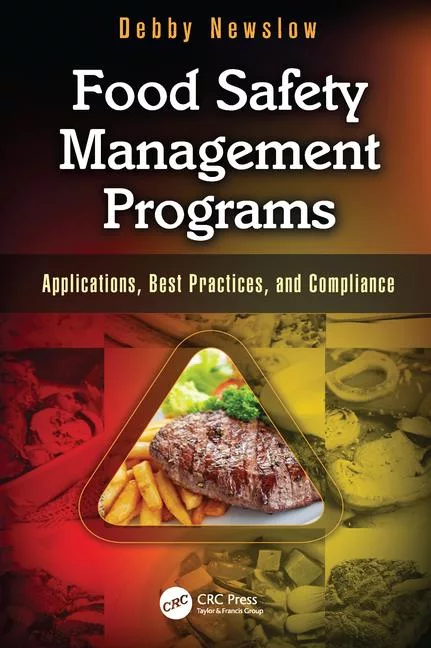
    Food Safety Management Programs: Applications, Best Practices, and Compliance

  • 1119237963.jpg

    Food Safety in China: Science, Technology, Management and Regulation

  • 9781032369990 (1).webp

    Food Safety Quality Control and Management

See More Products

Events

View AllSubmit An Event
  • February 26, 2025

    Transforming Food Safety Through Digitalization and AI—Are You Ready?

    On Demand: This webinar will cover the role of digitalization in addressing food safety challenges and the potential of AI in food safety.
View AllSubmit An Event

Related Directories

  • FoodReady

    FoodReady offers complete Traceability, Food Safety & Quality, and Supply Chain software to digitize everything related to quality, food safety, sanitation, and traceability. FoodReady also offers complete consulting services for GFSI audit-preparation, HACCP consulting and development, process authority, FDA consulting, USDA consulting, and master sanitation consulting services from a team of longtime auditors, former Directors of Quality at the largest food companies.
  • Hygiena LLC

    KLEANZ by Hygiena is the leading solution for food safety across the Food and Beverage industry. For over 40 years, KLEANZ has ensured that manufacturers’ Food Safety, Sanitation Management, and Maintenance needs are satisfied and streamlined. We pride ourselves in helping our clients mitigate risk and continuously improve.
  • Rentokil Pest Control

    Delivering solutions to food businesses for over 100 years, Rentokil is the single-source provider for your pest management needs. Our local technicians deliver customized programs and innovative solutions, ensuring regulatory compliance and audit readiness. To help you drive your business, our secure PestNetOnline platform provides detailed service data and reporting.
×

Never miss the latest news and trends driving the food safety industry

eNewsletter | Website | eMagazine

JOIN TODAY!
  • RESOURCES
    • Advertise
    • Contact Us
    • Directories
    • Store
    • Want More
  • SIGN UP TODAY
    • Create Account
    • eMagazine
    • eNewsletter
    • Customer Service
    • Manage Preferences
  • SERVICES
    • Marketing Services
    • Reprints
    • Market Research
    • List Rental
    • Survey/Respondent Access
  • STAY CONNECTED
    • LinkedIn
    • Facebook
    • Instagram
    • X (Twitter)
  • PRIVACY
    • PRIVACY POLICY
    • TERMS & CONDITIONS
    • DO NOT SELL MY PERSONAL INFORMATION
    • PRIVACY REQUEST
    • ACCESSIBILITY

Copyright ©2025. All Rights Reserved BNP Media.

Design, CMS, Hosting & Web Development :: ePublishing