Food Safety
search
Ask Food Safety AI
cart
facebook twitter linkedin instagram youtube
  • Sign In
  • Create Account
  • Sign Out
  • My Account
Food Safety
  • NEWS
    • Latest News
    • White Papers
  • PRODUCTS
  • TOPICS
    • Contamination Control
    • Food Types
    • Management
    • Process Control
    • Regulatory
    • Sanitation
    • Supply Chain
    • Testing and Analysis
  • PODCAST
  • EXCLUSIVES
    • Food Safety Five Newsreel
    • eBooks
    • FSM Distinguished Service Award
    • Interactive Product Spotlights
    • Videos
  • BUYER'S GUIDE
  • MORE
    • NEWSLETTERS >
      • Archive Issues
      • Subscribe to eNews
    • Store
    • Sponsor Insights
    • ASK FSM AI
  • WEBINARS
  • FOOD SAFETY SUMMIT
  • EMAG
    • eMagazine
    • Archive Issues
    • Editorial Advisory Board
    • Contact
    • Advertise
  • SIGN UP!
NewsFood TypeRegulatoryAlternative ProteinsInternational Standards/Harmonization

UK FSA Selects Participating Companies and Begins Work on Cell-Cultured Food Sandbox Program

By Food Safety Magazine Editorial Team
close up of meaty texture

Image credit: lifeforstock via Freepik

March 10, 2025

The UK Food Standards Agency (FSA) has selected companies and other partners to take part in its Cell-Cultivated Products (CCPs) sandbox program.

In October 2024, FSA and Food Standards Scotland (FSS) were awarded £1.6 million in funding from the Government’s Engineering Biology Sandbox Fund (EBSF) to launch an innovative sandbox program to ensure the safety of cell-cultivated foods. After an application process, FSA selected eight CCP companies to participate in the program:

  • Hoxton Farms (UK)
  • BlueNalu (U.S.)
  • Mosa Meat (The Netherlands)
  • Gourmey (France)
  • Roslin Technologies (UK)
  • Uncommon Bio (UK)
  • Vital Meat (France)
  • Vow (Australia).

Additionally, FSA announced academic partners with which it will be working closely throughout the CCP sandbox program: the Cellular Agriculture Manufacturing Hub (CARMA) led by the University of Bath, the National Alternative Protein Innovation Centre (NAPIC), and the Bezos Centre for Sustainable Protein. The Alternative Proteins Association (APA) trade body will represent industry, alongside non-governmental organization the Good Food Institute Europe (GFI).

Work has commenced on the two-year sandbox program, the aim of which is to gather rigorous scientific evidence about CCPs and how they are made, to inform how FSA and FSS regulate these products. A team of scientists and regulatory experts will collaborate with the aforementioned companies and partners to achieve this goal.

Evidence gathered will enable FSA to assess CCP applications more efficiently and make sure they are safe before they can be sold to consumers. FSA will provide clearer guidance to businesses, and address questions that must be answered before any CCPs can enter the market. Through the program, FSA is committed to completing the full safety assessment of two CCPs within the next two years.

Looking for quick answers on food safety topics?
Try Ask FSM, our new smart AI search tool.
Ask FSM →


KEYWORDS: cell-based meat FSA novel foods UK

Share This Story

Fsm purple logo 200x200

The Food Safety Magazine editorial team comprises Bailee Henderson, Digital Editor ✉ and Adrienne Blume, M.A., Editorial Director.

Recommended Content

JOIN TODAY
to unlock your recommendations.

Already have an account? Sign In

  • people holding baby chicks

    Serovar Differences Matter: Utility of Deep Serotyping in Broiler Production and Processing

    This article discusses the significance of Salmonella in...
    Food Type
    By: Nikki Shariat Ph.D.
  • woman washing hands

    Building a Culture of Hygiene in the Food Processing Plant

    Everyone entering a food processing facility needs to...
    Facilities
    By: Richard F. Stier, M.S.
  • graphical representation of earth over dirt

    Climate Change and Emerging Risks to Food Safety: Building Climate Resilience

    This article examines the multifaceted threats to food...
    Risk Assessment
    By: Maria Cristina Tirado Ph.D., D.V.M. and Shamini Albert Raj M.A.
Manage My Account
  • eMagazine Subscription
  • Subscribe to Newsletters
  • Manage My Preferences
  • Website Registration
  • Subscription Customer Service

More Videos

Sponsored Content

Sponsored Content is a special paid section where industry companies provide high quality, objective, non-commercial content around topics of interest to the Food Safety Magazine audience. All Sponsored Content is supplied by the advertising company and any opinions expressed in this article are those of the author and not necessarily reflect the views of Food Safety Magazine or its parent company, BNP Media. Interested in participating in our Sponsored Content section? Contact your local rep!

close
  • the use of dual-energy X-ray food inspection technology to identify foreign contaminants.
    Sponsored byEagle by METTLER TOLEDO

    Precision Inspection Starts with the Right X-ray Detector

  • This image depicts a worker cleaning stainless steel machinery in a food processing plant
    Sponsored byCintas

    Employee Uniforms: A Frontline Defense Against Food Contamination

  • This image depicts a healthcare professional managing a large volume of paperwork and transitioning to a digital workflow.
    Sponsored bySafetyChain

    The Invisible Plant Tax Starts with Your Records

Popular Stories

Don Prater at the 2026 Food Safety Summit

Donald Prater Becomes New Head of FDA Human Foods Program

town hall panelists on stage at the 2026 food safety summit

Top U.S. Food Safety Officials Discuss Regulatory Landscape at Food Safety Summit

digital 3d rendering of a biofilm

Plasma-Activated Mist Shows Promise for Biofilm Removal in Food Facilities


Events

May 28, 2026

Advanced Sanitation Strategies for Allergen Risk Reduction in Food Processing

Live: May 28, 2026, at 2:00 pm EDT: From this webinar, attendees will learn why validation and verification are necessary for allergen control, and how analytical tools can support allergen management programs.

June 3, 2026

How to Build a Better Food Safety Training Program

Live: June 3, 2026 at 2:00 pm EDT: Join this webinar to learn how AI is impacting food safety training, and how you can leverage AI in your programs.

June 4, 2026

Building a Stronger Food Safety Program in a Changing GFSI Landscape

Live: June 4, 2026 at 11:00 am EDT: Attend this webinar to understand how GFSI requirements are evolving and what those changes signal for quality programs at food and beverage facilities.

View All

Products

Global Food Safety Microbial Interventions and Molecular Advancements

Global Food Safety Microbial Interventions and Molecular Advancements

See More Products

Related Articles

  • illustration of lab grown beef

    UK FSA Seeking Cell-Based Food Companies to Participate in Sandbox Program

    See More
  • scientist holding up petri dish of meat

    UK FSA to Launch Program Investigating Cell-Based Food Safety

    See More
  • meat in a lab

    UK Releases First Guidance on Food Safety and Hygiene Requirements for Cell-Based Meat Production

    See More

Related Products

See More Products
  • 9781498721776.jpg

    Handbook of Food Processing: Food Safety, Quality, and Manufacturing Processes

  • 1119053595.jpg

    Food Safety for the 21st Century: Managing HACCP and Food Safety throughout the Global Supply Chain, 2E

  • 9781138198463.jpg

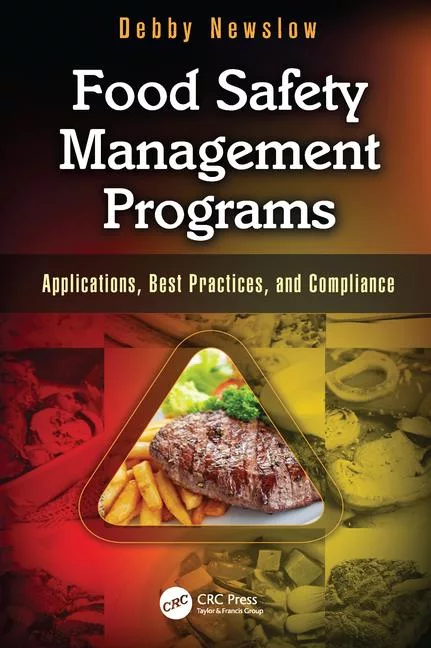
    Food Safety Management Programs: Applications, Best Practices, and Compliance

See More Products

Events

View AllSubmit An Event
  • March 31, 2026

    Regulatory Risk, Ingredient Safety, and GRAS: What Companies Need to Act on Now

    On Demand: From this webinar, attendees will recognize patterns in food policy affecting dietary guidelines, UPFs, state legislative actions, and expected GRAS reform.
View AllSubmit An Event

Related Directories

  • WorkForge

    WorkForge is reshaping the landscape of learning and development in the food manufacturing industry. Our comprehensive solution provides a centralized hub for off-the-shelf and customizable content, an advanced Learning Management System (LMS), and expert consulting services. WorkForge creates bespoke learning experiences where employees can access tailored training at their convenience, promoting universal learning across diverse environments and devices.
  • Michigan State University Online Food Safety Program

    MSU's Online Food Safety program strives to educate professionals on how to make global food systems safe. The program consists of a master’s degree and graduate certificate, both entirely online. Each program will provide students with applicable knowledge to navigate the ever-changing concerns surrounding food safety, food protection, and public health.
×

Never miss the latest news and trends driving the food safety industry

Newsletters | Website | eMagazine

JOIN TODAY!
  • RESOURCES
    • Advertise
    • Contact Us
    • Directories
    • Store
    • Want More
  • SIGN UP TODAY
    • Create Account
    • eMagazine
    • Newsletters
    • Customer Service
    • Manage Preferences
  • SERVICES
    • Marketing Services
    • Reprints
    • Market Research
    • List Rental
    • Survey/Respondent Access
  • STAY CONNECTED
    • LinkedIn
    • Facebook
    • Instagram
    • X (Twitter)
  • PRIVACY
    • PRIVACY POLICY
    • TERMS & CONDITIONS
    • DO NOT SELL MY PERSONAL INFORMATION
    • PRIVACY REQUEST
    • ACCESSIBILITY

Copyright ©2026. All Rights Reserved BNP Media, Inc. and BNP Media II, LLC.

Design, CMS, Hosting & Web Development :: ePublishing