Food Safety
search
Ask Food Safety AI
cart
facebook twitter linkedin instagram youtube
  • Sign In
  • Create Account
  • Sign Out
  • My Account
Food Safety
  • NEWS
    • Latest News
    • White Papers
  • PRODUCTS
  • TOPICS
    • Contamination Control
    • Food Types
    • Management
    • Process Control
    • Regulatory
    • Sanitation
    • Supply Chain
    • Testing and Analysis
  • PODCAST
  • EXCLUSIVES
    • Food Safety Five Newsreel
    • eBooks
    • FSM Distinguished Service Award
    • Interactive Product Spotlights
    • Videos
  • BUYER'S GUIDE
  • MORE
    • NEWSLETTERS >
      • Archive Issues
      • Subscribe to eNews
    • Store
    • Sponsor Insights
    • ASK FSM AI
  • WEBINARS
  • FOOD SAFETY SUMMIT
  • EMAG
    • eMagazine
    • Archive Issues
    • Editorial Advisory Board
    • Contact
    • Advertise
  • SIGN UP!
NewsSupply ChainFoodservice/Retail

Study: Corporate Restaurant Franchises Violate Health Code Less Than Family-Owned Counterparts

By Food Safety Magazine Editorial Team
Customer inside a Car ordering at a Drive Thru

Image credit: RDNE Stock project via Pexels

January 10, 2025

Family-owned restaurant franchises receive health code violations more frequently than their corporate-owned or single-owner counterparts, according to a new study led by Mississippi State University researchers. The findings also showed that corporate-owned franchises fared the best in terms of health and food safety.

Drawing data from public franchise disclosure documents, the Mississippi State-led research team analyzed health code violations for nearly 1,500 quick-service restaurants across the U.S. Southeast, categorizing establishments as single-owner (owned by one person), family-owned (owned by two or more members of the same family), or corporate-owned (owned by a parent company).

The researchers hypothesize that the better health and safety outcomes at corporate and single-owner foodservice establishments over family-owned businesses could be due to the frequent visitation of restaurants by corporate personnel, or because of lone owners’ high level of control and personal stake, respectively. Moreover, it is possible that family franchisees may prioritize family harmony over adherence to franchise rules, or that conflicting goals between family franchisees and franchisors may lead to conflicts that negatively affect health and safety outcomes.

According to the U.S. Centers for Disease Control and Prevention (CDC), the study’s findings are consistent with previous research showing that chain restaurants tend to have better food safety practices than independently owned restaurants. This is potentially attributable to corporate-owned chains having access to increased resources, better training, and procedures that meet national food safety standards, per CDC.

Looking for quick answers on food safety topics?
Try Ask FSM, our new smart AI search tool.
Ask FSM →


KEYWORDS: Mississippi State University study

Share This Story

Fsm purple logo 200x200

The Food Safety Magazine editorial team comprises Bailee Henderson, Digital Editor ✉ and Adrienne Blume, M.A., Editorial Director.

Recommended Content

JOIN TODAY
to unlock your recommendations.

Already have an account? Sign In

  • people holding baby chicks

    Serovar Differences Matter: Utility of Deep Serotyping in Broiler Production and Processing

    This article discusses the significance of Salmonella in...
    Testing & Analysis
    By: Nikki Shariat Ph.D.
  • woman washing hands

    Building a Culture of Hygiene in the Food Processing Plant

    Everyone entering a food processing facility needs to...
    Facilities
    By: Richard F. Stier, M.S.
  • graphical representation of earth over dirt

    Climate Change and Emerging Risks to Food Safety: Building Climate Resilience

    This article examines the multifaceted threats to food...
    Contamination Control
    By: Maria Cristina Tirado Ph.D., D.V.M. and Shamini Albert Raj M.A.
Manage My Account
  • eMagazine Subscription
  • Subscribe to Newsletters
  • Manage My Preferences
  • Website Registration
  • Subscription Customer Service

More Videos

Sponsored Content

Sponsored Content is a special paid section where industry companies provide high quality, objective, non-commercial content around topics of interest to the Food Safety Magazine audience. All Sponsored Content is supplied by the advertising company and any opinions expressed in this article are those of the author and not necessarily reflect the views of Food Safety Magazine or its parent company, BNP Media. Interested in participating in our Sponsored Content section? Contact your local rep!

close
  • the use of dual-energy X-ray food inspection technology to identify foreign contaminants.
    Sponsored byEagle by METTLER TOLEDO

    Precision Inspection Starts with the Right X-ray Detector

  • This image depicts a worker cleaning stainless steel machinery in a food processing plant
    Sponsored byCintas

    Employee Uniforms: A Frontline Defense Against Food Contamination

  • This image depicts a healthcare professional managing a large volume of paperwork and transitioning to a digital workflow.
    Sponsored bySafetyChain

    The Invisible Plant Tax Starts with Your Records

Popular Stories

Don Prater at the 2026 Food Safety Summit

Donald Prater Becomes New Head of FDA Human Foods Program

curcumin in wooden spoon and bowl

‘Natural’ Food Dyes May Have Health Risks Too, Studies Show

common food allergens and the word ALLERGY

Codex Moves to Adopt Standardized Precautionary Allergen Labeling, Kicks UPFs Can Down the Road


Events

May 28, 2026

Advanced Sanitation Strategies for Allergen Risk Reduction in Food Processing

Live: May 28, 2026, at 2:00 pm EDT: From this webinar, attendees will learn why validation and verification are necessary for allergen control, and how analytical tools can support allergen management programs.

June 3, 2026

How to Build a Better Food Safety Training Program

Live: June 3, 2026 at 2:00 pm EDT: Join this webinar to learn how AI is impacting food safety training, and how you can leverage AI in your programs.

June 4, 2026

Building a Stronger Food Safety Program in a Changing GFSI Landscape

Live: June 4, 2026 at 11:00 am EDT: Attend this webinar to understand how GFSI requirements are evolving and what those changes signal for quality programs at food and beverage facilities.

View All

Products

Global Food Safety Microbial Interventions and Molecular Advancements

Global Food Safety Microbial Interventions and Molecular Advancements

See More Products
building a stronger food safety program webinar

Related Articles

  • individual curly kale leafs

    Study Identifies Why Some Leafy Greens are Less Susceptible to E. Coli Than Lettuce; Finds Natural Antimicrobial Effect of Kale, Collards

    See More
  • cook serving up salad in kitchen

    2022 FDA Food Code is Being Adopted Three Times Faster Than Previous Versions, Reports NEHA

    See More
  • Del Monte Fresh Produce Vegetable Trays Linked to Second Outbreak in Less Than a Year

    See More

Related Products

See More Products
  • 9781138198463.jpg

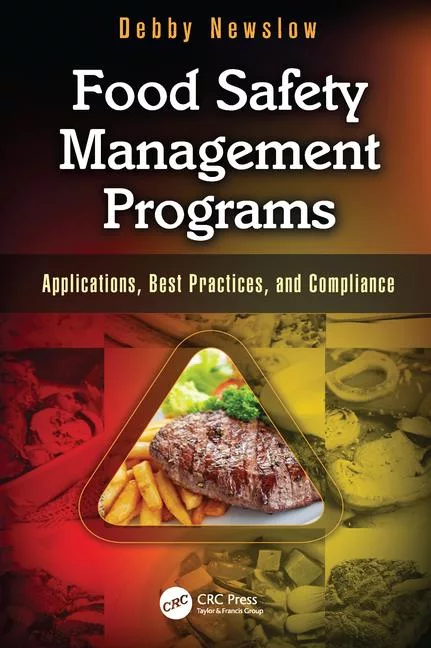
    Food Safety Management Programs: Applications, Best Practices, and Compliance

  • food safety.jpg

    Food Safety Contaminants and Risk Assessment

  • global food.jpg

    Global Food Safety Microbial Interventions and Molecular Advancements

See More Products
×

Never miss the latest news and trends driving the food safety industry

Newsletters | Website | eMagazine

JOIN TODAY!
  • RESOURCES
    • Advertise
    • Contact Us
    • Directories
    • Store
    • Want More
  • SIGN UP TODAY
    • Create Account
    • eMagazine
    • Newsletters
    • Customer Service
    • Manage Preferences
  • SERVICES
    • Marketing Services
    • Reprints
    • Market Research
    • List Rental
    • Survey/Respondent Access
  • STAY CONNECTED
    • LinkedIn
    • Facebook
    • Instagram
    • X (Twitter)
  • PRIVACY
    • PRIVACY POLICY
    • TERMS & CONDITIONS
    • DO NOT SELL MY PERSONAL INFORMATION
    • PRIVACY REQUEST
    • ACCESSIBILITY

Copyright ©2026. All Rights Reserved BNP Media, Inc. and BNP Media II, LLC.

Design, CMS, Hosting & Web Development :: ePublishing