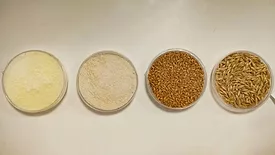
Dispersibility may be a useful tool for simulating the spread and hygienic control of allergenic food powders. Researchers recommend that producers add powders from as low a position as possible to reduce the risk of cross-contamination.
A laboratory study and large-scale commercial wheat mill trial demonstrated that a bacteriophage cocktail can significantly reduce Shiga toxin-producing Escherichia coli (STEC) O157:H7 contamination throughout milling operations without affecting the baking qualities of flour.
A recent survey of raw flour and flour-based foods conducted by the UK Health Security Agency (UKHSA) found a low incidence of Salmonella and Shiga toxin-producing Escherichia coli (STEC) among sampled products. Whole genome sequencing revealed a link between a Salmonella isolate from a sample and a human illness.
Belzona 5811DW2 (DW Immersion Grade) corrosion-resistant coating has been deemed compliant with EU regulations for prolonged contact with dry foodstuffs, and is therefore suitable for use in applications like flour storage tanks.
A recent study, funded by the U.S. Department of Agriculture’s National Institute of Food and Agriculture (USDA’s NIFA), has estimated the economic burden of foodborne illnesses linked to flour and flour-based food products in the U.S. from 2001–2021 to be as high as $258 million. Salmonella and Escherichia coli were implicated pathogens.
Flour mills produce a "ready-to-cook" product. The most severe food safety hazards at flour mills are physical and include metal, wood, pests, and other items. A variety of equipment is used in an enclosed system to prevent physical and other contamination of the product.