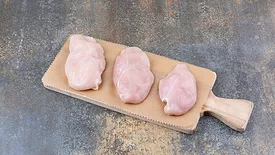
The U.S. Department of Agriculture’s Food Safety and Inspection Service (USDA-FSIS) has extended its comment period for its proposed regulatory framework for Salmonella in raw poultry products for a second time, now giving stakeholders until January 2025 to submit feedback.
In this bonus episode of Food Safety Matters, we speak to food safety culture expert Dr. Lone Jespersen about how companies can select the best methods for food safety culture assessment, and how to communicate the insights gained from those assessments.
Researchers with Ayass Bioscience have developed a novel, aptamer-based solution that neutralizes peanut allergens with potential application in the agriculture, food production, and sanitation sectors. The technology is non-invasive, and does not involve genetic modification to peanuts or traditional immunotherapy for patients.
The International Avian Influenza and One Health Emerging Issues Summit, hosted by the University of Arkansas (U of A) Center of Excellence for Poultry Science in Fayetteville, Arkansas on September 30-October 3, focused on highly pathogenic avian influenza (HPAI) and other animal pathogens and viruses affecting food safety and public health.
The In-Q Knowledge Center for FDA Compliance is a new platform designed to streamline compliance for U.S. Food and Drug Administration (FDA)-regulated manufacturers and importers.
Combining genomic sequencing data and artificial intelligence (AI), researchers have demonstrated the efficacy of a new approach for the untargeted detection of contaminants, antibiotics, and other food safety anomalies in bulk milk samples.
The ReposiTrak Traceability Network now includes 4,000 suppliers, facilitating compliance with the U.S. Food and Drug Administration’s Food Traceability Final Rule/FSMA 204.
Per a new agreement, Plastipak will purchase Avantium’s plant-based, recyclable polyethylene furanoate (PEF) polymer to manufacture beverage and food packaging for distribution in the U.S.
The Institute of Food Technologists’ (IFT’s) new Fundamentals of Food Science Course is designed to help the busy professional identify and apply scientific concepts to solve real-world food safety and quality problems, as well as to understand the food regulatory landscape.