Drawing from EFSA risk assessments, OpenFoodTox provides structured summaries of hazard information for thousands of individual substances, including food additives and flavorings, pesticides, contaminants, and food contact materials.
New Mexico has published a final rule enforcing the New Mexico PFAS Protection Act, outlining a staggered prohibition on the sale of products containing intentionally added PFAS, and describing a PFAS warning label for products still containing the chemicals.
Piloting of these assessments began in April and will continue through fiscal year 2026 at facilities across FDA inspectorates, including human and animal foods. The assessments are short, focused screening assignments that complement standard FDA inspections.
EFSA conducted an acute exposure assessment for glycerol in slushies and dealcoholized wine following reports of toddlers and young children experiencing glycerol intoxication due to excessive slushie consumption in a single sitting.
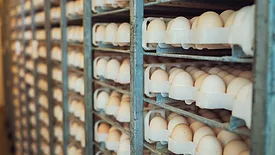
The guideline is designed to help small and very small plants producing egg products meet the regulatory requirements under the Egg Products Inspection Regulations Final Rule, including sanitation and HACCP requirements.
Based on the results of testing more than 125,000 food samples collected across Europe, compliance with EU pesticide maximum residue levels remains high, reported the European Food Safety Authority (EFSA).
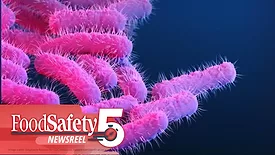
This episode of Food Safety Five discusses several foodborne pathogens that have been recently highlighted by researchers due to their unusual nature, emergence, and increasing public health significance, including a rare Salmonella strain, an STEC/ETEC hybrid, Group B Streptococcus, and drug-resistant Shigella.
The action plan would outline strategies to mitigate Campylobacter and reduce cases of foodborne illness. Those who are interested in contributing to the development of the action plan are invited to register to receive communications about stakeholder engagement.
Responding to growing consumer and regulatory demand for “natural” foods, the decision builds on Aldi’s removal of 13 synthetic colorants from its portfolio more than ten years ago. The grocer announced this ban while Congress, states, and industry debate ingredient oversight.
The National Academies of Sciences, Engineering, and Medicine’s (NASEM’s) Food Forum convenes scientists, administrators, and policymakers to explore issues and solutions related to food safety, regulation, and systems, as well as nutrition and health.
 RSS
RSS