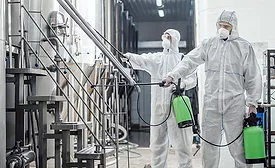
Sanitation success relies on people, programs, and hygienic design/maintenance. These three groups are characterized by interrelationships that are not always fully considered; however, examining them helps improve investigations of sanitation failures.
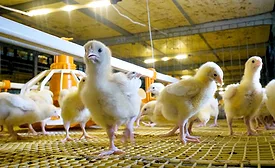
Salmonella prevalence has decreased significantly in the past three decades due to processing changes, but human illness cases from Salmonella have not decreased proportionally. To understand and eventually reduce the risk of salmonellosis from poultry meat, it is necessary to understand the poultry production system, the introduction of the microorganism into the poultry ecosystem (as well as its gastrointestinal tract), the sources of Salmonella during production, and, subsequently, strategies to control or reduce the risk from this microorganism at both the pre-and post-harvest stages.
This article explores the food safety challenges of the labor-heavy catering sector, including the pervasive lack of food safety culture and management commitment; the need for creative solutions in process monitoring for large facilities; how to build an effective training program for a catering facility; and how to handle customer complaints, including the importance of root cause analysis.
Assuring food safety in this "New Era of Smarter Food Safety" and with the increasing use of whole genome sequencing provides many new challenges for food safety professionals. While these challenges are many and multi-faceted, it is helpful to look back to the "old" era of food safety, to some of the foundational concepts in the 1938 Food, Drug, and Cosmetic Act that are still in force today. In this article, the authors focus first on one of many important legal terms that is extremely important and often misunderstood: adulteration.
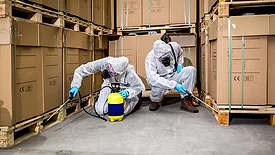
Pest control should always be top-of-mind for facility managers, but spring and summer provide a great opportunity to set up commercial facilities for success year-round. Managers can take several key steps to start off pest season on the right foot, as explained in this exclusive article by the National Pest Management Association.
Even with the right prep work, operations with the best sanitation, pest control, preventive maintenance, manufacturing practices, and food defense can experience a recall. This article establishes the background on recalls in the U.S. and offers a look at the behind-the-scenes activity of a food safety recall, including best practices, necessary steps, and tips for communication. It also explores an often-misunderstood resource that can minimize the negative impact and expense of a recall—your recall insurance policy.
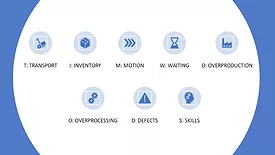
If you look around, you may find many examples of ‘TIM WOODS' in your facility. TIM WOODS is an acronym for the ‘eight wastes' that can plague a processing facility. In lean manufacturing, waste is any cost, effort, or material that is used in a processing facility that does not directly lead to a completed unit.
Ciguatera toxin, which does not break down during cooking, can cause severe foodborne illness in humans who consume contaminated reef fish that feed on toxic microalgae. Climate change is altering algal and seaweed growth patterns, which may impact the rate of ciguatoxin accumulation by these fish species.
Clean labeling is on the rise. Food producers must consider the packaging techniques and technologies that are used during manufacturing in order to label products as "clean."
Pests are a major source of concern for restaurant operators because they put food safety at risk by transmitting disease-causing pathogens and contaminating food. Part 2 of this article series considers other common restaurant pests and the preventive measures restaurant owners can take to avoid infestation, including chemical and non-chemical treatment options.
 RSS
RSS