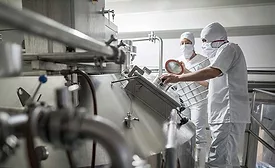
ABB’s improved Baldor-Reliance Food Safe motors, designed with smooth contours and advanced sealing, exceed IP69 ingress protection ratings for washdown conditions to maximize motor life in high-pressure, sanitary cleaning environments.
This article explores the total cost of ownership and the many categories of expenses involved in operating, maintaining, and cleaning equipment, as well as the different criteria to consider during the design phase.
The Center for Produce Safety has provided insight into an ongoing study funded by the center that is examining the efficacy of superheated steam, also known as “dry steam,” as a sanitization method for dry food production environments. The researchers are looking for industry respondents to fill out a survey on the financial realities of this technology.
Goodway Technologies is opening an office in Düsseldorf, Germany, bringing the company’s cleaning and sanitation solutions to Europe's food and beverage market.
In this episode of Food Safety Matters, we talk to Michael (Mike) Cramer, author of Food Plant Sanitation—now in its third edition! Mike has nearly 43 years of experience in food safety and quality assurance (FSQA) and sanitation at meat and poultry processors and major frozen foods producers, having retired from Ajinomoto Foods North America in 2021. He discusses his learnings throughout his time in industry and provides guidance, resources, and valuable insights for both experienced and up-and-coming FSQA professionals looking to implement effective sanitation programs and foster healthy food safety cultures at their organizations.
Errors involving product contamination, misbranding, and undeclared allergens remain the three leading causes of food recalls. Since employees are the cornerstone for preventing allergen and gluten adulteration, providing proper training to staff can prevent errors that could lead to a recall.
A recent study has confirmed human fecal indicators on 50 percent of food-safe, single-use, new and unused gloves, as well as foodborne pathogens and other microbes.
The U.S Food and Drug Administration (FDA) has completed a research study that evaluated Food Code recommendations for reducing the risk of norovirus in foodservice establishments.
The backbone of innovation relies on what some call the "underbelly" of the industry: sanitation. Many would agree that sanitation is the most fundamental aspect of an operation's ability to consistently produce high-quality, safe food. But how much does our industry really know about sanitation as a whole?
 RSS
RSS