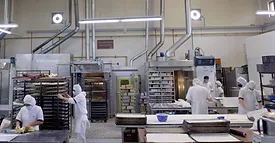
Food manufacturers should consider their physical plants in their list of prerequisite programs for HACCP. As demonstrated by a recent, high-profile Listeria outbreak at a major meat processor, facility condition and upkeep can have a significant effect on food safety.
Recently concluded research funded by the Center for Produce Safety provides practical, immediately actionable insights that industry can integrate into their operations, ranging from sanitation best practices, to Salmonella and E. coli mitigation, to wild bird management, and more.
A recent project led by Purdue University researchers has identified challenges to food safety in the low-moisture food industry, ranging from culture-based barriers to hygienic design and hesitance adopting food safety technologies.
In today’s food industry, a single recall can disrupt operations, damage reputations, and erode consumer trust. As food safety concerns escalate, professionals must stay ahead by implementing the latest preventive measures.
The challenge of mitigating E. coli in leafy greens calls for a rigorous, multifaceted approach that includes stringent sanitation practices, facility design optimization, and the use of advanced microbial control methods.
An ongoing study funded by the Center for Produce Safety aims to fill knowledge gaps about the microbial food safety risks posed by wax roller brushes used on fruit and vegetables, as well as identify best cleaning and sanitation practices.
Maintaining high standards throughout the production process is crucial in the food industry. Contamination can lurk in the most unexpected places, necessitating constant vigilance.
In this bonus episode of Food Safety Matters, we speak with Steve Voelzke, President of Electrical Products Division at Robroy Industries, about the important role that the hygienic design of food manufacturing equipment and facilities plays in food recall prevention.
Global Drain Technologies has released its new Circular Catch Basin for the 10,000 Series FoodSafe Slot Drain, designed to meet the stringent hygiene requirements of food production facilities.
 RSS
RSS