New data from the U.S. Office of Personnel Management (OPM) shows the most recent and complete picture of workforce attrition at federal agencies responsible for food safety and public health.
This article examines shifting USDA regulatory expectations, evolving risk assessment tools, and realistic strategies to manage Salmonella as a true public health risk rather than solely a process control issue.
The U.S. Public Interest Research Group (PIRG) Education Fund’s newly published Food for Thought report outlines food recalls and foodborne illness outbreak investigations that occurred in 2025 and provides recommendations for improving the U.S. food recall system.
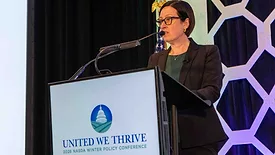
The National Association of State Departments of Agriculture (NASDA) has set its federal policy priorities for 2026. Food safety-related issues are central to NASDA's 2026 advocacy work for the Farm Bill, animal diseases and traceability, and pesticides
A new paper describes U.S. regulatory agencies’ roles in two recent, high-profile foodborne illness outbreak investigations—the Boar’s Head listeriosis outbreak and the McDonald’s Escherichia coli outbreak—and highlights the shortcomings and strengths in how the outbreaks were managed.
This episode of Food Safety Five reads between the lines of the revised Dietary Guidelines for Americans, discussing its use of the term “highly processed foods,” how its definition differs (or does not differ) from the debated “ultra-processed foods” category, and the potential implications for food policy.
USDA-FSIS has reissued its guidance on testing for Listeria species other than Listeria monocytogenes in ready-to-eat (RTE) food production facilities to reflect expansions made to the agency’s testing method and enforcement actions.
At a January 14 public meeting on strategies to reduce Salmonella in poultry products, USDA-FSIS focused on the importance of tailored strategies, data-driven decisions, and considering the needs of small- and medium-sized establishments. Stakeholders shared their concerns and ideas.
At a public meeting on January 14 held by USDA-FSIS to discuss strategies for reducing salmonellosis attributable to poultry, a Consumer Reports food scientist argued for the agency to return to its now-withdrawn proposed regulatory framework for Salmonella in poultry.
 RSS
RSS