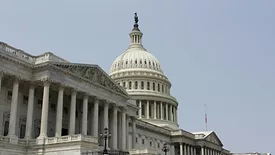
Recently introduced to U.S. Congress, the Federal and State Food Safety Information Sharing Act aims to grant the U.S. Food and Drug Administration (FDA) the authority to share crucial food safety information with state and local regulatory agencies to improve foodborne illness outbreak response.
A new public-private partnership, the Partnership for Food Traceability (PFT), has been launched to advance a shared vision for enhanced food traceability in alignment with the U.S. Food and Drug Administration’s (FDA’s) Food Traceability Final Rule/Section 204 of the Food Safety Modernization Act.
This article summarizes the results of the U.S. Food and Drug Administration (FDA’s) Pesticide Monitoring Program Report for fiscal year (FY) 2022, including the rates of violative samples, imported versus domestic foods, and chemicals of concern.
The Retail Food Safety Regulatory Association Collaborative’s Food Code Adoption Map is an interactive resource that shows the adoption of the U.S. Food and Drug Administration (FDA) Food Code in each state and U.S. territory.
A recent review of carcinogenicity data submitted to support U.S. FDA “Generally Recognized as Safe” (GRAS) determinations for food substances has shown that, although the types of carcinogenicity data are varied, safety is typically adequately evidenced. Still, a standardized approach defining which data is required to support a GRAS determination could be useful.
The U.S. Food and Drug Administration (FDA) has issued a warning letter to the manufacturer of the apple cinnamon fruit puree pouches that gave hundreds of children across the U.S. lead poisoning in late 2023.
Thanks to whole genome sequencing (WGS) and other investigative data, two foodborne salmonellosis outbreaks previously thought to be separate have been linked to each other and have been associated with cucumbers.
State action on PFAS is ongoing, and many states are currently seeking to adopt new rules for PFAS in food packaging or expand the scope of existing laws
New regulations concerning per- and polyfluoralkyl substances (PFAS) have impacted the food and beverage industry, but it will take time to replace PFAS with safe substances, as well as to establish comprehensive regulations and enforcement. However, time is running out.
In the spirit of collaboration, FDA's Office of Regulatory Affairs has partnered with the National Association of State Departments of Agriculture and North Carolina State University to create "Introduction to Public Health Food Inspections," the first-of-its-kind course to offer students a comprehensive understanding of federal regulatory food inspections and enforcement.
On September 25, FDA will hold a public meeting on its work to develop an enhanced systematic process for the postmarket assessment of chemicals in foods, with in-person and virtual attendance options available.
 RSS
RSS