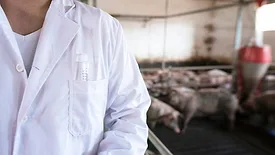
In this episode of Food Safety Matters, we are joined by Dr. Barbara Masters—Vice President of Regulatory Policy, Food, and Agriculture at Tyson Foods Inc.—about food safety policy and leadership in the meat and poultry industry, informed by her 34 years of experience in the sector across veterinary, regulatory, advisory, and corporate roles.
The U.S. Food and Drug Administration (FDA) and the Pennsylvania Department of Agriculture recently signed a memorandum of understanding, entering the agencies into a partnership agreement to set the foundation for domestic mutual reliance and an integrated food safety system in Pennsylvania.
The European Commission has set significantly stricter limits for the use of nitrites and nitrates as food additives to reduce consumer exposure to carcinogenic nitrosamines. EU food business operators have two years to adapt to the new limits.
The California Food Safety Act—statewide legislation that bans the sale of foods containing red dye 3, potassium bromate, brominated vegetable oil, and propylparaben—was signed into California law by Governor Gavin Newsom on October 7, 2023.
FDA has been adjusting its industry guidance for Food Contact Notifications and Food Contact Substances for infant formula since the passage of the Infant Formula Act of 1980
Starting in 2010, the U.S. Food and Drug Administration (FDA) began to include new restrictions in new Food Contact Notifications on the use of food contact substances for infant applications. Recently, FDA has hosted webinars to present information on regulatory requirements and considerations for infant formula ingredients and packaging. This article will discuss the history and current efforts by FDA to ensure the safety of infant formula, especially pertaining to food contact substances used in packaging.
In defending food safety procedures and practices to an inspector who is challenging them, it is best to have multiple sequential "rings of defense." This means that the easiest changes are suggested first, with more costly and difficult changes suggested later. Doing this strategically has the advantage of minimizing changes to the procedures and practices, and potentially avoiding a costly recall or market withdrawal.
In the ever-evolving world of the food industry, ethics play a pivotal role in safeguarding consumers and upholding the integrity of businesses. This article aims to provide readers with a profound understanding of ethics in the food industry and how they intertwine with food safety culture. Thought-provoking stories highlight the importance of formal food ethics and their role in decision-making. As consumers, employees, or stakeholders, we all play a part in shaping a more ethically responsible food industry, where safety and trust are paramount.
The U.S. Food and Drug Administration (FDA) has updated its infant formula compliance program, which outlines the agency’s approach to inspections, sample collection, sample analysis, and compliance activities for FDA personnel, with a focus on Cronobacter and Salmonella contamination.
The issuance of FDA guidance documents and feedback from FSPCA stakeholders prompted FSPCA to update and issue a new version of its training curriculum
The updated Food Safety Preventive Controls Alliance (FSPCA) Preventive Controls for Human Food curriculum provides small and midsized companies a better understanding of how to develop a food safety plan through the use of examples for implementation, with a clear demonstration that the Preventive Controls regulation is a HACCP-based system.
The establishment of a comprehensive surveillance program that harnesses the benefits of WGS requires a coordinated approach within the framework of One Health
The establishment of a comprehensive surveillance program that harnesses the benefits of whole genome sequencing (WGS) requires a coordinated approach involving multiple stakeholders at multiple levels within the framework of One Health. EFSA is actively collaborating with the network of EU experts to foster cooperation and promote equitable data-sharing practices, and is also committed to ensuring a more balanced contribution from all European countries and providing effective support and resources when necessary.