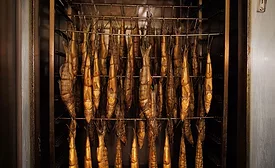
This article explores the science behind the controls required to ensure consistent, safe production of both hot and cold smoked fish, using generated wood smoke and liquid smoke, and focusing on two of the most relevant hazards—non-proteolytic Clostridium botulinum and Listeriamonocytogenes.
U.S. Food and Drug Administration (FDA) targeted testing of clams found a range of per- and polyfluoroalkyl substances (PFAS), with perfluorooctanoic acid (PFOA) present in all samples. Testing of domestic clams did not reveal a similar level of contamination.
The EU Joint Research Center (JRC) has developed new methods for detecting adulteration in six popular herbs and spices, as well as new reference materials to help identify fraudulent fish products.
A recent study of salmon sold at Seattle, Washington grocery stores and sushi restaurants found 18 percent of samples to be mislabeled overall, with one-third of “wild-caught” salmon sold at sushi establishments being mislabeled.
An ongoing project by the Norwegian food research institute Nofima is investigating the efficacy of different treatment baths for Listeria monocytogenes decontamination on fish and fish products.
The U.S. Food and Drug Administration (FDA) has released a new final Compliance Policy Guide on scombrotoxin (histamine) adulteration in fish and fishery products, and has lowered the acceptable levels for histamine in fish.
A new partnership between Trace Register and Foa and Son International Insurance Brokers provides incentive for the seafood industry to receive product contamination and recall insurance by applying half of insurance premiums toward Trace Register seafood traceability subscription costs.
Trace Register’s TR5 seafood traceability platform has successfully passed the Global Dialogue on Seafood Traceability’s (GDST’s) capability test, and also maintains backward compatibility with older systems.
The Food and Agriculture Organization of the United Nations (FAO) and World Health Organization (WHO) recently published a new document that weighs the food safety risks against the nutritional benefits of fish consumption.
 RSS
RSS