The UK Food Standards Agency (FSA) has granted its first positive safety assessment under novel foods regulations to a cannabidiol (CBD) product intended for use as a novel food supplement.
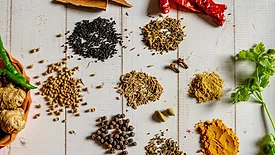
The Food Safety and Standards Authority of India (FSSAI) has issued an order regarding maximum residue limits (MRLs) for pesticides in spices and culinary herbs, in alignment with Codex Alimentarius guidelines and the MRLs adopted by the U.S., the EU, Japan, and Australia/New Zealand.
The European Commission recently made changes to the maximum levels of the mycotoxin deoxynivalenol (DON) in food with Commission Regulation (EU) 2024/1022, amending Regulation (EU) 2023/915.
Results of sampling and testing of imported honey for signs of economically motivated adulteration conducted by the U.S. Food and Drug Administration (FDA) in 2022–2023 has revealed only 3 percent of samples to be violative.
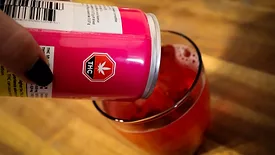
A new nonprofit organization called the Adult Beverage Alliance (ABA) has been formed in Massachusetts with the goal of advocating for responsible state-level regulation of drinks containing hemp-derived cannabidiol (CBD) and tetrahydrocannabinol (THC).
Addressing the recent wave of state-level food additives bans and bills, the Institute of Food Technologists (IFT) has released resources to help inform the public about the benefits of food additives and preservatives, as well as to keep industry abreast of current regulations.
The Singapore Food Agency has proposed amendments to federal regulations that would allow the use of new ingredients in infant formula, and would also extend the use of permitted food additives.
A bill has been introduced by California Assemblymember Jesse Gabriel (D-46), who was also behind the recently passed California Food Safety Act, to the California Assembly. Assembly Bill (AB) 2316 would prohibit food containing red dye 40 and titanium dioxide, among other color additives, from being offered by California public schools.
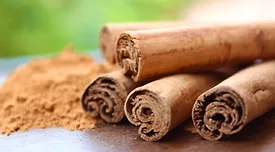
After hundreds of children across the U.S. contracted lead poisoning after eating fruit puree pouches containing contaminated cinnamon, the U.S. Food and Drug Administration (FDA) has identified six additional ground cinnamon products that were found to contain elevated levels of lead. The agency has issued a recall.
 RSS
RSS