Health Canada has announced the transition of sports electrolyte products from the Natural Health Product (NHP) regulatory framework to the food regulatory framework.
According to Austra Juice, the process lowers sugar and calories by at least 30 percent while maintaining the juice’s flavor profile, allowing beverage companies to label resulting products as “reduced-sugar fruit juice from concentrate.”
Acrylerase, developed by Kerry Group, is an amidase food enzyme that hydrolyzes acrylamide, and is the first commercially available food enzyme designed to directly decompose the process contaminant after it has formed.
Breading mixtures may be reused for different foods in foodservice operations. An FDA-supported study found that both shrimp and cod allergens accumulate in reused breading and transfer to subsequent foods, although the cod cross-contact risk was much greater.
However, ultra-processed foods were consistently more affordable and dominated total U.S. grocery sales. The report, commissioned by IFIC, suggests that dietary recommendations and discussions about UPFs must be grounded in real-world consumer behavior, rather than treating these products as easily avoidable, and consider nutritional value.
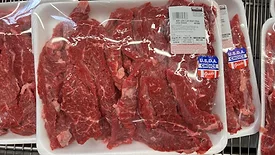
Consumers often throw away meat that is still safe to eat based on the “sell by” date. Auburn University researchers are investigating methods to predict meat spoilage based on microbial activity, which would enable more accurate “sell by” dates.
The bipartisan bill would prohibit the sale of “mislabeled” alternative protein products, requiring such products to bear “accurate” labels that clearly differentiate them from conventional meat and poultry.
EFSA conducted an acute exposure assessment for glycerol in slushies and dealcoholized wine following reports of toddlers and young children experiencing glycerol intoxication due to excessive slushie consumption in a single sitting.
The guideline is designed to help small and very small plants producing egg products meet the regulatory requirements under the Egg Products Inspection Regulations Final Rule, including sanitation and HACCP requirements.
Responding to growing consumer and regulatory demand for “natural” foods, the decision builds on Aldi’s removal of 13 synthetic colorants from its portfolio more than ten years ago. The grocer announced this ban while Congress, states, and industry debate ingredient oversight.
 RSS
RSS