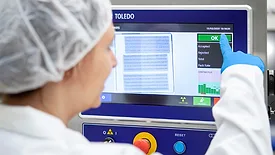
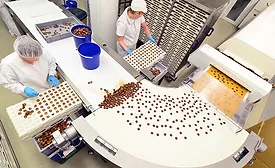
The new X-ray Reclaim Foreign Material Reinspection Services facility in Dallas will provide in-house and mobile foreign material reinspection, contaminant extraction, application validation, and documented reporting
services for regional food, beverage, ingredient, and pet food manufacturers evaluating products affected by suspected foreign material incidents.
Physical contamination prevention goes beyond end-of-line detection. Learn how strategic inspection points, metal detection, and x-ray technology can strengthen food safety, quality, and operational efficiency.
A new FAO technical brief explains how plastic pollution moves through agrifood systems and creates interconnected risks to food safety and human, animal, plant, and environmental health.
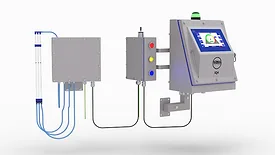
The system was developed to reduce the manual intervention and time required for routine performance testing while improving operator safety, consistency, and repeatability on food processing lines.
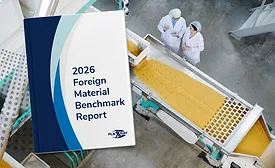
The third annual Foreign Material Contamination in Food Benchmark Report revealed how often food manufacturers are dealing with contamination, how confident facilities are in their detection equipment, how they are investing, and how they respond when an event happens.
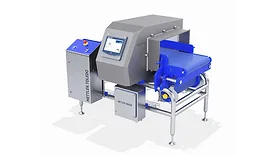
The M50 R-Series AdvancedLine metal detectors are designed for food manufacturers requiring metal detection capabilities alongside traceability, data connectivity, and production line monitoring.
Recall activity in 2026 is sending a clear message that the industry is not facing isolated failures, but rather recurring breakdowns in the systems designed to prevent them. Manufacturers must prioritize four critical areas to minimize the risk of product contamination and recalls heading into 2027.
Launching with the X12 LightningBuild X-ray inspection system and C31 LightningBuild checkweigher, the LightningBuild program offers delivery of select product inspection systems within four weeks of purchase order.
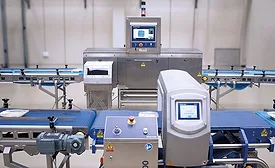
The Icon X-ray and Checkweigher Combination System features algorithmic foreign material detection, real-time product flow monitoring, IA+ filtering technology, configurable reject systems, a passive X-ray cooling generator, and data management and system oversight capabilities.
 RSS
RSS