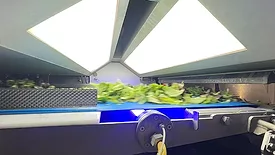
The new COMPASS optical sorter from Key Technology combines high-performance foreign material contamination detection and removal with gentle, hygienic product handling to help processors enhance food safety and operational efficiency.
To close significant knowledge gaps and inform measures to protect consumers, the European Food Safety Authority (EFSA) has been requested by Parliament to deliver a scientific opinion on the potential health risks posed by microplastics in food, water, and air.
Mettler Toledo Product Inspection Group has introduced its new X3 Series of bulk flow X-ray inspection systems for physical contamination detection. Typical applications include fruits and vegetables, nuts, pulses, confectionery, and cereals.
Glove manufacturer Eagle Protect PBC has submitted a petition to FDA urging the agency to prohibit the use of polyvinyl chloride (PVC or vinyl) disposable gloves for food handling in the U.S., citing compliance gaps, poor durability, and chemical risks.
The December 3 live webinar will focus on challenges associated with bone contamination in meat and poultry applications, describe the benefits of dual-energy X-ray inspection, and feature a live demonstration of X-ray inspection technology.
The latest generation of Eagle Product Inspection’s Tall PRO XSDV detection accuracy for contaminants in food products such as glass, metal, stone, or rubber—especially in complex or multi-layered packaging formats.
This episode of Food Safety Five discusses hoses as reservoirs for biofilms in food processing facilities, the presence of Listeria monocytogenes and Campylobacter on retail beef and chicken, a new Salmonella serovar database, and microplastics release from food contact materials.
A review published by EFSA concludes that, while there is clear evidence of microplastic release from food contact materials (FCMs), the actual quantities are likely lower than many studies suggest, and current evidence does not support reliable exposure estimates. Nanoplastics data remain insufficient.
This episode of Food Safety Five discusses a UK proposed ban on Bisphenol A (BPA) in food contact materials, as well as two studies with global relevance: a successful clinical trial for a novel Salmonella vaccine and research demonstrating how nanoplastics enter the edible parts of crops.
 RSS
RSS