The program, which was explored after the Boar’s Head outbreak of 2024 spurred the agency to reevaluate its inspection and Listeria monitoring protocols, was piloted in FY 2026 and will be expanded to FSIS districts nationwide.
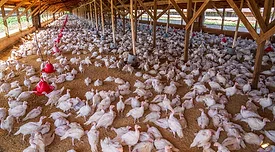
The researchers concluded that integrating multiple sampling matrices and detection methods could improve understanding of Campylobacter occurrence in commercial broiler production and support preharvest surveillance.
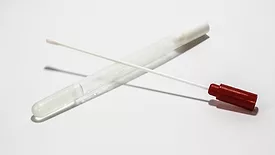
Sponges far outperformed cotton swabs in laboratory experiments and real-world sampling in an RTE food production facility. The findings align with existing recommendations supporting the use of sponge-based sampling with neutralizers for environmental monitoring.
The Infant Formula Safety Modernization Act includes provisions about expanded pathogen testing requirements and compulsory environmental monitoring for infant formula manufacturers, among other mandates.
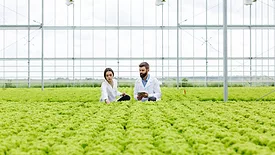
The researchers conducted environmental sampling throughout a controlled environment agriculture (CEA) operation and tested swabs for L. monocytogenes. Boot covers proved to be a useful tool for evaluating the effectiveness of cleaning and sanitation.
The European Commission has published a revised guidance document on monitoring and shelf-life studies for Listeria monocytogenes in ready-to-eat (RTE) foods in compliance with recent amendments to Regulation (EU) 2073/2005 on the microbiological criteria for foods.
The new XP-Design Assay Salmonella Serotyping Solution from Bio-Rad enables rapid detection and precise characterization of Salmonella in food and environmental samples.
Honeywell’s new Digital Holographic Microscopy technology leverages artificial intelligence (AI) and light-based holograms to quantify and classify microscopic particles and cells at the point-of-use. It can be used for liquid food safety and quality testing, as well as air and water environmental monitoring.
Classical approaches to environmental monitoring through "seek-and-destroy," while useful, can be enhanced with source tracking approaches applied in food production facilities. Such approaches have great potential to enhance food safety. However, these methods will look different when applied by academia and government, in contrast to the approaches recommended for industry.