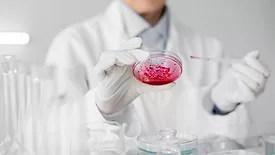
Developed by University of Texas at Dallas scientists, EnliSense’s READ FWDx is a novel, compact rapid sensor that can simultaneously detect microbiological and chemical food contaminants. EnliSense and the researchers behind READ FWDx envision their technology being used by both food manufacturers and consumers at home.
The European Food Safety Authority (EFSA) recently completed an assessment of estragole—a naturally occurring genotoxin and carcinogen—in fennel seed preparations, concluding that consumption of fennel seed preparations may be toxic to infants, children, and fetuses. EFSA is seeking public comment.
Using an artificial intelligence (AI) model to standardize and analyze a massive, global set of whole genome sequencing (WGS) data for Cronobacter sakazakii, University of Maryland researchers have discovered genetic traits that may explain the pathogen’s persistence and virulence in low-moisture foods like powdered infant formula.
Key Technology’s new COMPASS belt-fed optical sorter delivers exceptional foreign material and defect removal for food products that cannot be handled by chute-fed sorters.
FDA has shared concern about the growing number of edible products containing kratom available for sale online and at retailers like gas stations and smoke shops across the U.S. It has issued warning letters to seven companies for illegally marketing gummies, drinks, and tablets containing the kratom-derived concentrate 7-OH, a “novel, potent opioid.”
USDA Food Safety and Inspection Service (USDA-FSIS) laboratories now use an improved enrichment method for Campylobacter in poultry meat samples, which reduced enrichment incubation time by half, and shaved a day off of reporting times for results.
Following FDA’s announcement of its intent to end the use of artificial food colorants—largely by relying on voluntary action by industry—the agency has authorized a fourth petition for a naturally sourced food dye, Gardenia Blue. FDA is also reminding industry that even “natural” colorants must be approved by the agency.
The European Food Safety Authority (EFSA) has published a report that investigates the occurrence of 21 active substances frequently detected on organic products that are approved for use in plant protection products, but are not allowed in organic food production.
Switzerland has banned bisphenol A (BPA) and other hazardous bisphenols in food contact materials, but the regulation’s definition of hazardous BPAs is based on the chemicals’ molecular structure—notably leaving out some common, possibly harmful bisphenols like bisphenol M and bisphenol P.
The European Food Safety Authority (EFSA) reevaluated the safety of artificial sweetener acesulfame potassium (also known as acesulfame K, or additive E 950) for the first time since 2000, raising the acceptable daily intake. However, EFSA recommended lowering the maximum limits for lead and mercury in E 950.
 RSS
RSS