Ionophores—a class of antibiotics that are used widely in animal production but are not used in human medicine—may contribute to the development of medically important antimicrobial resistance (AMR), a new study suggests.
A recent analysis of French milk and infant formulas has revealed the presence of titanium dioxide—which is banned as a food additive in the EU due to potential toxicity—in all human and animal milk samples, as well as in most infant formula samples. Researchers raise concerns about implications for infant health, and question routes of exposure leading to contamination.
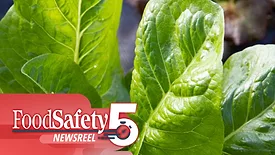
This episode of Food Safety Five discusses a new study that leverages a novel quantitative microbial risk assessment (QMRA) model that suggests that half of E. coli O157:H7 illnesses linked to romaine lettuce are caused by contamination via untreated overhead irrigation water.
England saw a 26 percent rise in Shiga toxin-producing Escherichia coli (STEC) infections from 2023 to 2024, and non-O157 STEC cases tripled since 2019. These trends may be driven by one foodborne illness outbreak involving contaminated salad leaves.
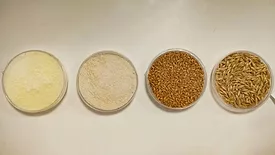
A laboratory study and large-scale commercial wheat mill trial demonstrated that a bacteriophage cocktail can significantly reduce Shiga toxin-producing Escherichia coli (STEC) O157:H7 contamination throughout milling operations without affecting the baking qualities of flour.
According to the 2025 International Food Information Council (IFIC) Food and Health Survey, consumer confidence in U.S. food safety has hit an all-time low in the 13 years since the survey began gauging the metric. Foodborne bacteria are the number one ranked concern in 2025, and attention to food additives and ingredients is rising.
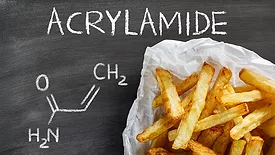
The UK Food Standards Agency (FSA) and Food Standards Scotland (FSS) have put out a call for data on the presence of acrylamide in food to better understand the health risks of dietary exposure and support policymaking decisions.
In support of the development of a systematic post-market review process for chemicals in the U.S. food supply, FDA has published a new Expanded Decision Tree (EDT) chemical toxicity and risk screening tool, which will help prioritize chemicals for safety evaluation based on their structure and estimated toxicity.
Despite a lack of scientific support to justify a carcinogenic risk determination, hundreds of companies have been sued under California's Prop 65 for failing to provide a "clear and reasonable" warning on food products containing acrylamide.
A peer-reviewed study led by CU Boulder researchers demonstrates that erythritol, a popular non-nutritive sugar alcohol that is commonly used as a zero-calorie sweetener in “sugar-free” snacks and beverages, may increase stroke risk by may constricting the brain’s blood vessels and lowering the body’s ability to dissolve blood clots.
 RSS
RSS