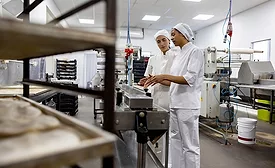
Small and midsized businesses striving for full compliance with the Preventive Controls for Human Food Rule (PCHF Rule) average $22,000 in upfront costs and $8,000 in every subsequent year, one study suggests.
The Consumer Good Forum’s Global Food Safety Initiative (GFSI) has launched a consultation on a new Food Safety Auditor Professional Development Framework.
The UK Food Standards Agency (FSA) has endorsed the Chartered Trading Standards Institute’s (CTSI’s) Professional Competency in Feed qualification route.
To celebrate National Food Safety Month in September, the National Restaurant Association and ServSafe are offering special educational content for foodservice and food retail establishments to deeply explore the causes of foodborne illnesses and how to prevent and respond to outbreaks.
In the spirit of collaboration, FDA's Office of Regulatory Affairs has partnered with the National Association of State Departments of Agriculture and North Carolina State University to create "Introduction to Public Health Food Inspections," the first-of-its-kind course to offer students a comprehensive understanding of federal regulatory food inspections and enforcement.
The Partnership for Food Safety Education’s 2025 Consumer Food Safety Education Conference will be held March 13–14 in Houston, Texas. The event will equip health and food safety educators with knowledge and tools to prevent foodborne illness at the consumer level.
The Food and Agriculture Organization of the United Nations (FAO) e-Learning Academy now offers free, certified online learning courses on topics related to Codex Alimentarius in English, French, and Spanish.
Seafood supply chain solutions provider Trace Register now enables customers to glean maximum benefits from its TR5 platform with personalized training.
Ensuring personnel are qualified for the position they hold is not only essential to manufacturing quality, compliant finished goods; it is part of the law by which those items are regulated. Food industry regulations point to three main categories to ensure qualification: education, experience, and training.
In this episode of Food Safety Matters, we are joined by Caroline Smith DeWaal, J.D. and Richard Pluke, Ph.D., who discuss their work to improve food safety in traditional markets under the Global Alliance for Improved Nutrition’s (GAIN’s) five-year EatSafe Initiative.
 RSS
RSS