Food Safety
search
Ask Food Safety AI
cart
facebook twitter linkedin instagram youtube
  • Sign In
  • Create Account
  • Sign Out
  • My Account
Food Safety
  • NEWS
    • Latest News
    • Sponsored Insights
    • Sponsored White Papers
  • PRODUCTS
  • TOPICS
    • Contamination Control
    • Food Types
    • Management
    • Process Control
    • Regulatory
    • Sanitation
    • Supply Chain
    • Testing and Analysis
  • PODCAST
  • EXCLUSIVES
    • Food Safety Five Newsreel
    • eBooks
    • FSM Distinguished Service Award
    • Interactive Product Spotlights
    • Videos
  • MORE
    • BUYER'S GUIDE
    • NEWSLETTERS >
      • Archive Issues
      • Subscribe to eNews
    • Store
    • ASK FSM AI
  • WEBINARS
  • FOOD SAFETY SUMMIT
  • FSM FEATURES
    • eMag Archives
    • FSM Features Collection
    • Editorial Advisory Board
    • Contact
    • Advertise
  • SIGN UP!
Home » Topics » Management » Recall/Crisis Management

Recall/Crisis Management
Recall/Crisis Management RSS Feed RSS

food preparation

How Restaurant Operators can Handle Food Poisoning Allegations

Restaurants must handle foodborne illness claims professionally, and a framework for investigating consumer food poisoning allegations must be in place
Bole
Dhruv Kishore Bole, M.B.A, PCQI, LSSGB
October 11, 2022

Every restaurant owner wants to avoid foodborne illness incidents and accusations, since a single lawsuit stemming from a food poisoning incident can have serious consequences for the restaurant's business, including poor brand image, high legal costs, and reduced customer loyalty. This article examines how restaurant operators can handle food poisoning accusations from customers.


Read More
lab workers

The Incident Command System and Foodborne Illness Outbreak Investigations

The Coordinated Outbreak Response and Evaluation (CORE) Network is the coordination focal point for all FDA resources during outbreak investigations
Stelios Viazis Ph.D. Sharon Seelman M.S., M.B.A. Kari Irvin M.S. Julia Mangia M.P.H.
October 11, 2022

During foodborne illness outbreak investigations, public health and regulatory authorities collect three types of data to determine a common food consumed by ill people: epidemiologic, traceback, and laboratory. State and local partners work with FDA to conduct traceback investigations and examine the food supply chain to determine the origin of the foods identified by the epidemiologic investigations. This article looks at the benefits of using incident command system (ICS) principles during emergency response coordination activities for foodborne illness outbreaks, with input from members of the FDA's CORE Network.


Read More
Food Safety Matters

Ep. 130. Kim Livsey: Leading a Food Safety Incident Management Team

October 10, 2022

In this episode of Food Safety Matters, we talk with Kimberly (Kim) Livsey about the interworking of the U.S. Food and Drug Administration’s (FDA’s) investigations of and responses to food safety incidents and foodborne illness outbreaks through the Incident Command System and Incident Management Teams (IMTs). Kim is a Senior Emergency Response Coordinator in FDA's Office of Regulatory Affairs' Office of Human and Animal Food Operations who has led a number of IMTs, including for a recent, high-profile foodborne illness outbreak.


Read More
milk caution tape

FDA Announces Enhanced Recall Subscription Service

Pamela Ogonowski
September 26, 2022

In July 2022, FDA unveiled an enhanced Enforcement Report Subscription Service for recalls that allows users, including industry and consumers, the option to receive notifications of new and updated recalls of FDA-regulated products posted to the application using custom keywords.


Read More
Food Safety Matters

Ep. 129. Michael Taylor: Legislating after the 1993 Jack in the Box E. coli Outbreak

September 26, 2022

In this episode of Food Safety Matters, we talk with Michael (Mike) R. Taylor about the regulatory changes that have occurred since the Jack in the Box E. coli outbreak of 1992–1993. He served as Administrator of UDSA’s Food Safety and Inspection Service (FSIS) during a time of great transformation within the agency, and is currently a board member for Stop Foodborne Illness. Mike talks about how his previous work at FDA informed his work at USDA; what it was like to negotiate with industry on new Salmonella and E. coli standards, as well as HACCP regulations; the evolution of food safety culture and the concept of taking accountability for prevention; and the personal impact of the stories of foodborne illness outbreak victims.


Read More
infant formula blue background

FDA Releases Review of Response to Infant Formula Supply Crisis, Addresses Improvements

September 20, 2022

The U.S. Food and Drug Administration (FDA) has concluded its internal review of the agency’s response to the U.S. infant formula supply crisis, which details key findings and recommendations that will allow the agency to respond more quickly during food safety emergencies.


Read More
Food Safety Matters

Ep. 128. Bill Marler: Perspectives on Poisoned and Food Safety Progress

September 19, 2022

In this episode of Food Safety Matters, we speak with prominent foodborne illness attorney Bill Marler about the deadly 1993 E. coli outbreak in ground beef served by Jack in the Box restaurants along the U.S. West Coast. Marler defended Brianne Kiner, the most seriously injured survivor of the outbreak, as well as hundreds of other victims in a class-action lawsuit. The story of this outbreak—which led to regulatory changes by USDA to declare E. coli an illegal adulterant in ground beef—and its ensuing legal and industry battles, is told in the book Poisoned by author Jeff Benedict. As the central figure in Benedict's book, Marler tells his story of the 1993 outbreak, as well as his outlook on the future of food safety legislation in the U.S.


Read More
chicken salad sandwich

Researchers Develop Model to Estimate Economic Value of Foodborne Illness Outbreak Investigations, Recalls

Bailee Henderson headshot
Bailee Henderson
September 7, 2022

Researchers from the USDA’s Economic Research Service and CDC developed a model that can be used to assess the value of state and federal foodborne illness outbreak investigations and subsequent recalls. The researchers demonstrated the replicability of the model using a 2018 Salmonella outbreak as a case study.


Read More
recalls fragmented shattered

Food Companies Struggle with a Fragmented Recall System

Mitzi D. Baum M.Sc. Vanessa Coffman Ph.D.
August 29, 2022

Food companies are struggling with recall execution and communication, stemming from a patchwork of regulations. Three key issues confront industry due to this fragmentation of the recall system. The path to more effective recalls, in simple terms, is to standardize and streamline the existing system and utilize modern technology to circulate pertinent information.


Read More
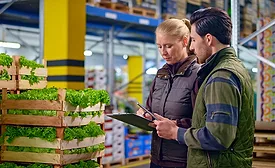
two people working in warehouse next to pallets of lettuce looking at documents

Anatomy of a Recall—Best Practices

An often-misunderstood resource can minimize the negative impact and expense of a recall—your recall insurance policy
Peg Dorn Jen Pino-Gallagher
July 24, 2022

Even with the right prep work, operations with the best sanitation, pest control, preventive maintenance, manufacturing practices, and food defense can experience a recall. This article establishes the background on recalls in the U.S. and offers a look at the behind-the-scenes activity of a food safety recall, including best practices, necessary steps, and tips for communication. It also explores an often-misunderstood resource that can minimize the negative impact and expense of a recall—your recall insurance policy.


Read More
Previous 1 2 … 13 14 15 16 17 18 19 20 21 … 29 30 Next
Manage My Account
  • eMagazine Subscription
  • Subscribe to Newsletters
  • Manage My Preferences
  • Website Registration
  • Subscription Customer Service

More Videos

Sponsored Content

Sponsored Content is a special paid section where industry companies provide high quality, objective, non-commercial content around topics of interest to the Food Safety Magazine audience. All Sponsored Content is supplied by the advertising company and any opinions expressed in this article are those of the author and not necessarily reflect the views of Food Safety Magazine or its parent company, BNP Media. Interested in participating in our Sponsored Content section? Contact your local rep!

close
  • Top view portrait of two factory workers standing by conveyor belt during quality inspection at food production, copy space
    Sponsored byFlexXray

    Foreign Material By the Numbers: What the 2026 Benchmark Report Reveals

  • a conveyorized industrial metal detector system that appears to resemble a Loma Systems IQ4 Metal Detector setup with an integrated conveyor belt and control panel for food or package inspection.
    Sponsored byMettler Toledo

    Beyond Detection: How to Avoid Physical Contamination in Food Through a Smarter Inspection Strategy

  • The image displays a bottling plant production line, commonly used in the beverage industry for filling and packaging soft drinks.
    Sponsored byBIOIONIX

    Sustainability with ROI: A Beverage Producer Case Study in Water Savings

Popular Stories

Dr. Heidi Overton speaking at Senate hearing

In Senate Hearing, FDA Commissioner Nominee Says Lack of Resources Will Challenge GRAS Reform

The image displays a bottling plant production line, commonly used in the beverage industry for filling and packaging soft drinks.

Sustainability with ROI: A Beverage Producer Case Study in Water Savings

whitish sauce in a bottle

Researchers Examine Microbiological Risks in Sauces and Dressings

allergens ebook

Events

October 6, 2026

Advances in Environmental Monitoring Science and Strategy

Live: October 6, 2026 at 2:00 pm EDT: This webinar will cover how environmental monitoring science and EMP strategies support sanitation verification and the safe production of food.

October 15, 2026

How to Prevent Physical Contamination in Food Production and Strengthen Compliance

Live: October 15, 2026 at 2:00 pm EDT: Attend this webinar to gain insight into how product inspection helps protect your brand, reduce recall risk, and support compliance.

October 29, 2026

FDA Proposes Major GRAS Reform: What It Could Mean for Your Business

Live: October 29, 2026 at 2:00 pm EDT: Attend this webinar to examine potential implications for self-GRAS, Flavor and Extract Manufacturers Association (FEMA) GRAS, and food-contact substances.

View All

Products

Global Food Safety Microbial Interventions and Molecular Advancements

Global Food Safety Microbial Interventions and Molecular Advancements

See More Products

Never miss the latest news and trends driving the food safety industry

Newsletters | Website | FSM Features Collection

JOIN TODAY!
  • RESOURCES
    • Advertise
    • Contact Us
    • Directories
    • Store
    • Want More
  • SIGN UP TODAY
    • Create Account
    • eMagazine
    • Newsletters
    • Customer Service
    • Manage Preferences
  • SERVICES
    • Marketing Services
    • Reprints
    • Market Research
    • List Rental
    • Survey/Respondent Access
  • STAY CONNECTED
    • LinkedIn
    • Facebook
    • Instagram
    • X (Twitter)
  • PRIVACY
    • PRIVACY POLICY
    • TERMS & CONDITIONS
    • DO NOT SELL MY PERSONAL INFORMATION
    • PRIVACY REQUEST
    • ACCESSIBILITY

Copyright ©2026. All Rights Reserved BNP Media, Inc. and BNP Media II, LLC.

Design, CMS, Hosting & Web Development :: ePublishing