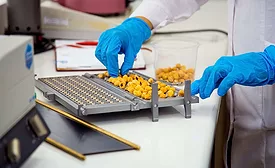

In light of a recent investigation that found nearly half of honey imported to the EU is adulterated, UK researchers have demonstrated the promise of two innovative techniques—DNA barcoding and spatial offset Raman Spectroscopy—for detecting sugar adulterants in honey.
The UK Food Standards Agency (FSA) recently published the 2024 Food Crime Strategic Assessment. Since the last report in 2020, the UK food supply chain has faced significant disruptions, causing the food crime landscape to change and creating new opportunities for fraud.
The UK Food Standards Agency (FSA) has endorsed the Chartered Trading Standards Institute’s (CTSI’s) Professional Competency in Feed qualification route.
Recently introduced to U.S. Congress, the Federal and State Food Safety Information Sharing Act aims to grant the U.S. Food and Drug Administration (FDA) the authority to share crucial food safety information with state and local regulatory agencies to improve foodborne illness outbreak response.
Providing food manufacturers with a standardized methodology for determining whether precautionary allergen labeling is appropriate for their products, the Allergen Bureau has introduced the latest version of its risk assessment tool, Voluntary Incidental Trace Allergen Labeling (VITAL®) 4.0.
The world could be rendered defenseless against the next global pandemic if antimicrobial use in Southeast Asian animal agriculture is not curbed, researchers from RMIT University have warned.
The Food and Agriculture Organization of the United Nations (FAO) recently published a report on the health impact of dietary exposure to toxic fatty acid esters from supplementary foods provided by humanitarian organizations to treat malnutrition.
To celebrate National Food Safety Month in September, the National Restaurant Association and ServSafe are offering special educational content for foodservice and food retail establishments to deeply explore the causes of foodborne illnesses and how to prevent and respond to outbreaks.
A recent European Food Safety Agency (EFSA) technical report has summarized emerging chemical risks to food safety identified by the agency and its processes for doing so, covering the period 2020–2023.
A recent review of carcinogenicity data submitted to support U.S. FDA “Generally Recognized as Safe” (GRAS) determinations for food substances has shown that, although the types of carcinogenicity data are varied, safety is typically adequately evidenced. Still, a standardized approach defining which data is required to support a GRAS determination could be useful.