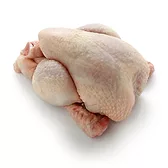
Last week, the U.S. Department of Agriculture Food Safety and Inspection Service (USDA FSIS), along with Empire Kosher Poultry, Inc., issued a public health alert warning consumers about possible Salmonella contamination in raw, kosher chicken products.
The U.S. Food and Drug Administration (FDA) is telling consumers and retailers to avoid eating, selling, or handling food products that are prepared by adding liquid nitrogen at the point of sale, immediately before consumption.
The U.S. Department of Agriculture (USDA) Food Safety and Inspection Service (FSIS), in a letter authored by Acting Deputy Under Secretary for Food Safety Carmen Rottenberg, is clearing up faulty information that was disseminated last year regarding poultry sampling test results.
This week, the U.S. Food and Drug Administration (FDA) announced that it has recognized Brea, CA-based International Accreditation Services (IAS) as an accreditation body under the Accredited Third-Party Certification Program for a period of 5 years.
In an August 16th update, the U.S. Food and Drug Administration (FDA) confirmed a total of 476 Cyclospora illnesses in 15 states linked to salads sold at McDonald’s restaurants. According to FDA, the salad ingredients were supplied by a company that has also been implicated in a separate outbreak that was declared over last month.
In a July 31st notice, the Food Safety Authority of Ireland (FSAI) warned restaurants and other foodservice establishments about the dangers of not properly cooking minced beef burgers.
The U.S. Environmental Protection Agency (EPA) has been ordered by the Court of Appeals for the 9th Circuit to ban the use of chlorpyrifos, a commonly used pesticide for various fruit, nut, and vegetable crops.
The U.S. Department of Agriculture (USDA) has released a summary of a study entitled Before Implementation of the Food Safety Modernization Act’s Produce Rule: A Survey of U.S. Produce Growers.
 RSS
RSS