The U.S. Food and Drug Administration (FDA) has issued its final rule for added fluoride levels in bottled water, which amends the maximum allowable level.
The Association of Food and Drug Officials (AFDO) recently released a whitepaper that provides recommendations for recall modernization to the U.S. Food and Drug Administration (FDA) and other stakeholders, based on three years of data collection and analysis.
The U.S. Food and Drug Administration (FDA) recently published a draft guidance that will clarify how FDA evaluates the public health risk of food allergens that are not one of the major nine food allergens identified by law in the Federal Food, Drug, and Cosmetic Act.
A study by scientists from the U.S. Food and Drug Administration’s CFSAN and the U.S. Department of Agriculture’s ARS provides insight about factors that affect the presence of Shiga toxin-producing Escherichia coli in bagged romaine lettuce.
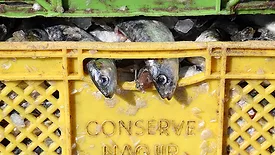
The U.S. Food and Drug Administration (FDA) published a final guidance for the seafood sector, “Guidance for Industry: Reconditioning of Fish and Fishery Products by Segregation.”
The U.S. Department of Agriculture’s Food Safety and Inspection Service (USDA FSIS) has released a new HACCP Model for certain meat and poultry products that receive a full lethality heat process step.
The Food Standards Agency (FSA) has reviewed Regulation 2019/1793: Controls Applied to Imported Food and Food Safety, and has proposed amendments to the legislation for the first time since the UK’s exit from the EU.
The EU is conducting a report to analyze the legality and rationale of subjecting all imported agricultural and agri-food products to EU health and environmental standards, to which the U.S. Meat Export Federation (USMEF) has submitted its concerns.
The U.S. Food and Drug Administration (FDA) and the National Environmental Health Association (NEHA) are emphasizing Retail Food Regulatory Program Standards nationwide with $7 million in funding and upcoming workshops.
The U.S. Food and Drug Administration (FDA) held a webinar on April 13 on its Foodborne Outbreak Response Improvement Plan, which covered scientific context for the plan and its four core priorities.
 RSS
RSS